Fira Barcelona Montjuïc exhibition stands:
win with disciplined simplicity
and a stand your team can run calmly

Exhibiting at Fira Barcelona Montjuïc can be a gift if you approach it the right way. Not because it’s “easier,” but because Montjuïc often rewards something many brands forget in the rush to impress: clarity, usability, and a stand that stays professional for the entire event-not just for the first photo.
Montjuïc is where you can win without overbuilding. You can win with a layout that guides visitors naturally, a message that lands fast, and proof that doesn’t require a long pitch. You can win with a stand that feels calm and intentional, even when the hall gets busy.
This page is your practical guide to exhibition stands at Montjuïc: what tends to work, what commonly goes wrong, and how to make decisions that keep scope stable and budgets under control.
If you need the broader overview of Barcelona venues:
If you want to start with stand design strategy:
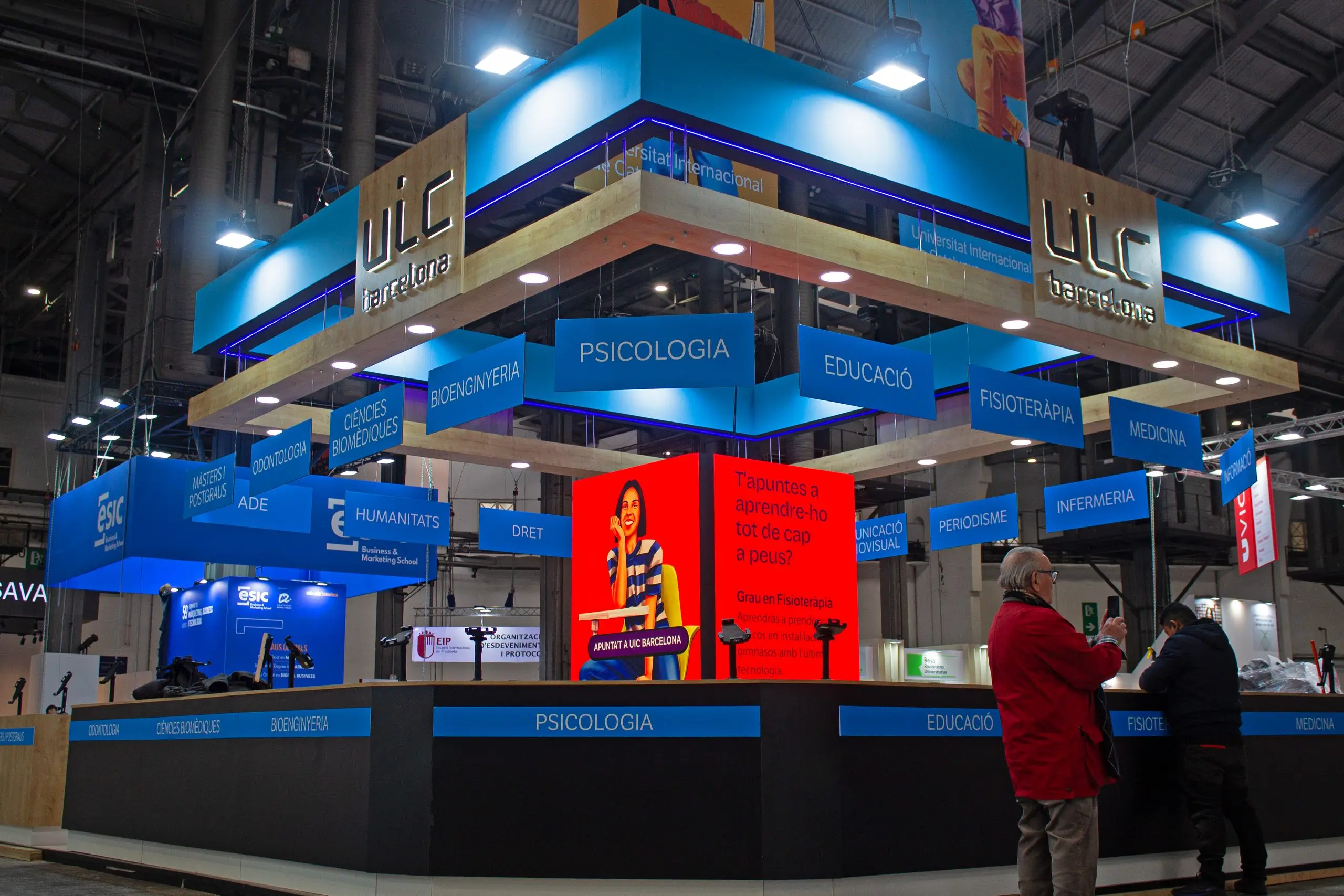
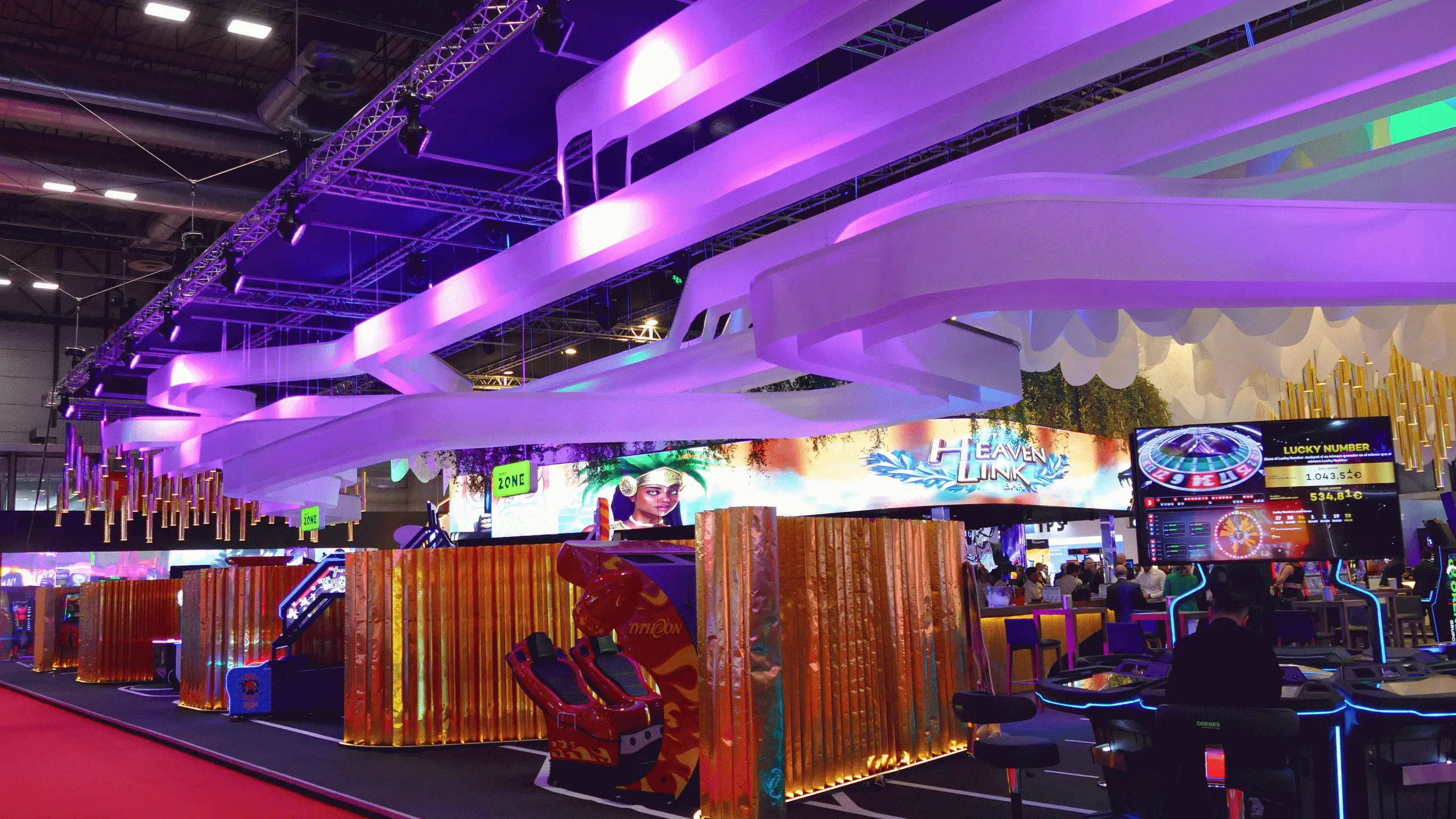
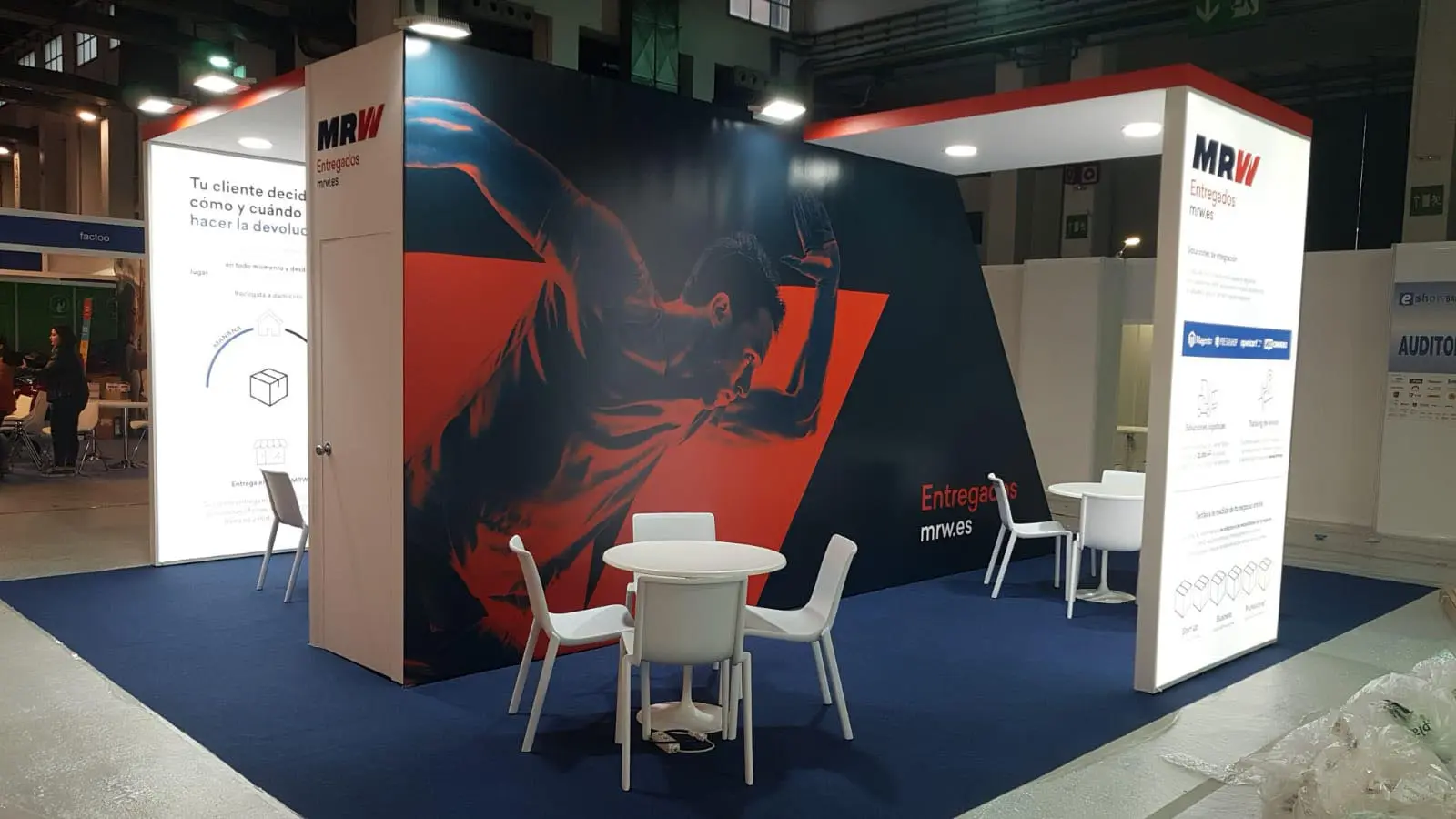
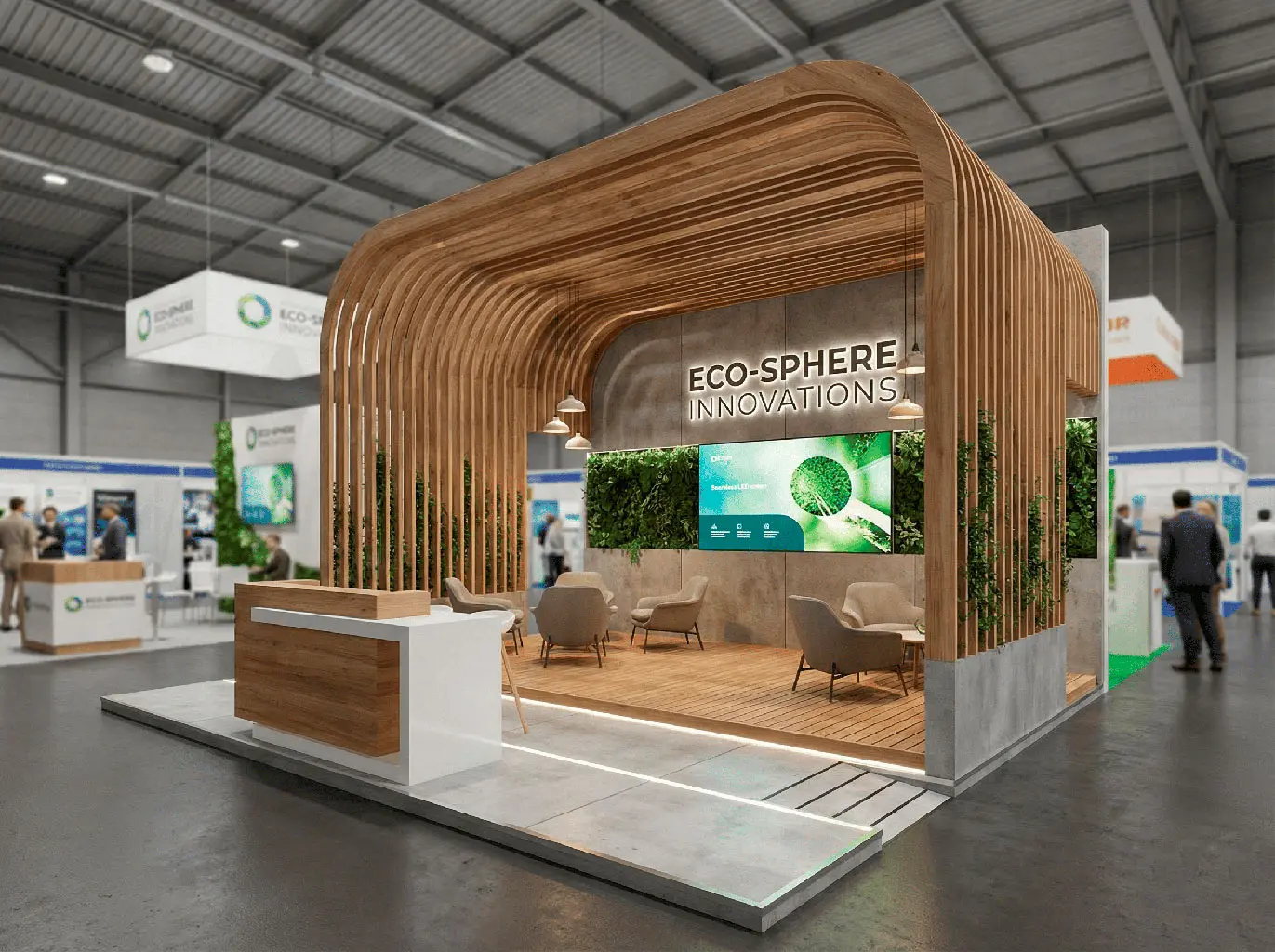
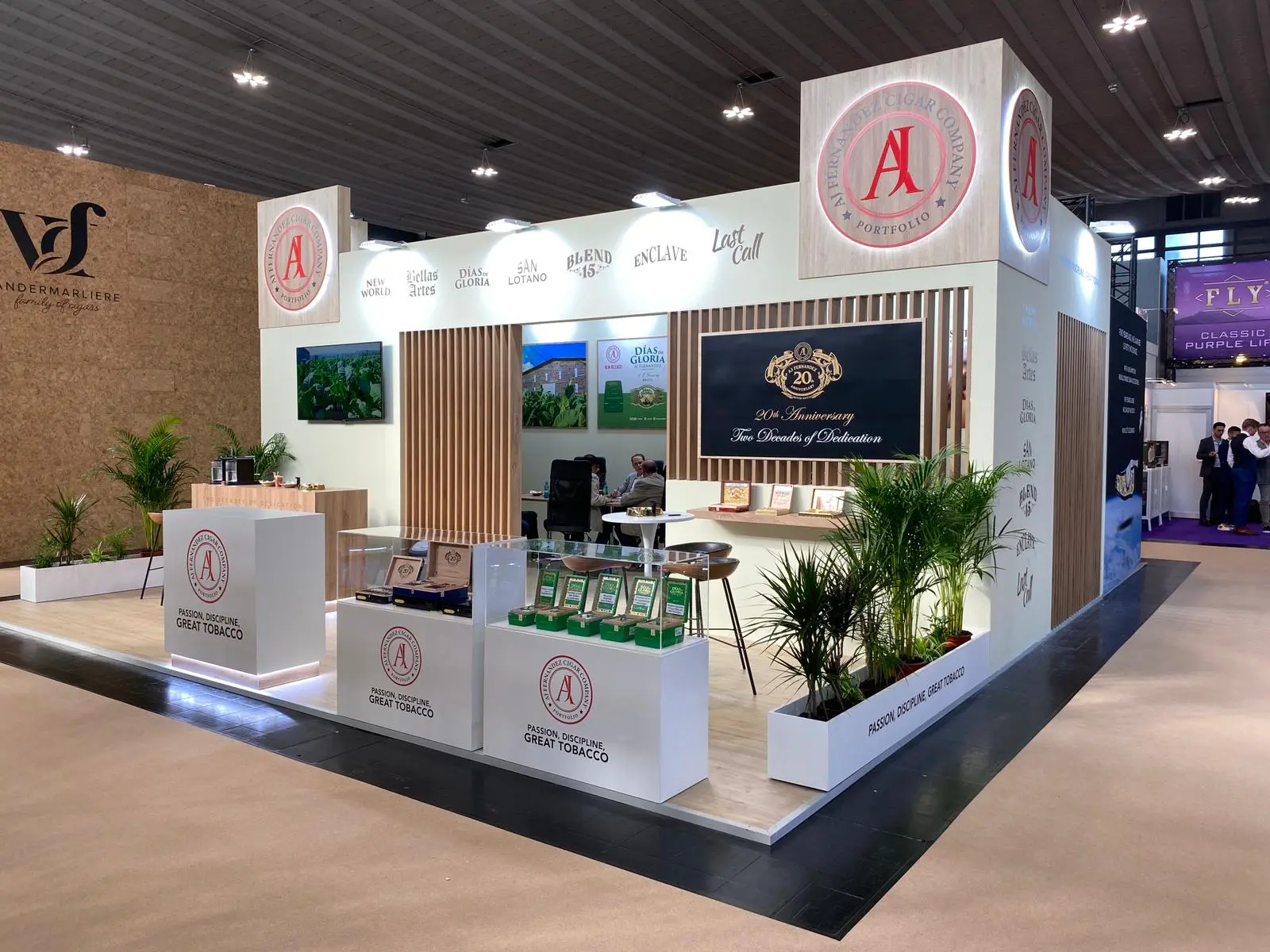
What's different about Montjuïc
(the behavioural reality)
Every venue has a rhythm. Montjuïc often rewards stands that feel usable rather than theatrical.
That doesn’t mean visual presence doesn’t matter. It means the stands that perform tend to:
- Be readable quickly without shouting
- Avoid clutter and over-text
- Prioritise flow and conversation comfort
- Feel open, approachable, and well-zoned
- Remain tidy and resettable over multiple days
A common Montjuïc failure is a stand that tries to look “big” by adding too many elements. The result is a space that feels busy, blocks its own entry, and forces the team to work harder than necessary to guide visitors.
Montjuïc doesn’t punish ambition. It punishes confusion.
The Montjuïc rule:
buildability is part of performance
In exhibition projects, “buildability” can sound like a production detail. In reality, it’s a conversion factor. Why? Because projects that are hard to build are also hard to approve, hard to deliver calmly, and hard to keep looking premium on day two and day three.
At Montjuïc, the best results often come from:
- A disciplined layout that doesn’t rely on last-minute fixes
- A stand type strategy that matches timeline and risk
- Scope clarity that prevents budget drift
- A clear proof moment instead of multiple weak messages
If you want to understand the difference between services and outcomes:
Flow and open sides at Montjuïc:
avoid the "invisible barrier"
Many stands underperform because they create a barrier without realising it. This happens when counters or furniture sit in the natural entry line, or when meeting zones sit on the edge and “close” the stand psychologically.
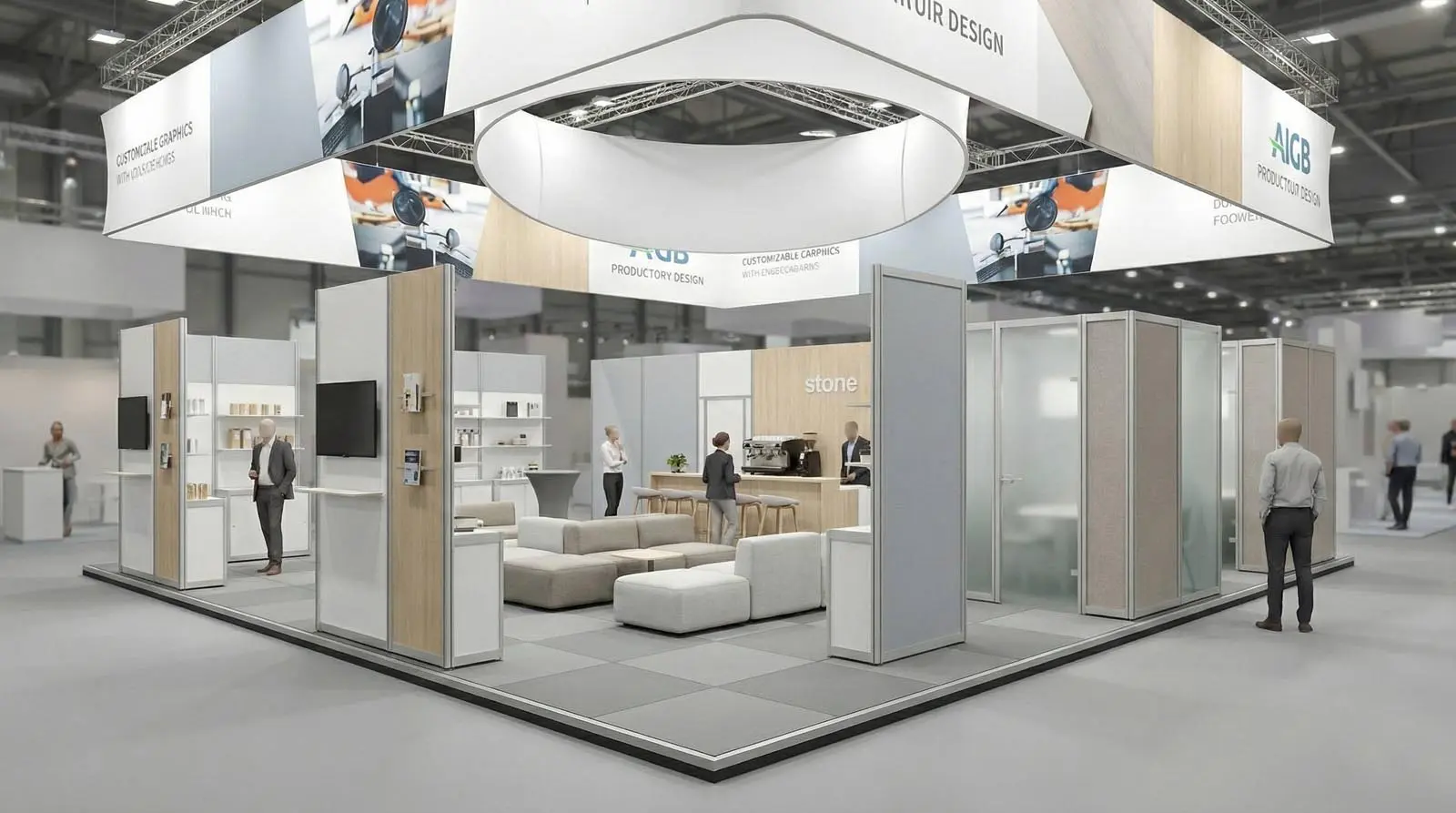
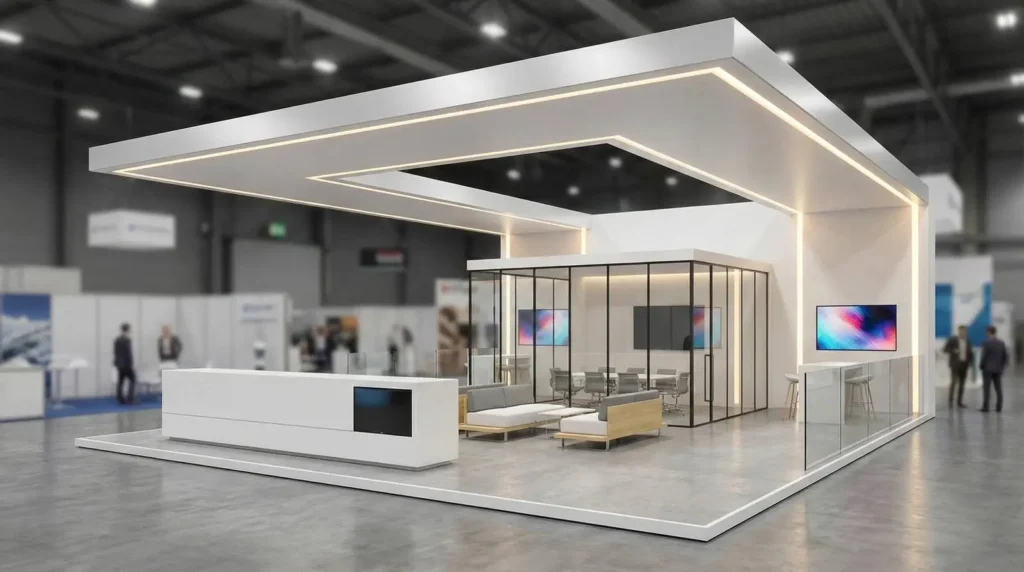
Open sides still matter here:
One open side
Your stand must feel easy to enter. Protect the entry lane. Avoid putting the counter where people need to walk.
Two open sides (corner)
Corner stands can perform strongly if the layout guides visitors around the corner naturally. Dead corners happen when messaging and proof are only oriented to one aisle.
Three open sides (peninsula)
Peninsula stands are powerful when lanes are defined. Without lane thinking, traffic swirls and conversations collide.
Four open sides (island)
Island stands at Montjuïc should feel open, not empty. You need a clear “stop” moment and a clear next step-otherwise visitors circle and leave.
If you want footprint-specific layout guidance:
Choose the primary objective
(Montjuïc rewards intentional zoning)
A stand can support multiple actions, but it needs one primary objective so the layout stays coherent.
Lead-first at Montjuïc
Lead-first works best when the stand is simple and repeatable:
- open engagement edge
- one headline that explains what you do
- one visible proof point
- a natural capture step that the team can repeat quickly
- storage and staff workflow to keep the stand tidy
If you’re choosing the execution partner:
Demo-first at Montjuïc
Demo-first can work well when the demo is planned as part of the layout:
- the demo must be visible without blocking entry
- technical needs must be decided early (power/AV)
- the demo should lead naturally to a capture or meeting request
If your demo is heavy, hybrid or custom may be safer than pure modular:
Meeting-first at Montjuïc
Meeting-first at Montjuïc can perform well when it stays inviting:
- meeting space should be usable and calm
- privacy should be a choice, not a wall that closes the stand
- qualification must happen before meetings so the calendar stays valuable
If meeting demand is truly high:
Stand types that often make sense at Montjuïc
(and why)
Montjuïc is a venue where controlled scope often wins.
Modular exhibition stands
Modular is a strong Montjuïc strategy because it supports predictable delivery and reduces unknowns. It performs best when message hierarchy and lighting are disciplined.
Hybrid exhibition stands
Hybrid is often the best middle: modular backbone for stability, plus one custom signature element so the stand feels branded rather than generic.
Hire / rental stands
Hire can be excellent when time is tight. The key is to treat hire as a conversion system, not as a generic box.
Custom stands
Custom works well when you need tailored zoning or differentiation and you can lock scope early.
Bespoke stands
Bespoke can work, but the strongest bespoke projects at Montjuïc are disciplined: the architectural idea must earn its place by improving behaviour, not by adding complexity.
Sustainable strategy
Reuse-first modular/hybrid strategies often align naturally with Montjuïc’s “disciplined simplicity” advantage.
Check stand design guidance by Objective
Budget and scope:
how to keep the project calm
Montjuïc projects become expensive for the same reasons projects become expensive anywhere:
- Late changes
- Unclear inclusions
- Technical needs decided late
- Finishing expectations not written
If you want the full cost drivers explained plainly:
If you need a fast budget range for internal decision-making:
The most reliable way to protect budget is to lock:
- Objective
- Layout direction
- Must-haves vs optional upgrades
- Technical needs (if demos exist)
- Content approvals early enough to avoid reprints
Timeline guidance:
Brief template:
What to send us for a quote that stays stable
To quote a Montjuïc stand properly, send:
- Event name + dates
- Venue (Gran Via / Montjuïc / CCIB)
- Stand size (m²) and footprint if known (e.g., 10×5)
- Open sides (1 / 2 / 3 / 4)
- Primary objective (leads / demos / meetings)
- Must-haves (AV, storage, meeting space, product display)
- Deadline for design approval
➔ You can also use the brief template
Phone: +34 609 70 92 56
FAQs:
Frequently Asked Questions
Yes. We plan for Montjuïc with a buildability-first mindset, focusing on clarity, flow and operability.
Disciplined simplicity: clear messaging, usable flow, one strong proof moment, and a stand that stays tidy and calm over multiple days.
Overbuilding and clutter. Too many elements can block entry, confuse flow, and make the stand harder to operate and approve.
It depends on objective and timeline. Modular/hybrid often performs well due to predictability. Custom can be strong when differentiation and tailored zoning matter.
Yes, especially when time is tight. The key is to design the rental stand for conversion and flow, not treat it as a generic box.
Open sides change entry/exit logic and congestion risk. Corner and peninsula stands need lane planning; island stands need 360° coherence.
Yes. Demos work best when technical needs are planned early and the demo is placed so it doesn’t block entry or create awkward crowding.
It can be, depending on the event. Meeting success still depends on zoning and keeping the stand inviting rather than closed.
Lock objective and layout early, separate must-haves from optional upgrades, decide technical needs early, and finalise content to avoid reprints.
Use /stand-price-calculator-barcelona/ for a realistic range and /exhibition-stand-cost-barcelona/ to understand cost drivers.
Event, venue, footprint/m², open sides, objective, must-haves and approval deadline. Send via /contact/ or call +34 609 70 92 56.
Yes. Share your event, objective, footprint and deadline via /contact/ and we’ll recommend the strategy that fits your constraints.