CCIB exhibition stands in Barcelona:
meeting-first planning
without closing the stand

Exhibiting at CCIB (Centre de Convencions Internacional de Barcelona) often feels different from exhibiting in huge exhibition halls. Depending on the event, CCIB can be more scheduled, more conversation-led, and more focused on professional interactions than on pure footfall volume.
That doesn’t mean you can relax on stand design. It means the success criteria change.
At CCIB, many brands win by creating a space where conversations feel calm, credible, and easy to step into-without turning the stand into a closed room that kills inbound interest. The best CCIB stands don’t look “busy.” They look intentional. They guide visitors smoothly, qualify quickly, and create a clear path from “I’m curious” to “let’s talk properly.”
This page explains how to plan an exhibition stand for CCIB in a practical way: how visitors behave, what meeting-first really means, how to keep the stand open and welcoming, and what stand types tend to fit CCIB reality.
If you need the overview of Barcelona venues first:
If you want to start with your objective and stand strategy:
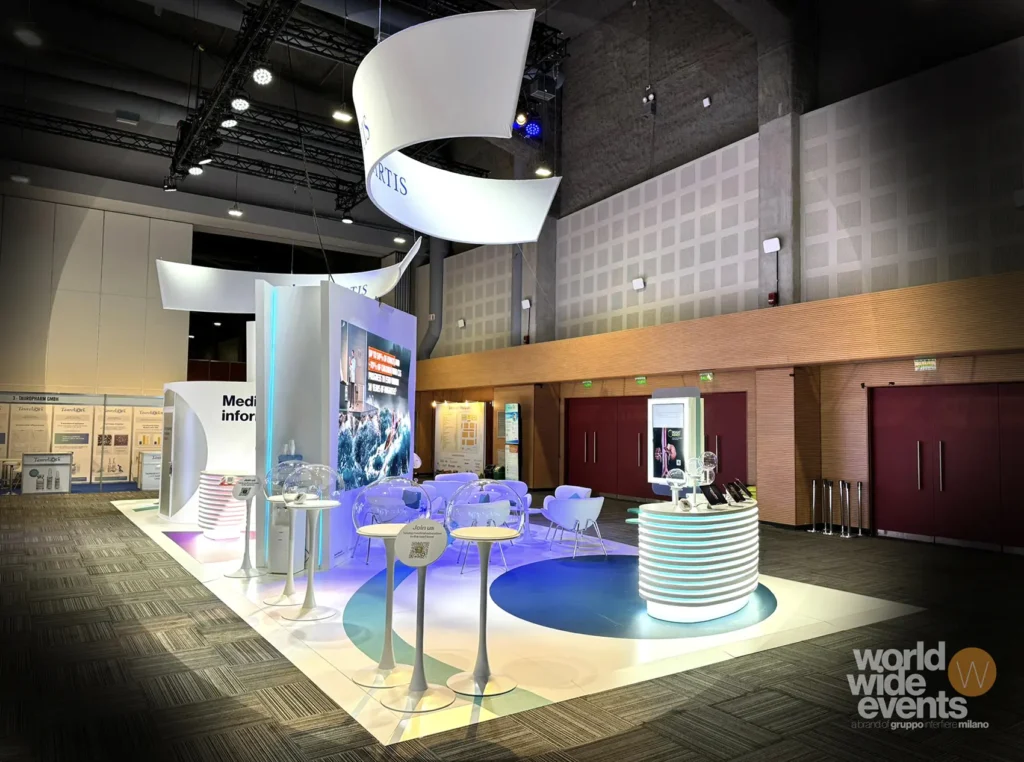
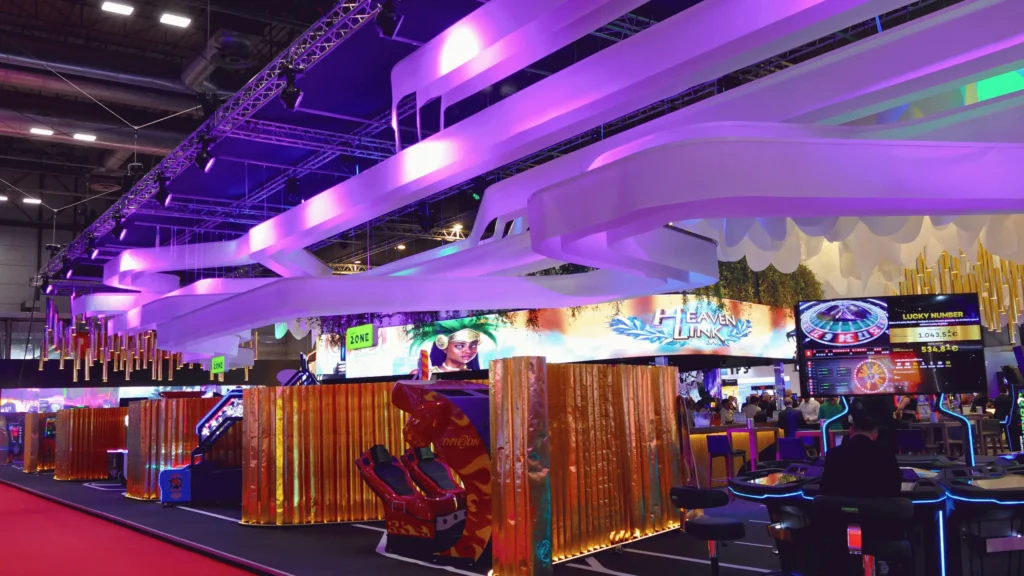
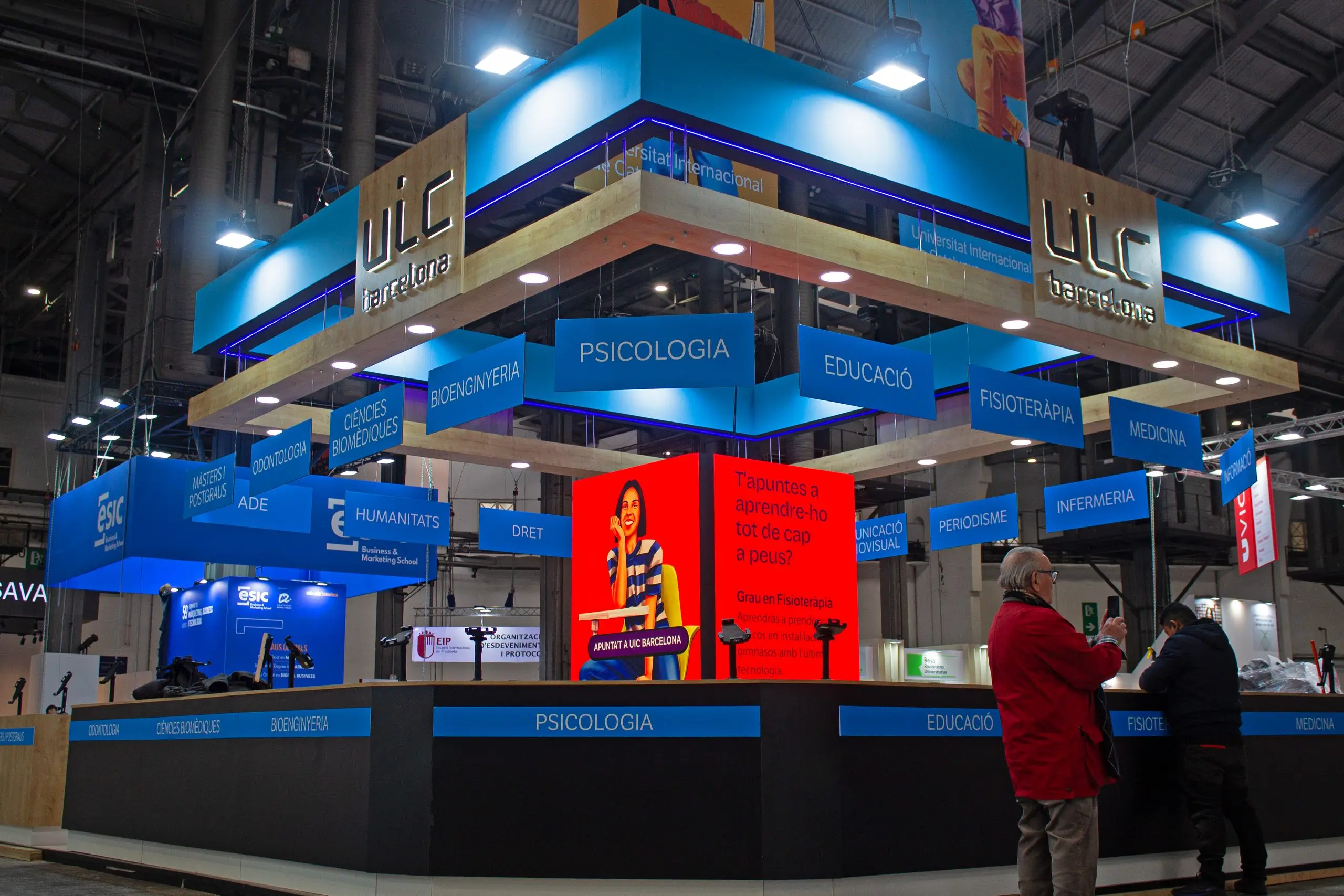
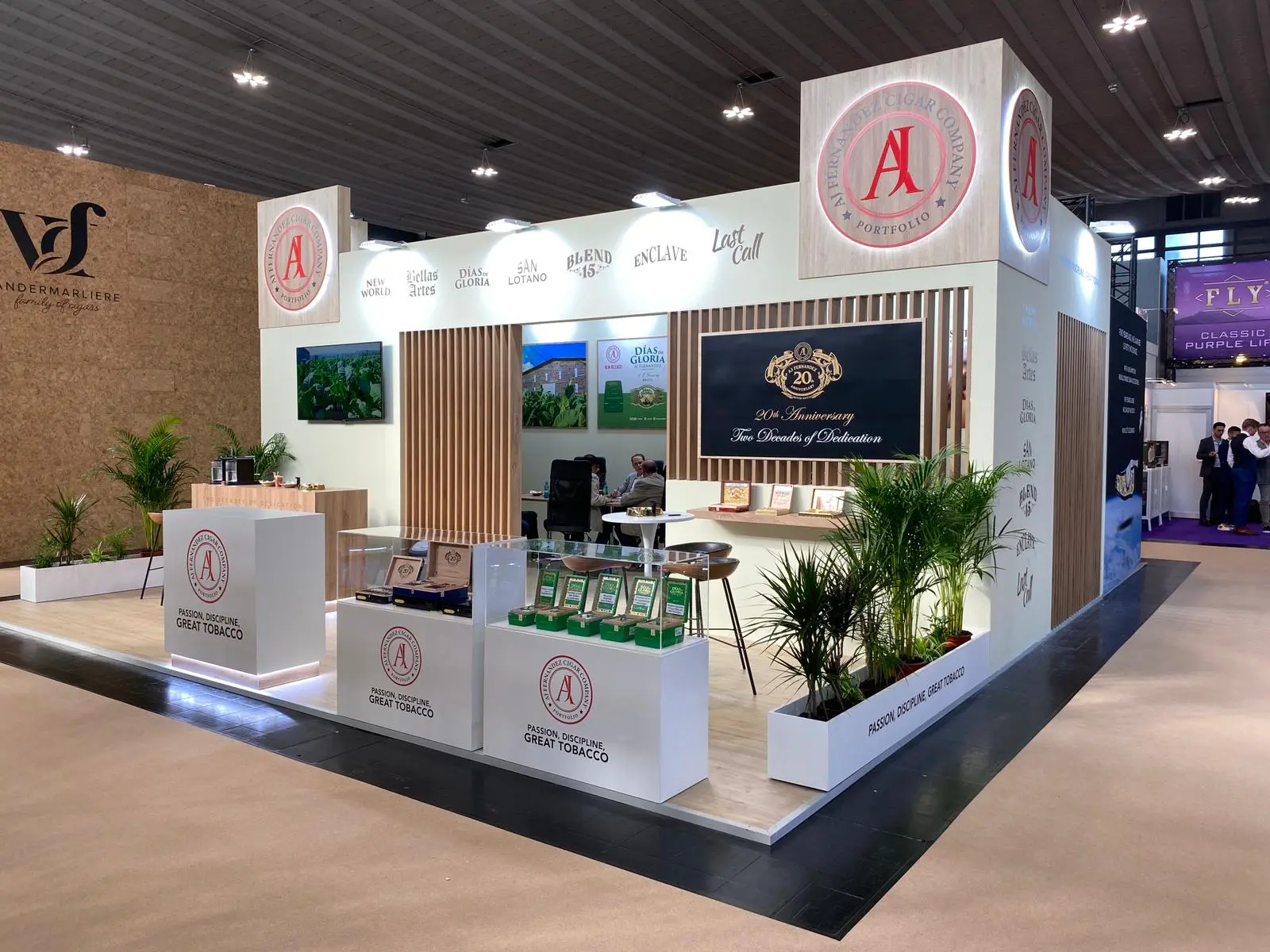
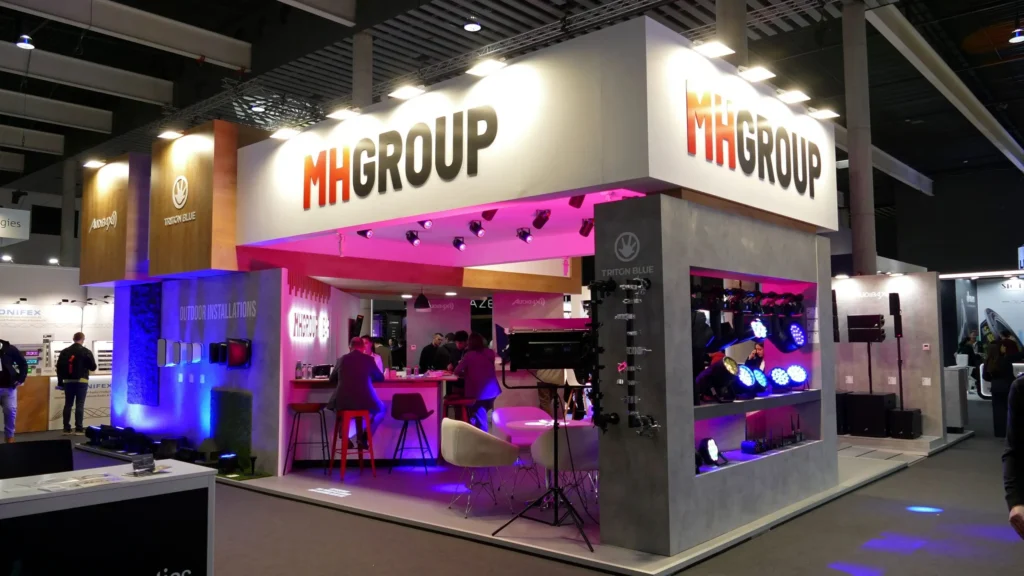
What's different about CCIB
(and why "quiet stands" often perform best)
At CCIB, people often arrive with intent. They’re not only browsing.
They might be looking for:
- A solution provider they can trust
- A partner conversation
- A meeting with context
- A clear comparison between options
When visitors have intent, your stand doesn’t need to shout. It needs to reduce friction:
- Friction in understanding what you do
- Friction in approaching
- Friction in starting a conversation
- Friction in moving from conversation to a meeting or next step
This is where many stands get it wrong. They build meeting areas that look private but feel unapproachable. Or they overbuild walls that create a psychological barrier. Or they put the “serious conversation” zone so far inside that nobody knows what to do when they enter.
CCIB often rewards a stand that feels human and professional at the same time: open enough to invite, structured enough to guide.
The CCIB rule:
meeting-first doesn't mean closed-off
Many exhibitors assume meeting-first means building a closed box. That usually backfires.
Visitors interpret closed spaces as “not for me.” Even qualified visitors hesitate if the stand feels guarded or overly corporate. The stand becomes intimidating, and your team ends up doing outreach from the aisle just to compensate.
Meeting-first works best at CCIB when:
- Meetings are possible without blocking the stand
- Privacy is offered as a choice, not a wall
- There is a clear welcome zone where conversations start naturally
- Qualification happens quickly so meetings stay valuable
- Staff workflow supports transitions (so the stand stays calm)
A meeting-first stand should still have an invitation edge. The stand must still be readable and approachable from the aisle.
Visitor journey at CCIB:
attract, qualify, meet (in that order)
A CCIB stand that converts usually follows a simple journey:
- Attract
Not with noise-by being clear. A headline that explains what you do in plain language is more valuable than a wall of text. - Qualify
CCIB conversations can be valuable, but not every visitor is a meeting. Qualification should be short and respectful, not interrogative. - Meet
The stand should make meetings easy to host. That means usable seating, calm acoustics where possible, and a layout that doesn’t force meetings into awkward corners.
The strongest CCIB stands are designed so the team doesn’t need to “fight the space.” The space supports the process.
Open sides and flow:
calm doesn't happen by accident
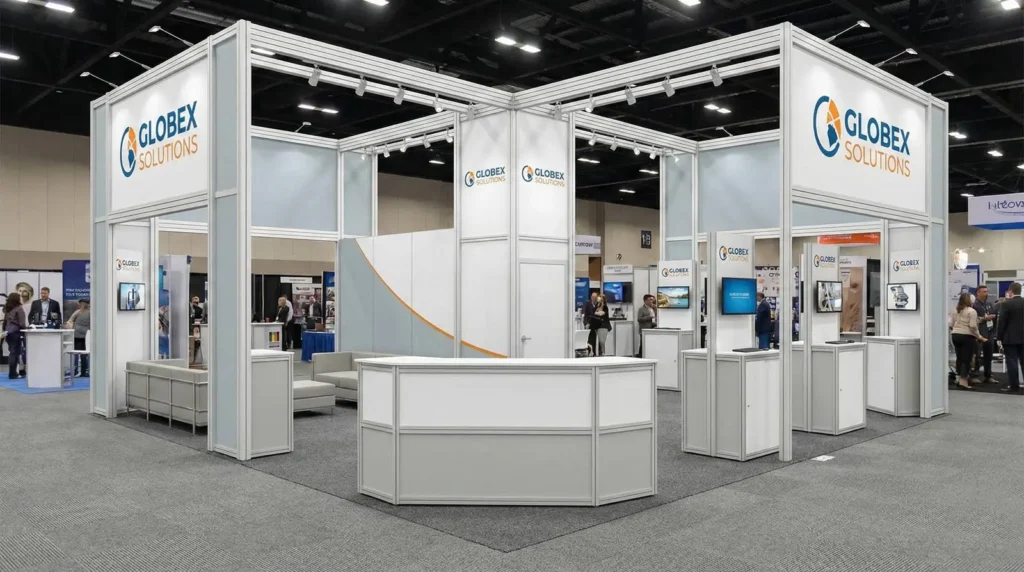
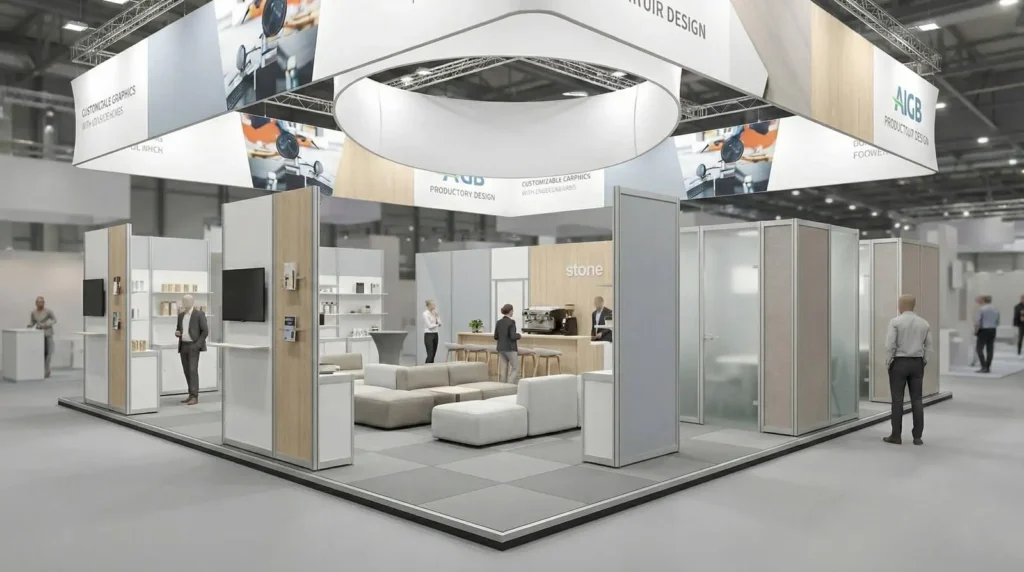
Even at conversation-led events, flow matters. It’s what keeps the stand from becoming awkward or congested.
- One open side: protect the entry and avoid placing barriers in the entry line.
- Two open sides (corner): use the corner to invite approach rather than turning it into dead space.
- Three open sides (peninsula): define lanes so meetings don’t collide with inbound traffic.
- Four open sides (island): keep the journey obvious from any angle; make it clear where conversations start.
If you want footprint and layout logic by size:
CCIB stand types that often make sense
(and when they don't)
Because CCIB can be meeting-led, the right stand type is often the one that creates calm without creating risk.
Modular stands at CCIB
Modular is often a strong choice when you want predictability and speed. Modular can feel premium if message hierarchy and lighting are disciplined, and if meeting areas are designed for usability.
Hybrid stands at CCIB
Hybrid is often ideal: a modular backbone for stability plus one purposeful custom element that creates identity and improves approachability without overbuilding.
Custom stands at CCIB
Custom works well when you need tailored zoning: welcome zone, proof point, and meeting environment with a clear journey.
Bespoke stands at CCIB
Bespoke can be powerful when the architectural idea supports credibility and commercial purpose. The risk is building something impressive that feels unapproachable.
Hire / rental at CCIB
Hire can be a smart choice when time is tight. The key is to avoid generic layouts. Rental must still be designed for approachability and meeting flow.
Double deck at CCIB
Double deck is worth considering only when meeting demand is real and heavy. If meetings are occasional, a disciplined single-level meeting-first layout often converts better.
Sustainable strategy at CCIB
Sustainability often aligns with CCIB success because reuse-first systems and scope discipline tend to create calmer, clearer stands.
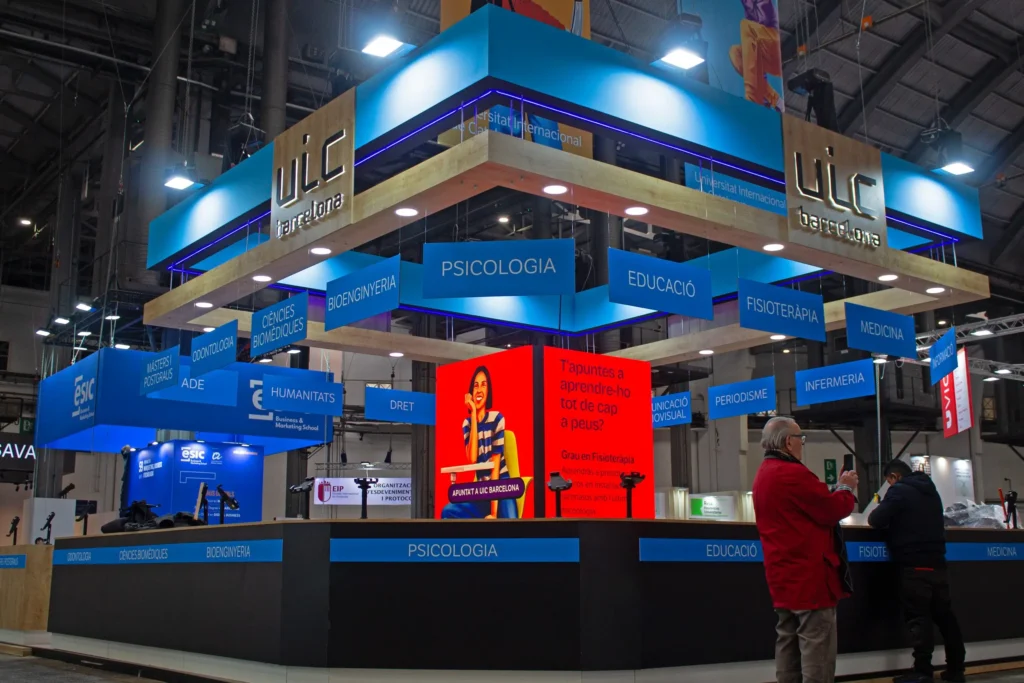
Cost control at CCIB:
meetings increase value, but only if the system is real
Meeting-first stands can justify higher investment because outcomes per conversation can be higher. But costs drift when meeting needs are vague.
To keep CCIB stand cost controlled:
- Define how many meetings you expect per day (even as a range)
- Decide what level of privacy is actually required
- Separate must-haves from optional upgrades
- Lock layout direction early
- Avoid late changes that force rework and reprints
Cost guide: /exhibition-stand-cost-barcelona/
Budget range: /stand-price-calculator-barcelona/
What to send us for a quote that stays stable
To quote a CCIB stand properly, send:
- Event name + dates
- Venue (Gran Via / Montjuïc / CCIB)
- Stand size (m²) and footprint if known (e.g., 10×5)
- Open sides (1 / 2 / 3 / 4)
- Primary objective (leads / demos / meetings)
- Must-haves (AV, storage, meeting space, product display)
- Deadline for design approval
➔ You can also use the brief template
Phone: +34 609 70 92 56
FAQs:
Frequently Asked Questions
Yes. We plan CCIB stands with a meeting-first mindset that stays open, approachable and commercially effective.
Often, depending on the event. CCIB can be more conversation-led, which makes meeting usability and calm zoning especially important.
Making the stand feel closed or guarded. If visitors feel they’re interrupting something, they won’t enter.
By designing privacy as a choice: usable meeting zones positioned intelligently, with clear welcome flow and without building walls that block inbound approach.
Many teams succeed with modular or hybrid for controlled scope. Custom can be strong for tailored zoning. Double deck is only worth it when meeting demand is truly heavy.
Yes, especially on tight timelines, but the layout still needs to be designed for approachability and meeting flow to avoid feeling generic.
With a short, respectful qualification step: clarify fit, then offer a calm conversation zone or scheduled meeting as the natural next step.
Yes. Open sides shape flow and how approachable the stand feels. Clear entry logic prevents awkwardness and congestion.
By designing a clear journey and ensuring qualification happens before meetings, so the meeting zone stays focused and calm.
Define meeting needs clearly, separate must-haves from optional upgrades, plan technical needs early, and lock the layout direction to avoid late changes.
Use /stand-price-calculator-barcelona/ for a realistic range and /exhibition-stand-cost-barcelona/ for cost drivers.
Event, dates, venue, footprint/m², open sides, objective, meeting expectations, must-haves and approval deadline. Send via /contact/ or call +34 609 70 92 56.