Sustainable exhibition stands in Barcelona
without greenwashing:
reuse-first design that still looks premium and converts

Most teams want a sustainable stand for the right reasons.
They don’t want waste. They don’t want last-minute panic printing. They don’t want a beautiful structure that ends up in a skip after four days. They also don’t want to compromise the brand presence they need in a competitive Barcelona hall.
The problem is that sustainability in exhibitions is often explained like marketing, not like operations. It turns into vague claims and material buzzwords, while the real drivers of waste stay untouched: scope drift, late changes, overbuilding, disposable graphics, and decisions made too late to be efficient.
At Stands.Barcelona, we approach sustainability like we approach performance: as a system. A sustainable exhibition stand is not one “eco” material. It’s a set of choices that reduce waste while keeping the stand clear, premium, and commercially effective.
If you’re searching for “sustainable exhibition stands Barcelona,” this page is here to make the topic practical: what actually reduces waste, what helps budgets stay stable, and how to design a stand you can reuse without it looking tired or generic.
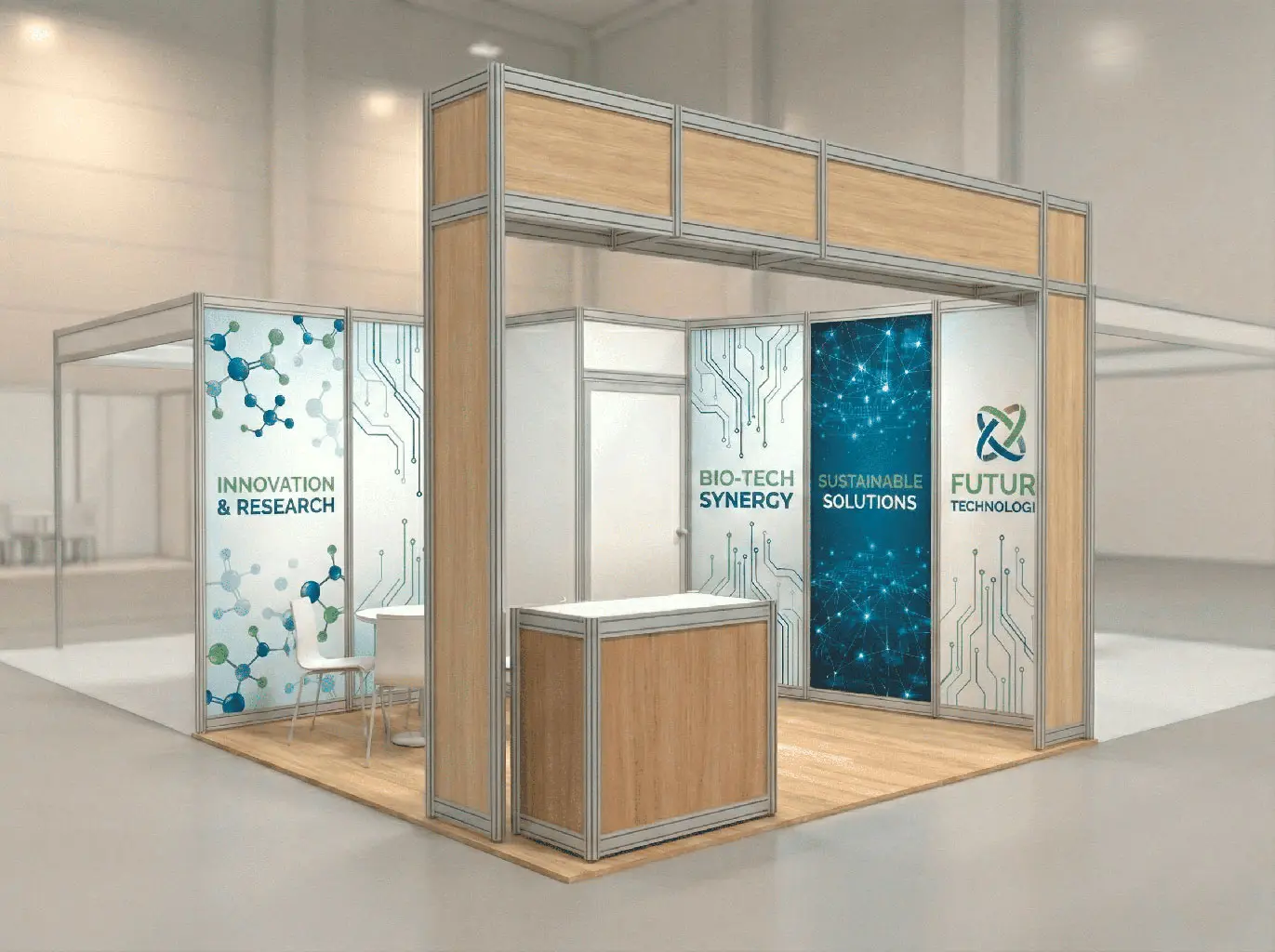
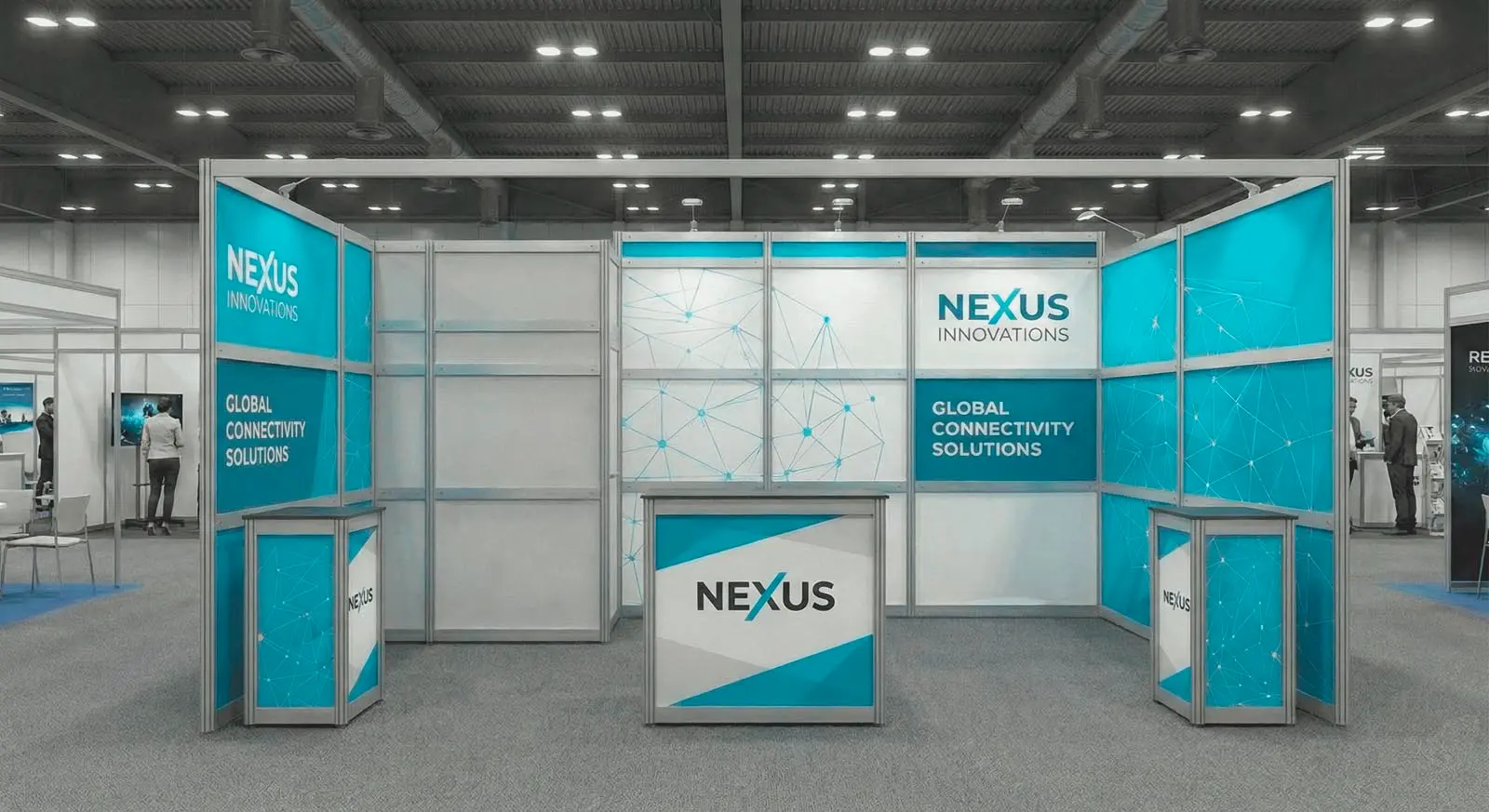

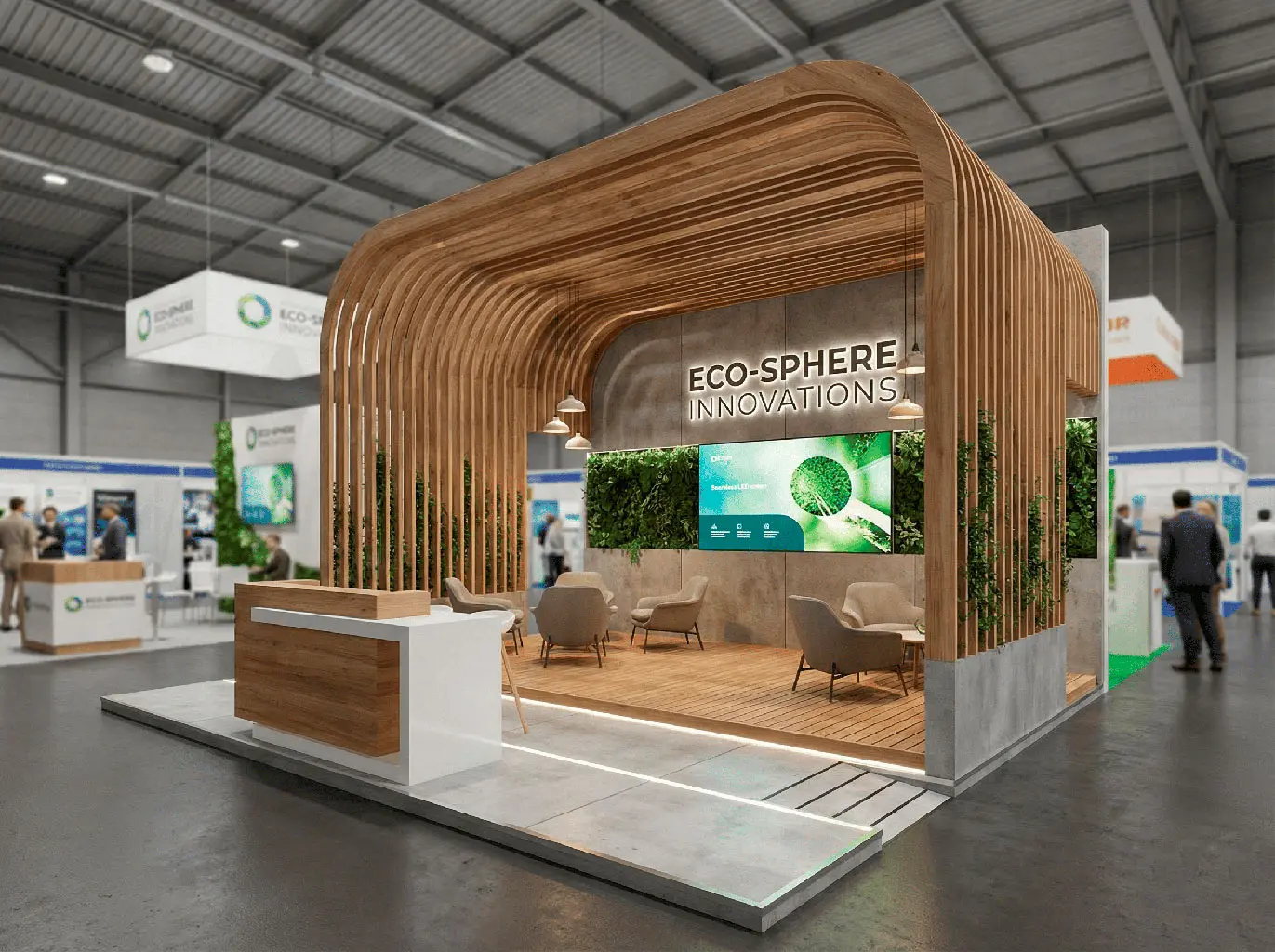
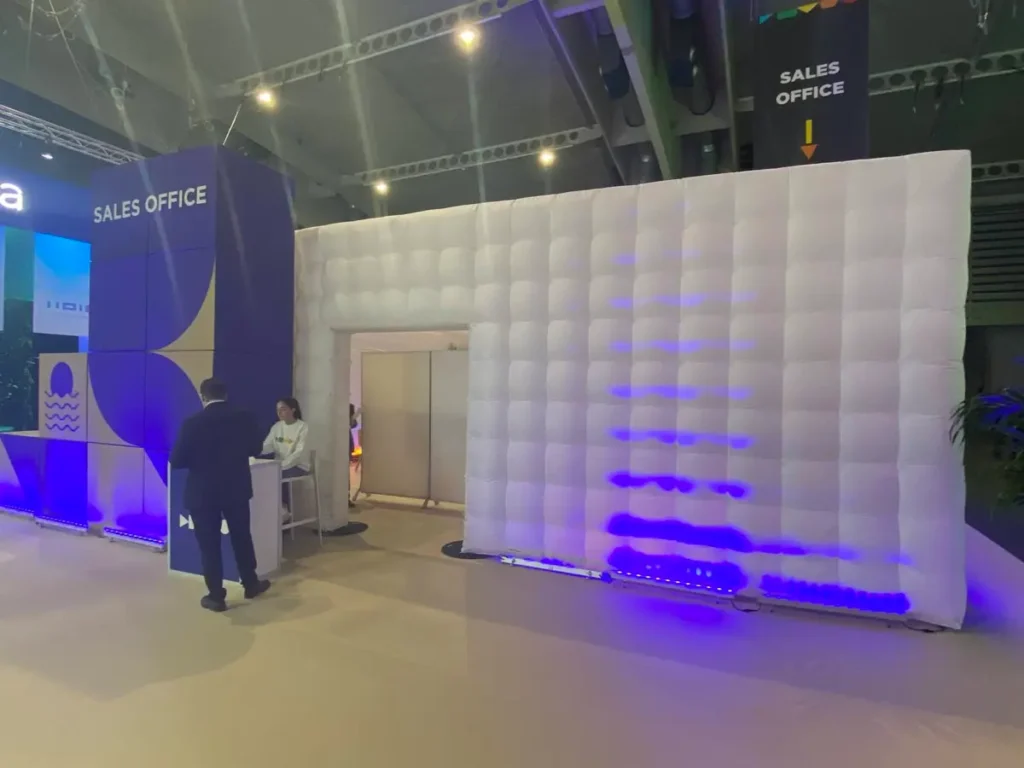
What "sustainable" really means for exhibition stands
(the operational definition)
Sustainability in exhibition stands becomes real when you can answer three questions clearly:
- What will we reuse?
A stand is sustainable when key components are designed to live beyond one event. - What will we reduce?
Waste often comes from overbuilding, disposable elements, and unnecessary complexity. - What will we avoid?
Late changes and emergency fixes create reprints, remakes, and rushed logistics that increase waste fast.
If you can’t answer these questions, sustainability becomes a label rather than a design strategy.
The biggest sustainability lever is not a material.
It's scope discipline.
This is the part most vendors avoid saying because it sounds unglamorous.
The most wasteful stands are not necessarily the biggest stands. They are the stands that keep changing. Every late change creates waste:
- new graphics, reprints, replacements
- remade elements because dimensions shift
- rushed production that increases errors
- emergency logistics and labour
- duplicated purchases “just in case”
If you want a more sustainable exhibition stand in Barcelona, the first step is not shopping for a greener panel. The first step is locking the objective and the scope early enough that you don’t create waste through panic.
That discipline also protects budget. Sustainability and cost control are often the same habit: decide early, reduce rework, keep the system calm.
If you want cost drivers explained plainly:
Reuse-first design: the difference between “recyclable” and “reusable”
Recyclable sounds good, but recycling is still a disposal process.
Reusable is where sustainability becomes meaningful in exhibitions. Reuse-first design asks:
- Which elements can be kept for the next show?
- Which elements can be adapted by size or open sides?
- Which surfaces can be refreshed without rebuilding the structure?
- How do we update messaging without replacing everything?
A reuse-first stand does not look “old.” It looks intentional because it was designed as a system from the start.
This is why modular and hybrid strategies are so useful for sustainability.
Modular and hybrid:
The practical backbone of sustainable stands
If you’re deciding between stand types, use this logic instead of guessing.
Modular exhibition stands
Modular stands are built for repeatability. That repeatability is a sustainability advantage because:
- Core elements can be reused across shows
- Layout can be adapted by footprint
- Production waste is reduced because you’re not rebuilding from scratch
Modular page:
Hybrid exhibition stands
Hybrid combines a modular backbone with selective custom elements. This can be a sustainable sweet spot:
- Modular reuse reduces waste
- A custom signature element can be designed for reuse
- The stand remains distinctive without being disposable
Hybrid page:
Sustainability does not require your stand to look generic. It requires your stand to be designed intelligently.
Sustainable does not mean bland:
premium perception comes from clarity and discipline
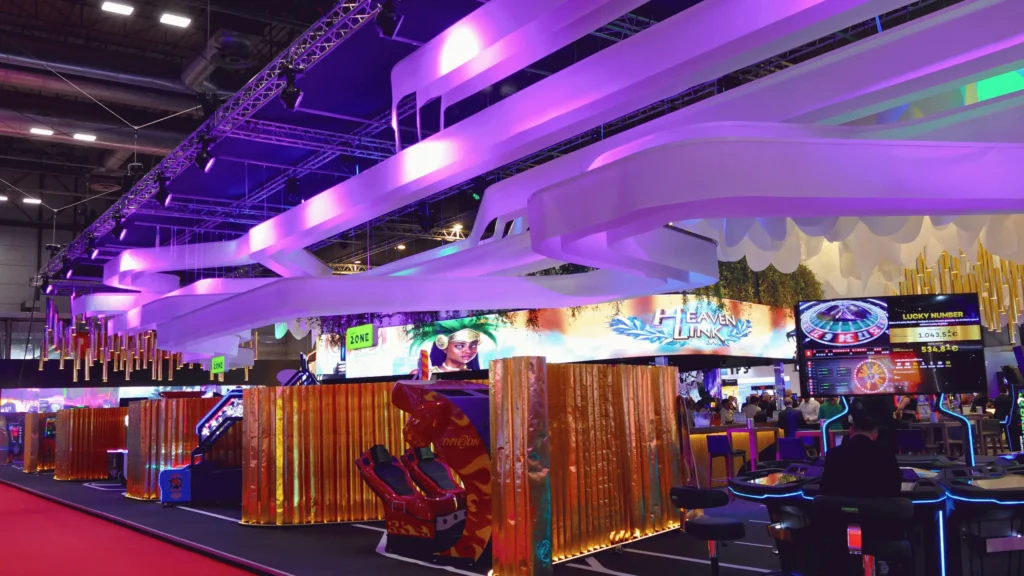
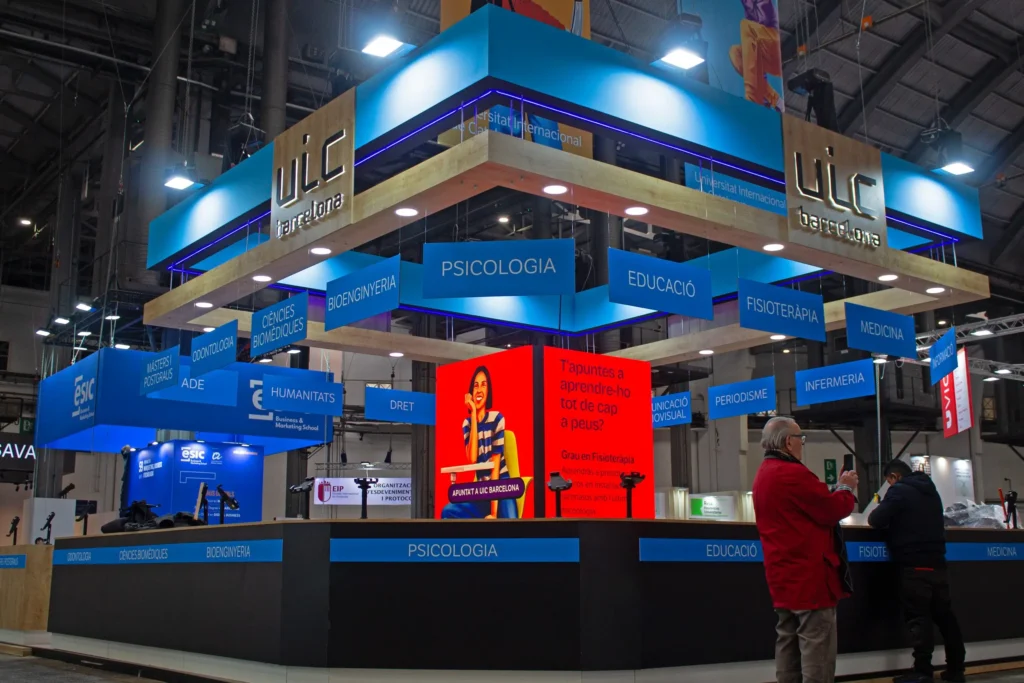
Many brands fear that sustainability will weaken their presence. In practice, the opposite is often true.
Stands that feel premium are usually:
- Clear in message hierarchy
- Calm in composition (not cluttered)
- Disciplined in lighting and contrast
- Intentional in touchpoints (where people look and interact)
- Operationally tidy through the week
Those are the same qualities that reduce waste:
- Fewer unnecessary elements
- Fewer last-minute changes
- Fewer disposable pieces
- Less chaos on the floor
A sustainable stand can look more premium than a wasteful stand because it is calmer and more intentional.
Learn More:
Many brands fear that sustainability will weaken their presence. In practice, the opposite is often true.
Stands that feel premium are usually:
- clear in message hierarchy
- calm in composition (not cluttered)
- disciplined in lighting and contrast
- intentional in touchpoints (where people look and interact)
- operationally tidy through the week
Those are the same qualities that reduce waste:
- fewer unnecessary elements
- fewer last-minute changes
- fewer disposable pieces
- less chaos on the floor
A sustainable stand can look more premium than a wasteful stand because it is calmer and more intentional.
Graphics are one of the biggest hidden waste sources because they get reprinted often.
Sustainable graphics strategy is not only about materials. It’s about structure:
- design a message hierarchy that can be updated without reprinting every surface
- separate evergreen brand messaging from event-specific messaging
- avoid text-heavy walls that invite last-minute copy changes
- build the stand so key graphic areas can be swapped without rebuilding structure
The goal is to update what needs updating without treating the whole stand as disposable.
Sustainability is not just what you build. It’s how you run it.
A stand that becomes messy creates waste:
- emergency printing
- rushed replacements
- last-minute purchases
- extra packaging and transport
Operational sustainability is supported by design choices:
- hidden storage to prevent clutter
- staff routes that keep the stand resettable
- surfaces that don’t become dumping areas
- demo and meeting zones that don’t fight the flow
If your team can run the stand calmly, you create less waste and you also convert better. Operational calm is an underrated sustainability lever.
Stand size and sustainability:
the footprint is not the problem, the plan is
Sustainability is possible at any size, but the strategy changes.
Available sizes include:
3×3, 3×4, 3×5, 3×6, 3×7, 3×8, 3×9, 3×10, 5×5, 8×5, 10×5, 10×10, 15×10, 20×10.
Practical truths:
- Small stands become more sustainable when they’re disciplined and reusable, not rebuilt every time.
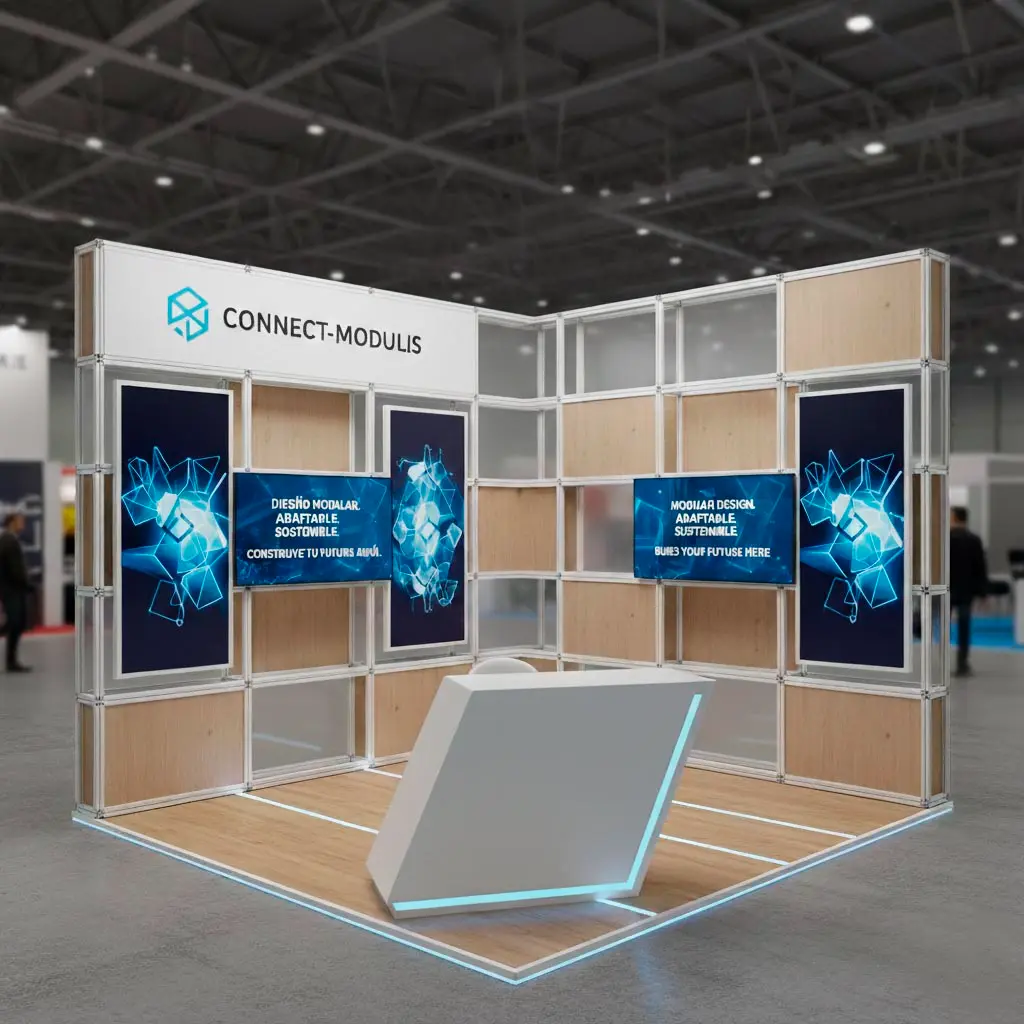
- Mid-size stands are ideal for modular/hybrid reuse systems.
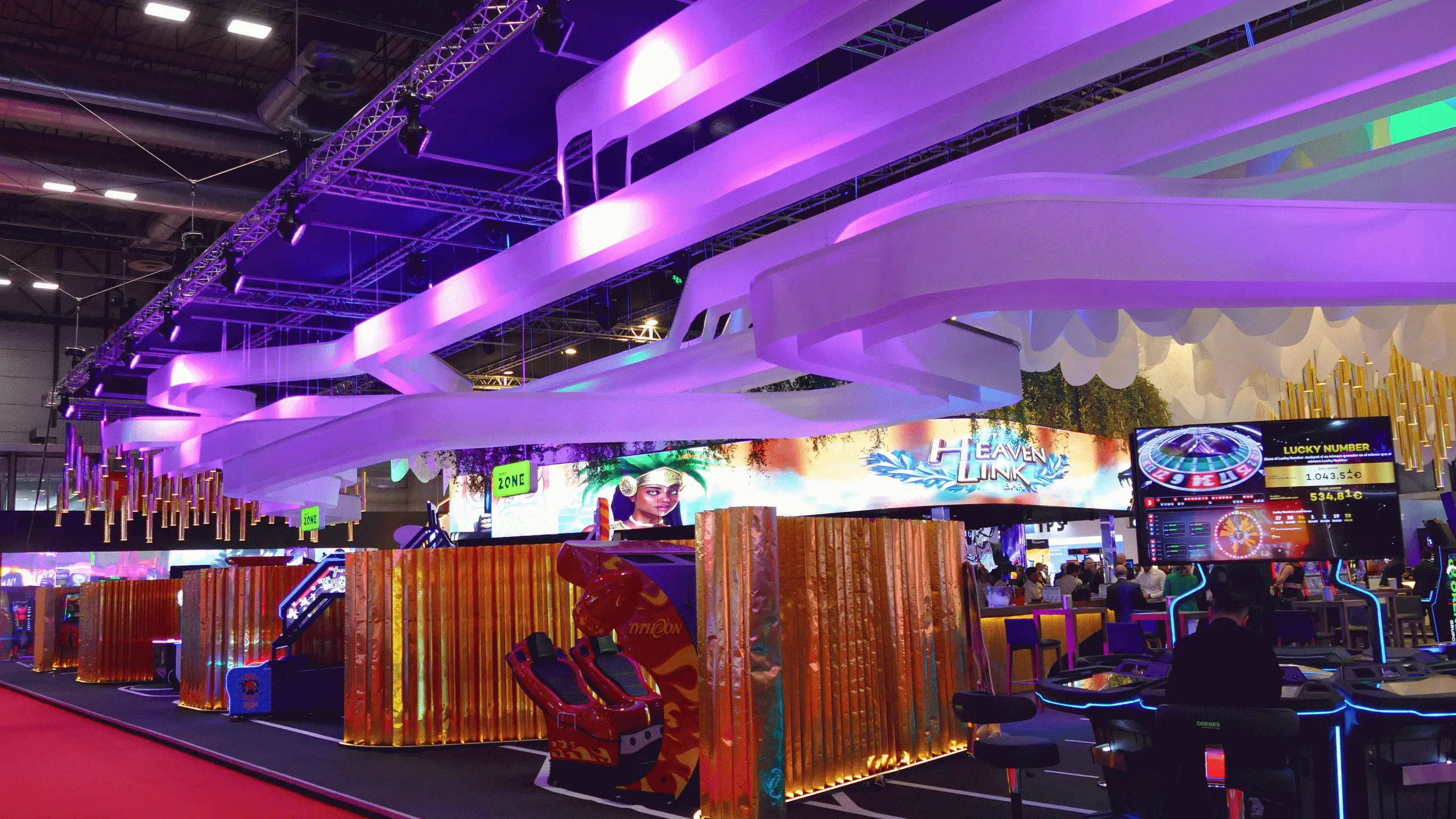
- Large stands become sustainable when signature elements are designed for reuse and layout changes are limited.
A bigger footprint is not inherently less sustainable. A chaotic process is.
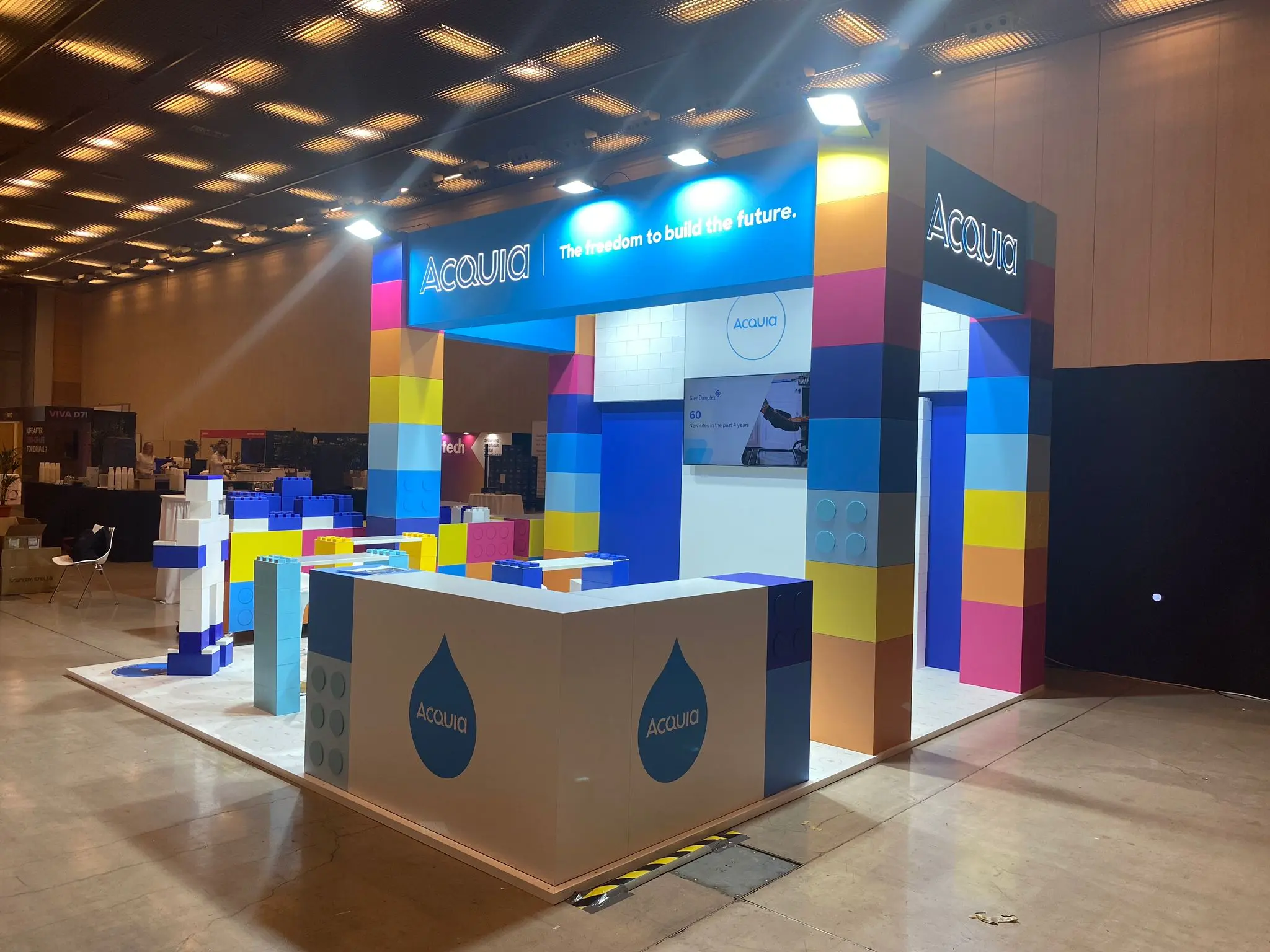
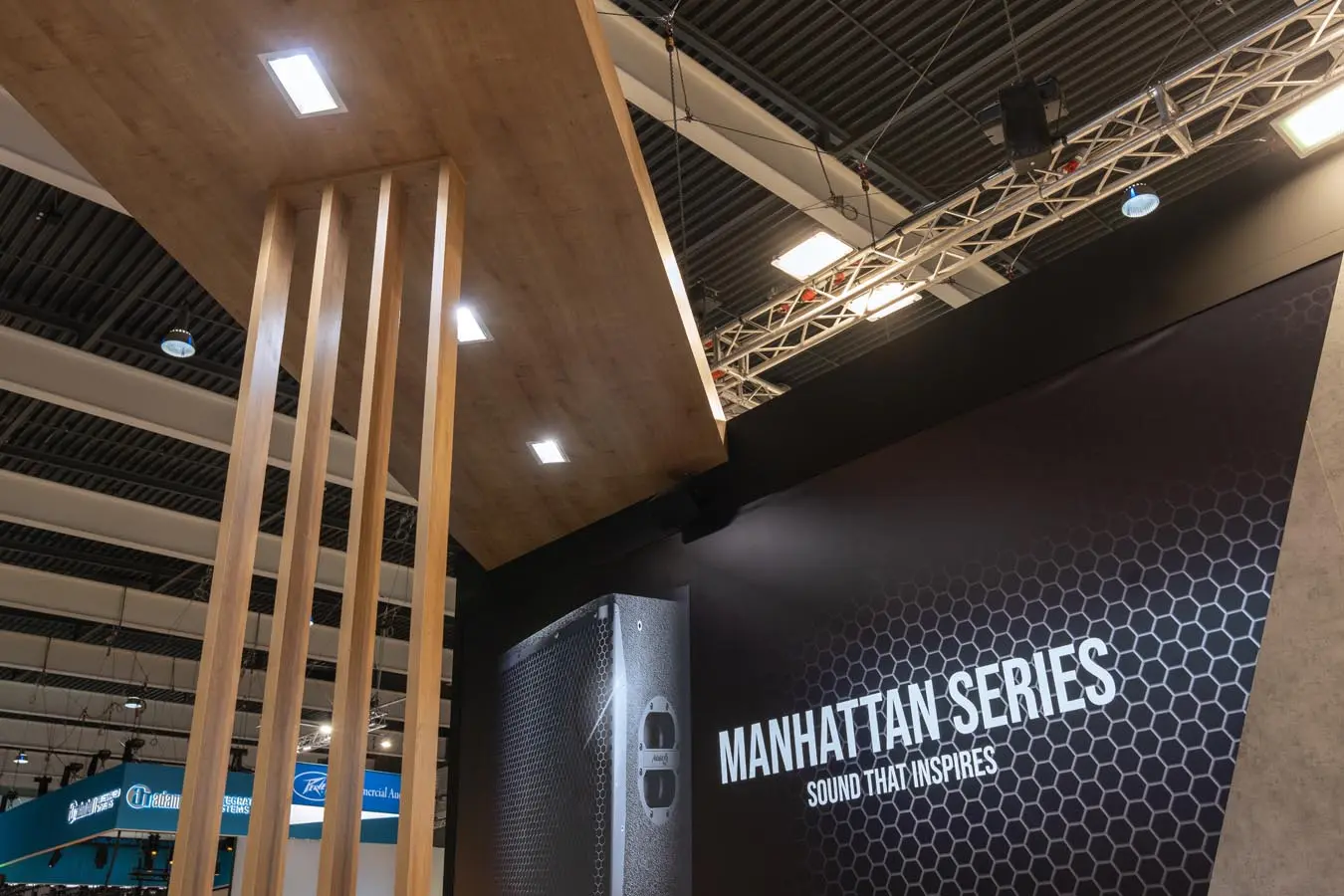
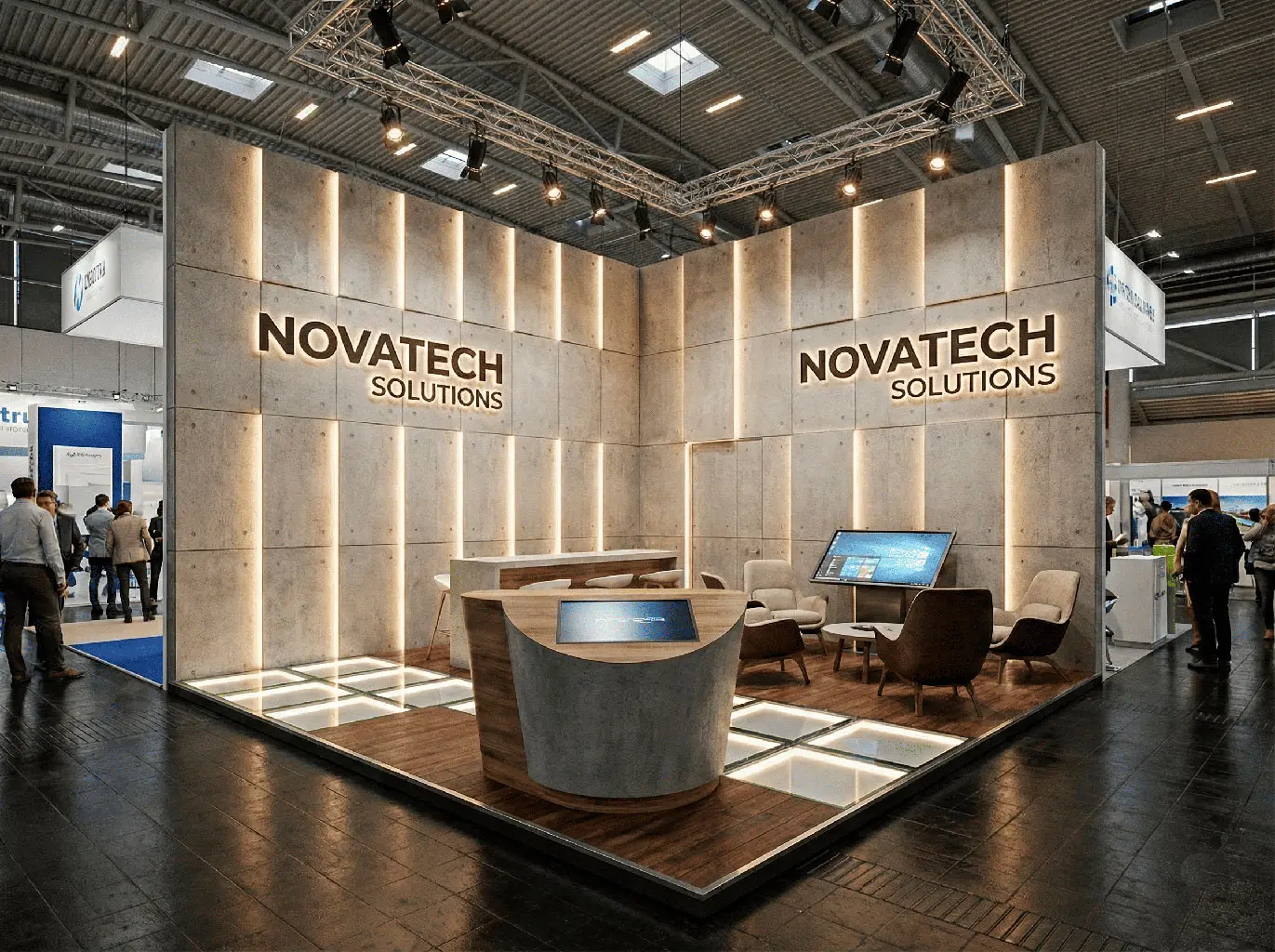
Sustainable stand types:
choosing the right strategy
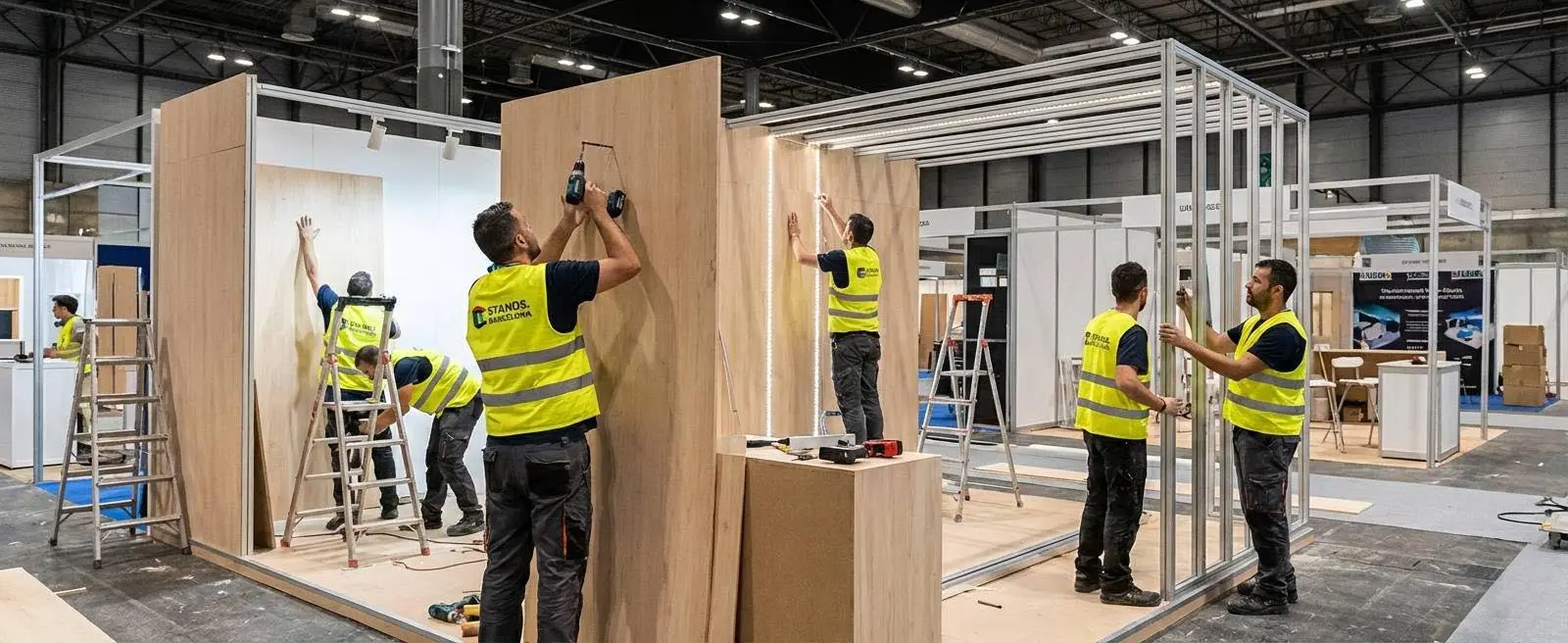
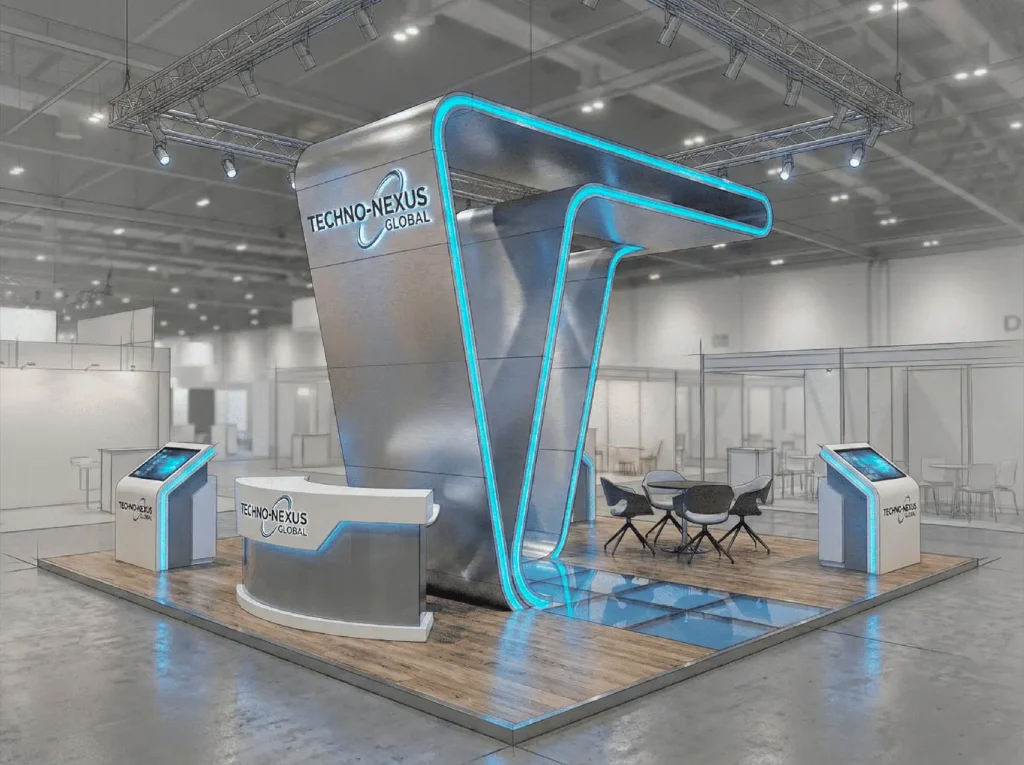
Sustainability often aligns naturally with certain stand types.
- Modular: highest natural reuse potential
- Hybrid: strong reuse + distinctive presence
- Custom: can be sustainable if designed for reuse and scope is controlled
- Bespoke: can be sustainable if anchor elements are designed for reuse and complexity is purposeful
- Hire/rental: can reduce production waste for one-off events, but the sustainability outcome depends on logistics and graphics strategy
Pages:
- /custom-exhibition-stands-barcelona/
- /bespoke-exhibition-stands-barcelona/
- /exhibition-stands-hire-barcelona/
Sustainable is not a label. It is the strategy that produces the least waste for the outcome you need.
The sustainable brief:
what to tell us so sustainability becomes real
If you want sustainability without vague promises, define what “sustainable” means for you. Different brands mean different things.
Useful sustainability requirements include:
- reuse across multiple events (how many?)
- limits on disposable graphics
- preference for modular/hybrid backbone
- reduced production complexity
- controlled scope and earlier approvals
- a plan for refreshing messaging without rebuilding the stand
When we know your priorities, we can design the system around them.
How to keep a sustainable project calm
(and why calm is sustainable)
The fastest way to create waste is to make decisions late.
A sustainable project is usually the project that:
- chooses a primary objective early (leads, demos, meetings)
- locks the layout direction early
- separates must-haves from optional upgrades
- confirms technical needs early (power, AV, lighting)
- avoids last-minute “improvements” that create reprints and remakes
This is not only greener. It’s a better way to deliver. It protects budget and protects quality.
Cost Guide
If you want a cost explanation written plainly
Directional estimate
If you want a fast directional range before requesting quotes
What we need to quote a sustainable exhibition stand in Barcelona
To get a quote that is meaningful and comparable, send:
- event name + dates
- venue (Gran Via / Montjuïc / CCIB)
- stand size (m²) and footprint if known (e.g., 10×5)
- open sides (1 / 2 / 3 / 4)
- primary objective (leads / demos / meetings)
- must-haves (AV, storage, meeting space, product display)
- deadline for design approval
You can also use the brief template:
Phone: +34 609 70 92 56
FAQs:
Frequently Asked Questions
Reuse-first design, scope discipline, reduced last-minute waste, and a plan to update messaging without rebuilding the stand.
Materials matter, but the biggest waste driver is often late changes and disposable elements. Sustainability improves when scope is controlled and reuse is planned.
Modular is often the strongest reuse foundation. Hybrid can also be highly sustainable when custom elements are designed for reuse.
Yes, if the project is designed for reuse and complexity is purposeful. Sustainability depends on planning discipline, not just stand type.
Not necessarily. Reuse and reduced rework can stabilise cost. Late changes are often what increases cost and waste.
Late scope changes that force reprints, remakes and rushed production decisions.
Separate evergreen brand messaging from event-specific messaging and design the stand so key graphics can be swapped without rebuilding structure.
Yes. Discovering constraints late can cause emergency fixes and waste. Venue-aware planning reduces last-minute changes.
It can reduce production waste for one-off events, but the sustainability outcome depends on graphics strategy and logistics planning.
Specify reuse goals, limits on disposable graphics, preferred stand type (modular/hybrid), and any constraints that matter to your team.
Yes. Premium perception is driven by clarity, lighting discipline, composition and operational calm, which often align naturally with sustainability.
Use a modular or hybrid backbone, keep scope disciplined, and avoid late changes that force reprints and remakes.
Design storage and staff workflow so clutter stays out of sight and reset is easy. Operational calm reduces waste and improves conversion.
Use /stand-price-calculator-barcelona/ for a directional range, then review cost drivers at /exhibition-stand-cost-barcelona/.
Send your event, venue, size, open sides, objective and sustainability priorities via /contact/ or call +34 609 70 92 56.