

The first morning is excitement: teams arrive early, graphics look fresh, the product is clean, and every conversation feels full of possibility. The second day is when reality appears. Foot traffic increases, the aisles get louder, meetings overlap, demos start running behind schedule, and the stand either holds its shape or it starts to drift. That drift is rarely dramatic. It’s subtle. A counter becomes a storage point. A meeting table becomes a dumping area. A demo gathers a crowd and blocks the entrance. A simple question from a prospect takes too long to answer because the stand doesn’t tell the story fast enough.
The best stands in Barcelona don’t just look good on day one. They stay operable. They stay clear. They keep the team confident, not reactive.
And they convert because the space is designed for what actually happens.
Stands.Barcelona exists for that reality.
We help international exhibitors plan and execute exhibition stands in Barcelona with a design-first mindset that protects conversion. Not design as decoration. Design as an operating system: attention, movement, proof, meetings, lead capture, staff workflow, and the small details that keep the stand clean and professional after hours of traffic.
If your goal is to show up and look present, you can do that with almost any structure. If your goal is to make your space work like a commercial machine—clear, repeatable, calm and persuasive—then the stand must be designed with discipline.
Barcelona is not an average trade show city. It is high competition, high stimulus, international, and fast. Most visitors do not arrive with time to spare. They are moving between meetings, sessions, demos and commitments. Your stand has seconds to earn a stop.
That is why the best exhibition stand design in Barcelona is not about adding more. It is about choosing better.
If the stand can’t answer those questions at walking speed, the team is forced to do it verbally over and over again, and the conversations become longer, slower and less consistent. If the stand can answer them visually and spatially, the team can focus on what humans do best: listening, qualifying and closing.
A lot of trade show content online is built for images: a dramatic structure, a big wall, a hero screen, a sleek counter. It looks good in a gallery. But it doesn’t always behave well in a real hall.
New-school stand design is behaviour-first. That means we think in sequences:
When a stand is built on those sequences, the design feels calm. The team operates it naturally. And conversion rises because the space supports the objective.
Many exhibitors want everything: leads, demos, meetings, brand impact, partner hosting, recruitment, content creation. The stand can support multiple actions, but it must be anchored by one primary outcome.
If the primary outcome is unclear, the space becomes a compromise. Compromises produce stand behaviours you did not choose: visitors hover outside because the entrance feels blocked, meetings don’t happen because the meeting area is too exposed, demos fail because power and crowding weren’t planned, and lead capture becomes inconsistent because it wasn’t designed as a step in the journey.
Lead-first doesn’t mean aggressive. It means efficient and respectful.
Demo-first is about proof you can see and understand.
Meeting-first is about conversation quality.
Barcelona isn’t a single “venue reality.” Each venue has different hall dynamics and different behaviours that show up in stand performance.
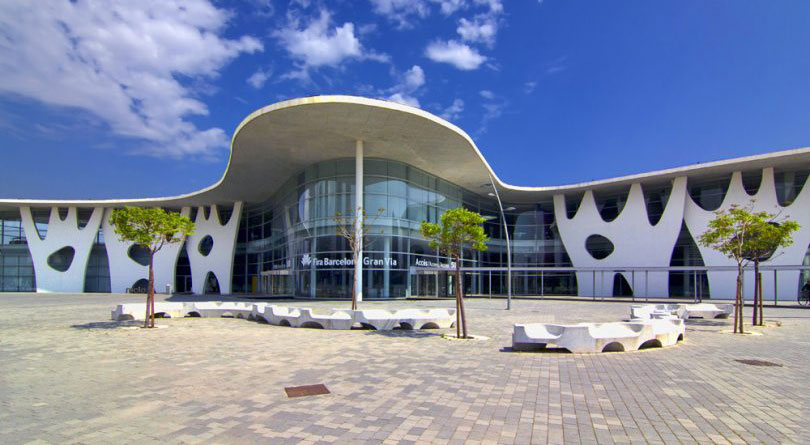
Gran Via is scale, intensity and competition. You are surrounded by strong brands. Visibility matters. The stand must communicate quickly from distance. Demo expectations are high. If your stand is not clear from the aisle, visitors will keep moving.
Gran Via also punishes weak operations. The stand must have a clean system for storage, staff movement and reset. A stand that looks premium in the morning and messy in the afternoon loses trust.
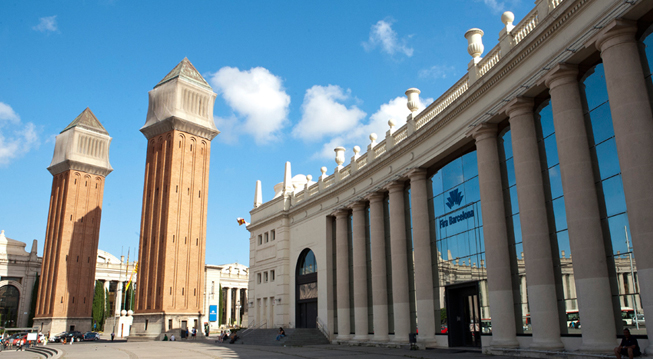
Montjuïc can feel more varied. Depending on the event and hall, flow and access decisions matter more than people expect. The best Montjuïc stands are disciplined, not complicated. They focus on clarity, usability and calm delivery.
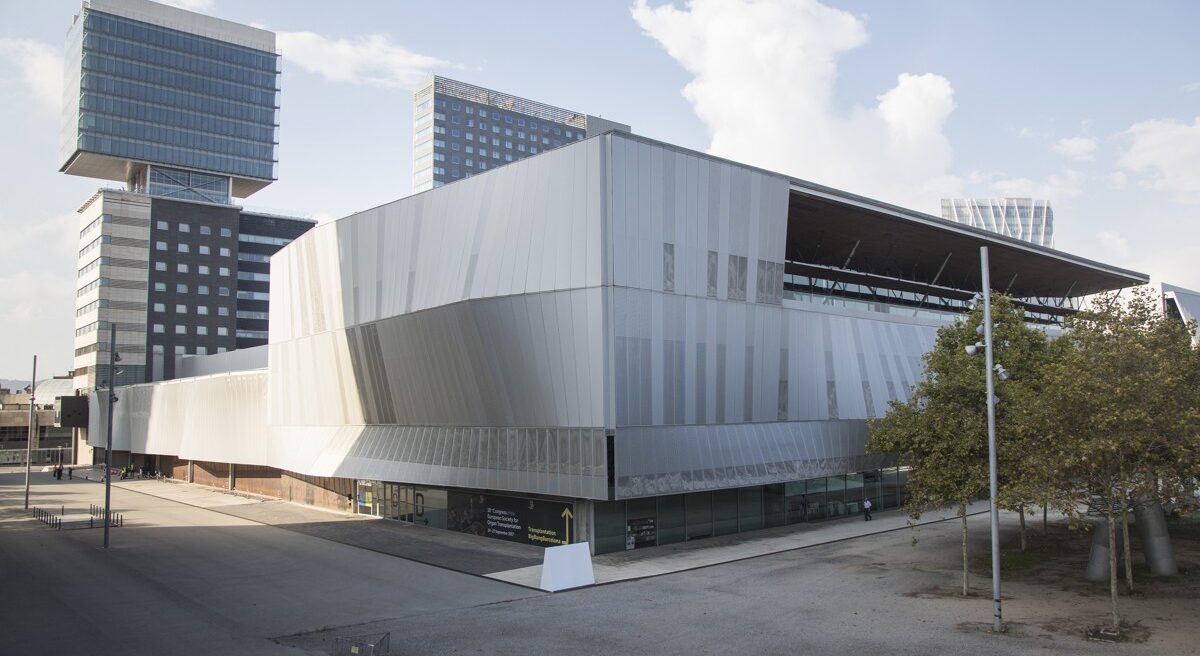
CCIB often rewards meeting-led performance. The tone can be more professional, more scheduled, more conversation-focused. Calm, confidence and usability tend to outperform noise. If you’re meeting-first, CCIB can be an advantage if your layout supports it.
Footprint decisions are not just budget decisions. They are workflow decisions. The same team in the wrong footprint can underperform. The same team in a disciplined footprint can outperform bigger brands.
Included sizes: 3×3, 3×4, 3×5, 3×6, 3×7, 3×8, 3×9, 3×10, 5×5, 8×5, 10×5, 10×10, 15×10, 20×10.
Each size page is built as a practical decision guide:
If you’re unsure which size fits your objective, we can recommend a range based on expected traffic and how many conversations you want to run at once.
A lot of exhibitor stress comes from choosing a stand type that doesn’t fit the real project constraints. A stand type is not a style choice. It’s a risk and delivery strategy.
Custom is for brands that need differentiation and a layout tailored to their objective. The key is discipline: custom should be selective, not complicated.
Modular is for reliability, speed and repeatability. It can still look premium when message hierarchy and lighting discipline are done well.
Hybrid is the modern default for many smart exhibitors: a modular backbone for stability plus one custom signature element that creates impact and improves conversion.
Bespoke is flagship, perception-led, architecture with a commercial role. Done well, it changes who approaches and how they behave.
Hire can be a strong strategy for speed and controlled scope, as long as the layout and branding are designed for conversion rather than treated like a generic box.
Double deck is for serious meeting capacity. It only works when meeting demand is real and the ground floor remains open and inviting.
Sustainability improves when scope is disciplined, reuse is planned, and late changes are reduced. It’s an operating system, not a marketing claim.
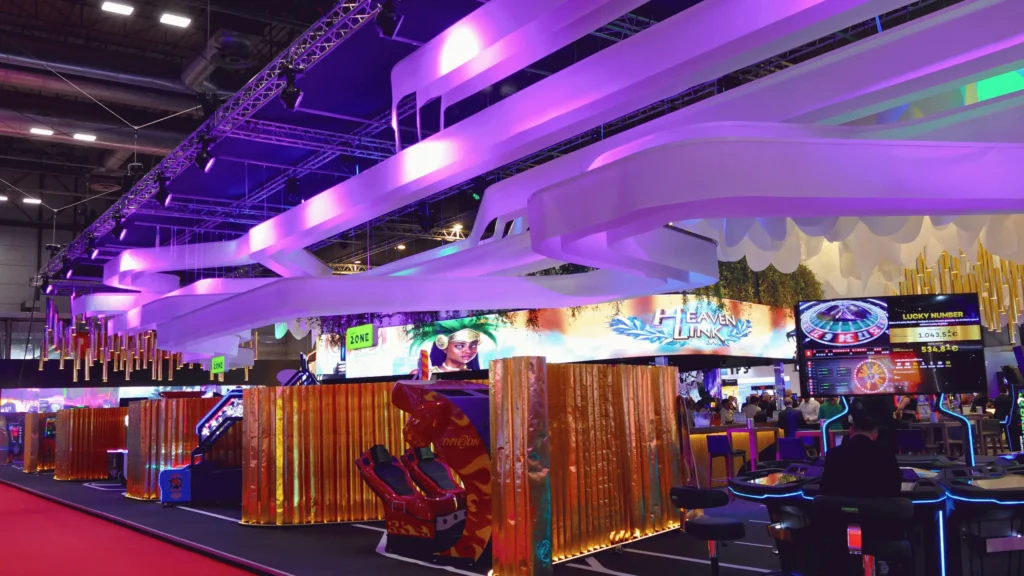
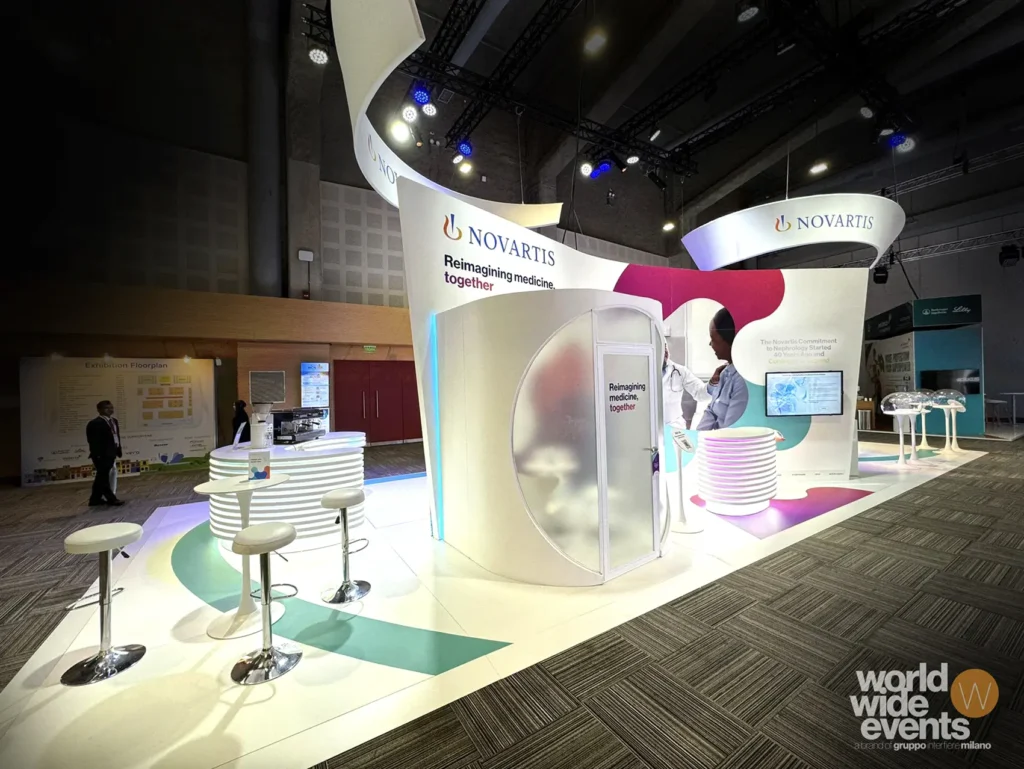
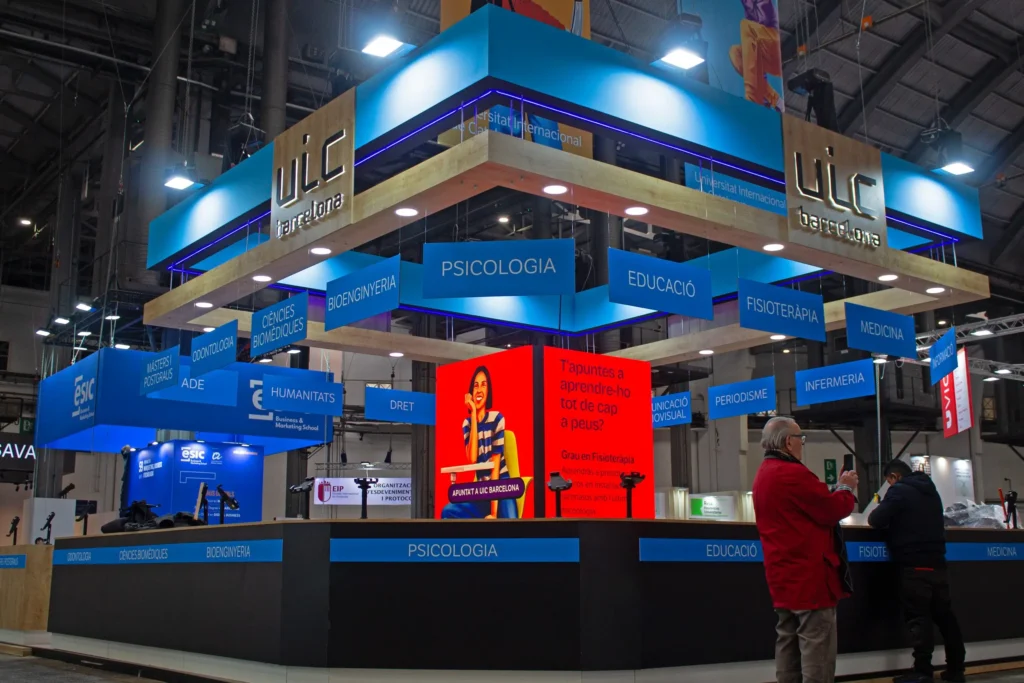
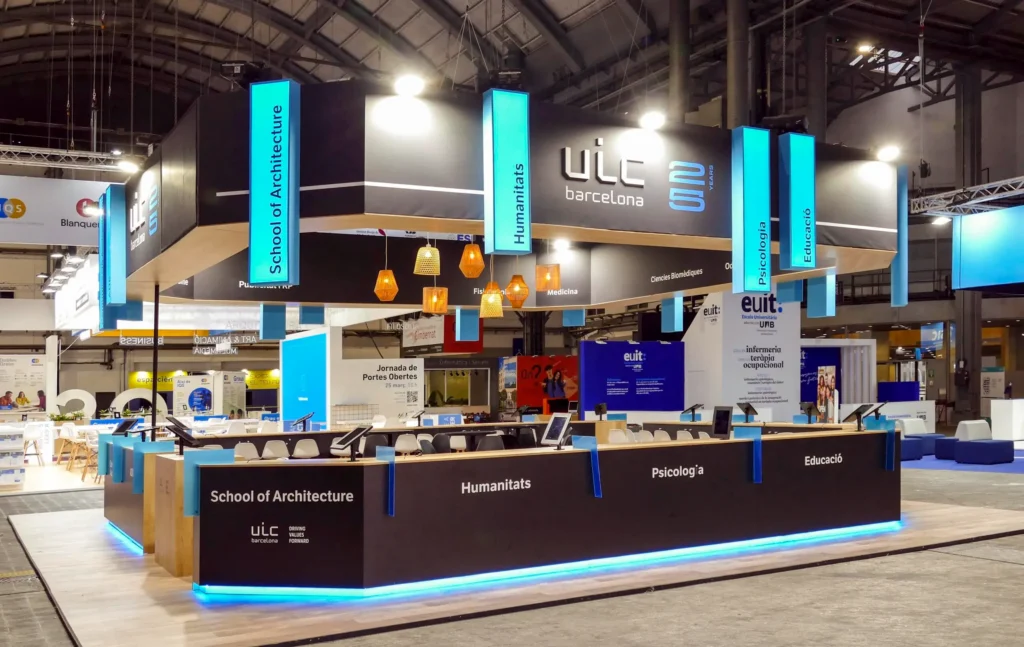
A stand that works at one event can underperform at another because visitor intent changes.








If you want a quote that reflects reality, send:
The calculator is not a final quote. It’s a way to reduce uncertainty early so you can request quotes that are actually comparable.
A detailed guide of the costs involved in the production of different Stands.
We focus on exhibition stand design in Barcelona with a delivery mindset: layout strategy, clarity, planning around venue realities, and a structured path to a concept and quote.
Yes. Stands.Barcelona is a local business at Calle de la Paloma 7, Barcelona, with a direct phone line at +34 609 70 92 56.
Send your event, venue, size/m², open sides, objective and deadline via /contact/ or call +34 609 70 92 56.
Yes. We can work from your goals and recommend a footprint range and layout strategy, then confirm once the organiser plan is final.
Design defines how the space communicates and works. Build is execution. In Barcelona, design must include operational reality: flow, proof, capture and usability.
Yes. Gran Via requires fast message clarity, strong sightlines, and disciplined flow and operations.
Yes. Each venue has different behaviour patterns and constraints, and the layout should adapt.
Choose based on objective, timeline, repeatability needs and risk tolerance. Hybrid is often the practical middle when you want impact and controlled scope.
A clear message at walking speed, a visible proof moment, and a frictionless next step placed where conversations actually end.
Poor visibility, no queue plan, and technical instability (power/AV) discovered too late.
Meeting areas that are decorative, exposed, or placed in a way that kills inbound interest. Usability and flow matter more than “privacy walls.”
Storage planning, staff routes, disciplined surfaces, and a layout that keeps clutter out of sight.
Yes. We align terminology (stand vs booth) so briefs and expectations stay clear.
Yes. Sustainable outcomes come from reuse planning, scope discipline, and reducing late-change waste.
Don’t add complexity. Lock objective, lock footprint, choose the simplest high-performing layout, and send your constraints via /contact/ or call +34 609 70 92 56.
hi@stands.barcelona
(+34) 609 709 256