20x10 exhibition stand Barcelona:
build a flagship presence that stays
readable, operable and worth the investment
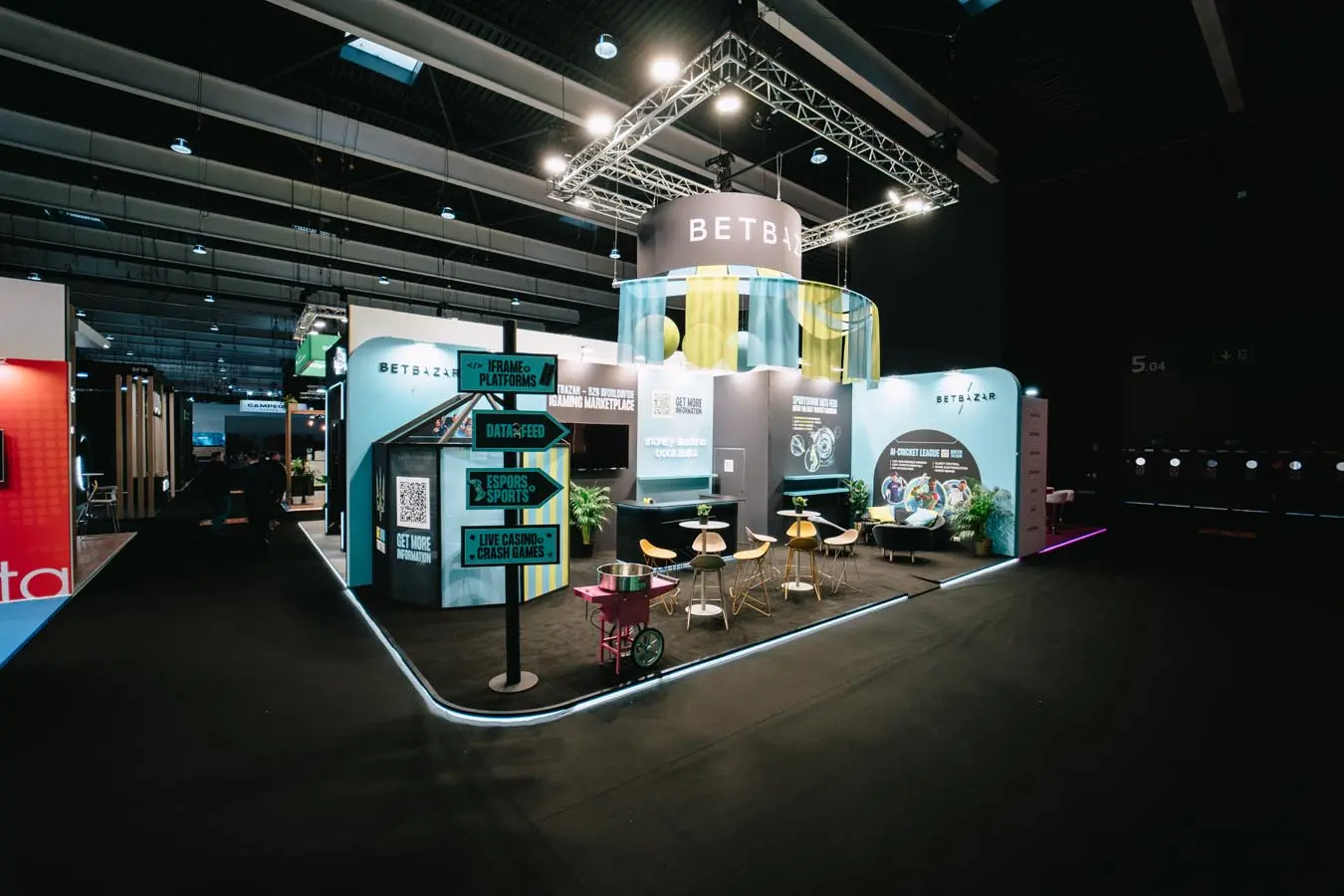
A 20×10 is a flagship footprint.
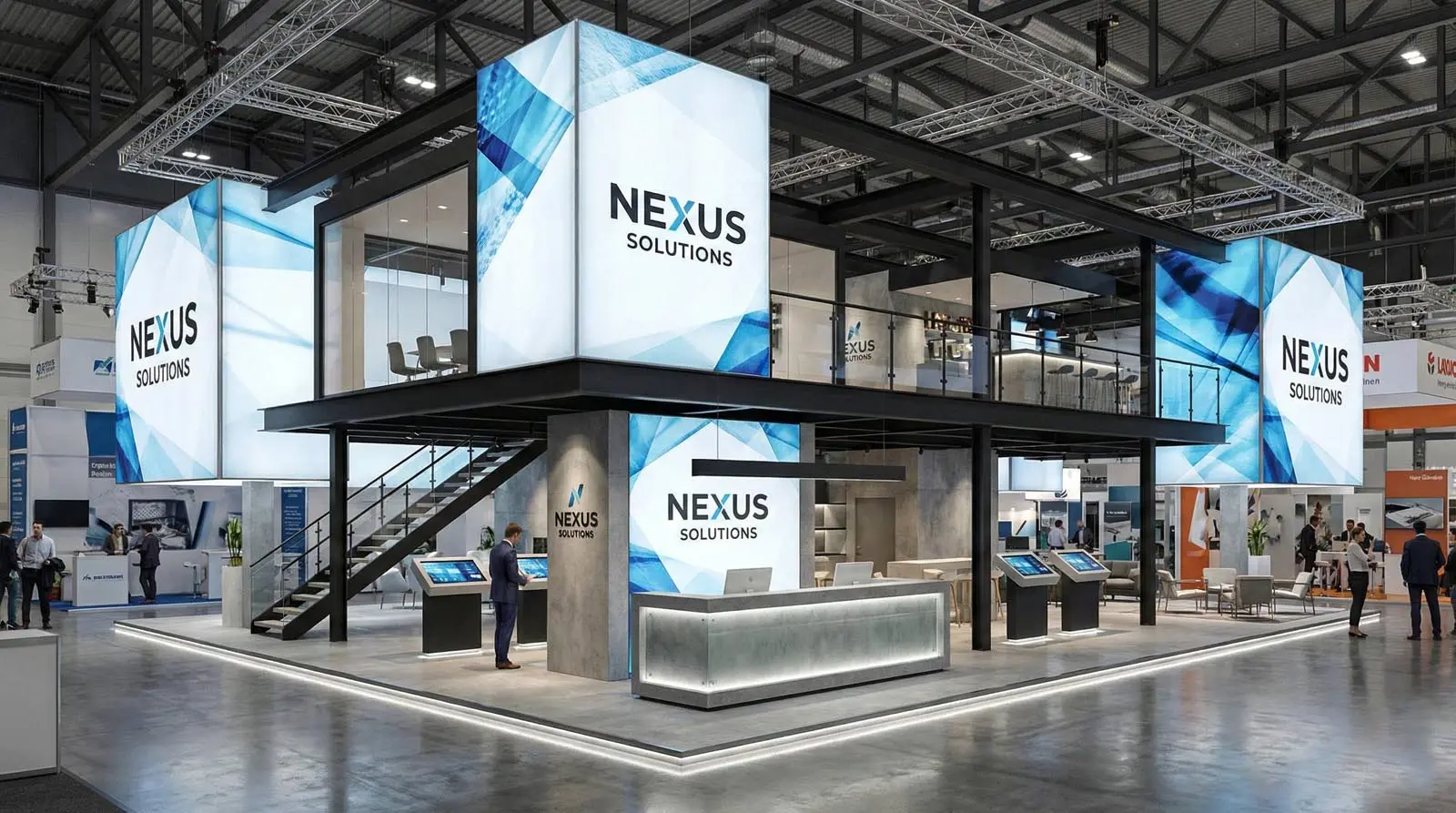
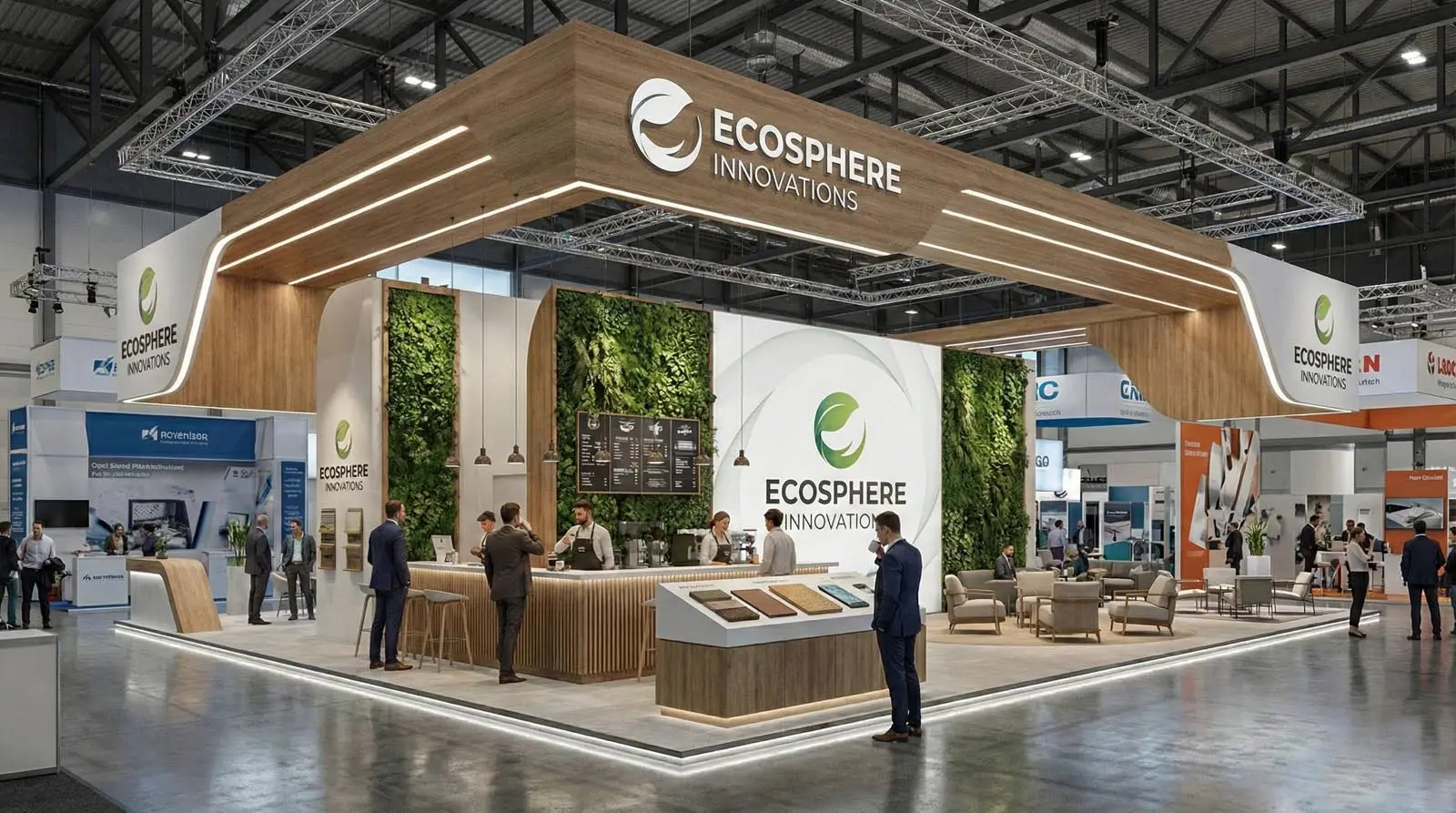
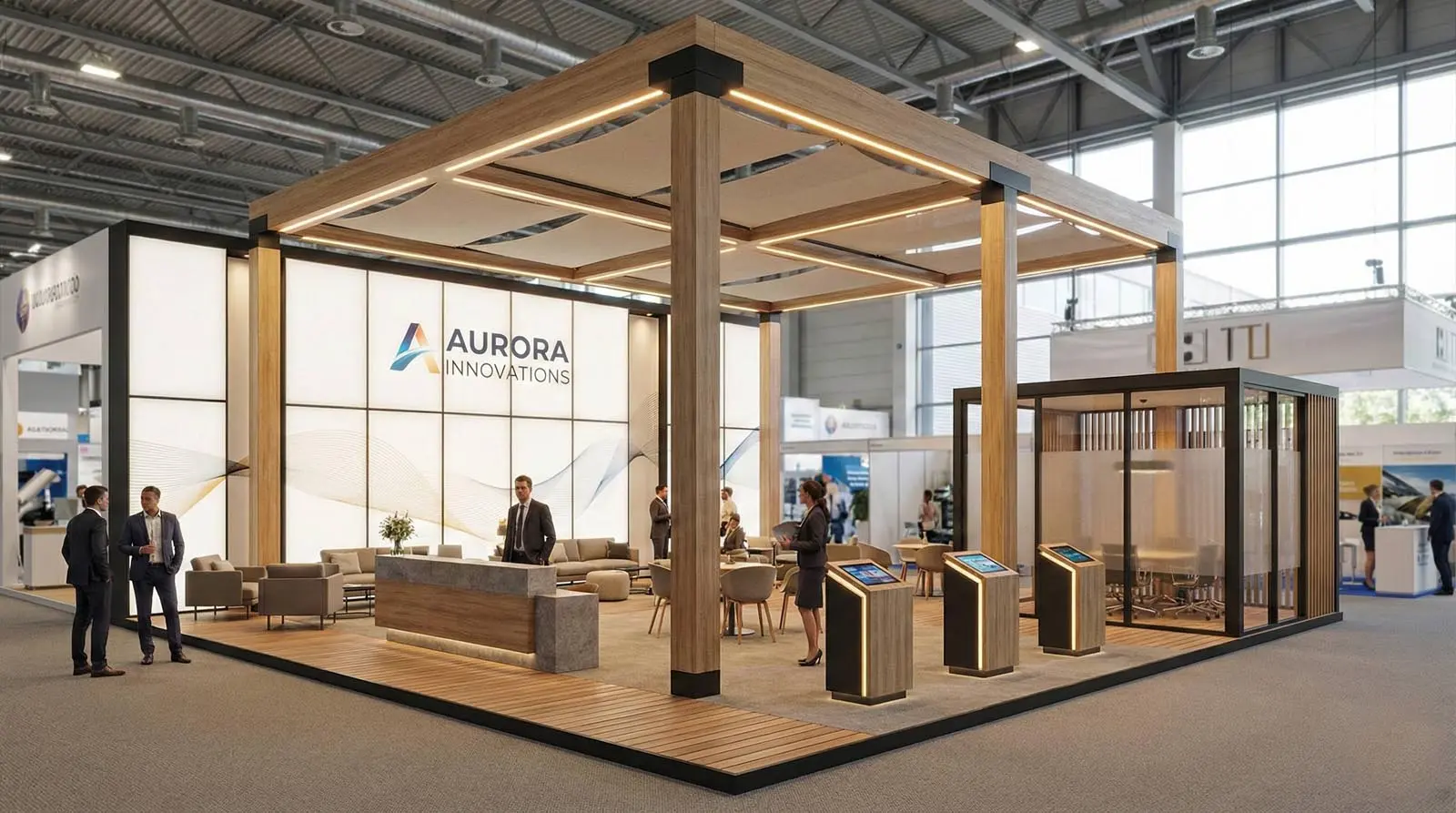
At 200m², you’re not building a stand-you’re building a temporary commercial environment. That can create huge upside: strong presence, multiple demos, serious meeting capacity, partner hosting, and a clear brand statement.
But it can also create waste if the stand becomes a maze, a collection of features, or a design that looks impressive but behaves poorly. At this scale, performance is not about adding more.
It’s about organising attention and protecting operability.

Start with design foundation:
What 20×10 is best for
- major brands competing for category leadership
- multiple demos and proof zones
- structured meeting and hosting programs
- events where your stand is a destination, not a stop
The flagship rule:
one story, many paths
Big stands fail when they try to tell five stories at once.
Big stands win when:
- there is one clear “why you” story
- visitors can enter from multiple points without confusion
- zones are distinct but connected
- staff can guide people naturally into the right next step
Zoning models that work at 20×10
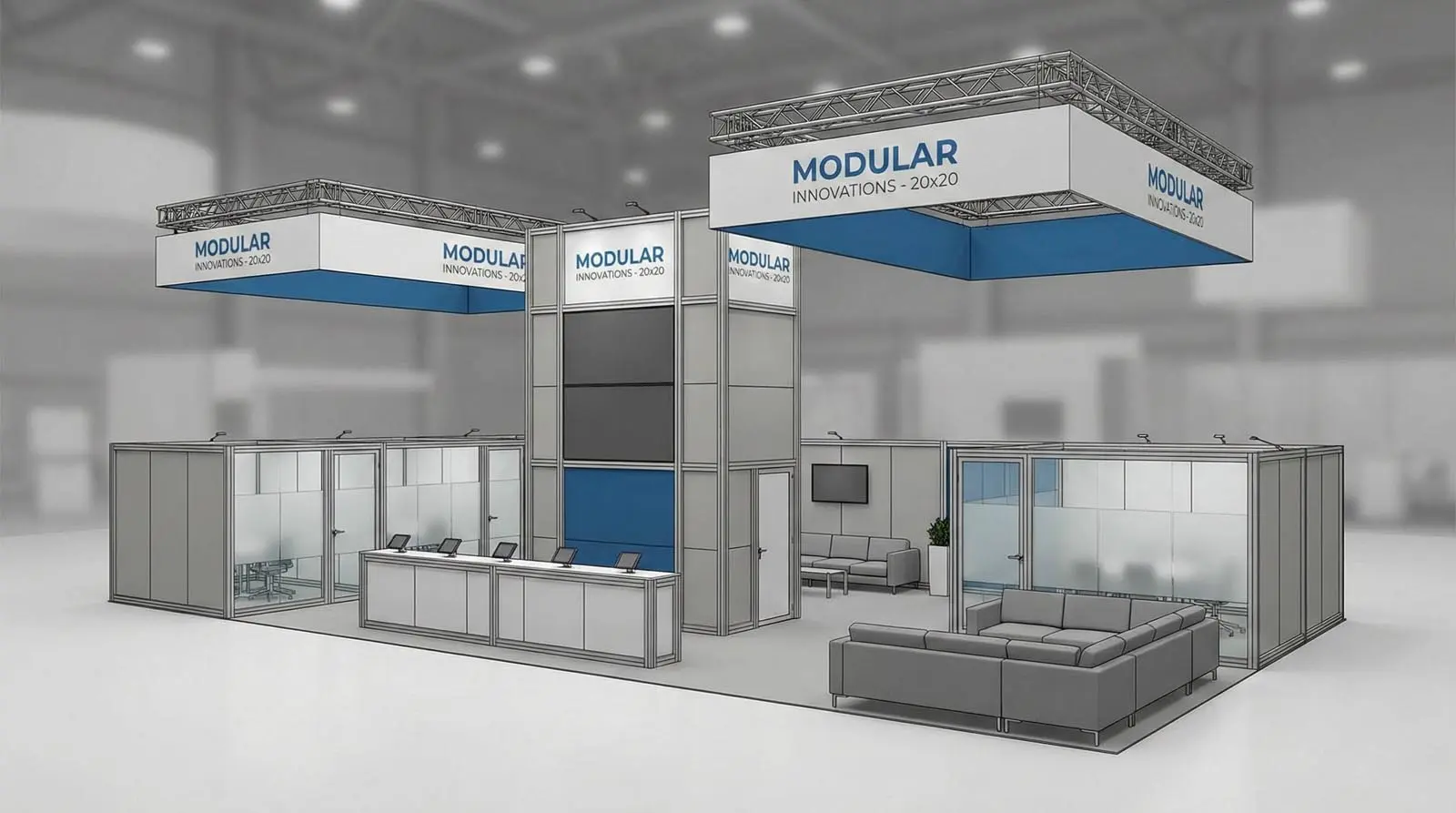
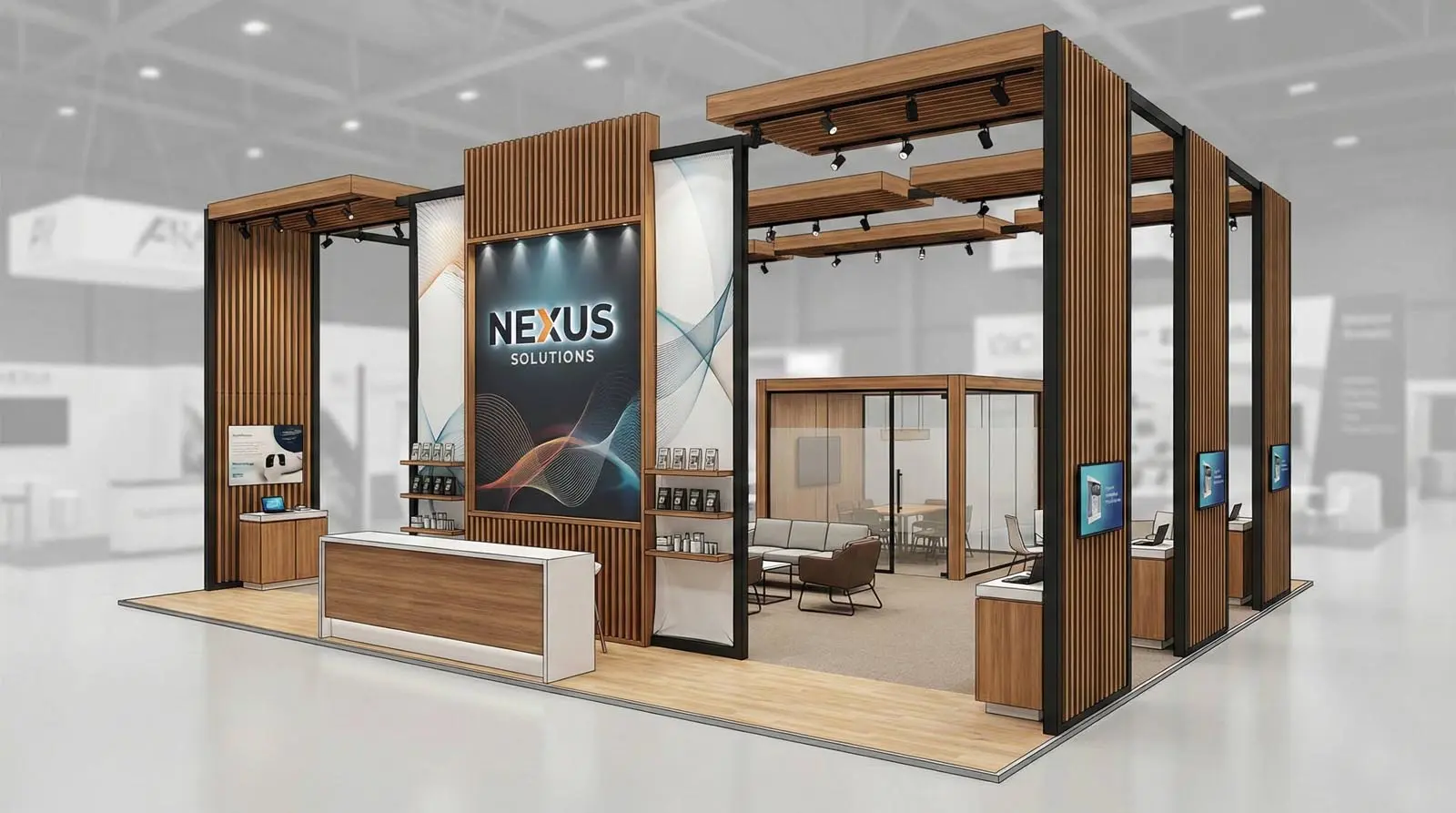
Model A: Central proof hub + surrounding zones
Proof hub acts like gravity; zones support demos, consult and meetings.
Model B: District layout
Each zone is a “district” with a clear purpose (demo, consult, meeting, partner), linked by lanes that keep flow calm.
Model C: Presentation + meeting suite
Works when you have scheduled presentations and a meeting program-only if lanes and access are disciplined.
Double deck: evaluate with honesty
Double deck can make sense at 20×10, but only when meeting volume and value justify it:
Stand type strategy at flagship scale
Hybrid
stability + signature identity with controlled risk
/hybrid-exhibition-stands-barcelona/
Custom
tailored zones and workflow
/custom-exhibition-stands-barcelona/
Bespoke
architecture-led flagship presence with commercial purpose
/bespoke-exhibition-stands-barcelona/
Sustainable
reuse-first strategy and material discipline become meaningful at this scale
/sustainable-exhibition-stands-barcelona/
Cost drivers for 20x10
- number of zones and complexity of each
- AV and demo infrastructure
- meeting program demands (capacity, privacy)
- finishing and lighting level
- project governance: late approvals are extremely expensive here
Stand Price Calculator
If you want a fast directional range before requesting quotes
20x10 governance checklist
(to avoid chaos)
- Define primary objective and the top 3 outcomes
- Limit zones and assign each a job
- Decide demo/AV requirements early
- Separate must-haves from optional upgrades
- Lock key messages early to avoid reprints
- Define approval deadlines and stick to them
Get your quote
If you need a 20x10 quote, send:
- Event name + dates
- Venue (Gran Via / Montjuïc / CCIB)
- Stand size (m²) and footprint if known (e.g., 10×5)
- Open sides (1 / 2 / 3 / 4)
- Primary objective (leads / demos / meetings)
- Must-haves (AV, storage, meeting space, product display)
- Deadline for design approval
➔ You can also use the brief template
Phone: +34 609 70 92 56
FAQs:
Frequently Asked Questions
Building a “feature museum” instead of a clear journey-visitors get lost and staff can’t scale conversations.
Not always. Hybrid/custom can deliver flagship presence with better scope control. Bespoke is best when the architecture has a clear commercial role.
When meeting volume is consistently high and meetings are the business case-not just “nice to have.”
One main story, one dominant proof hub, and disciplined zone signage/hierarchy.
Late changes, unclear inclusions, and technical decisions made after design is “approved.”