Modular exhibition stands in Barcelona
that feel branded, not generic,
and stay easy to run all week

Most exhibitors come to modular for one reason: they want control.
Control of timeline, control of scope, control of how many surprises can appear when the hall is already full and there is no time left to “fix it later.”
That instinct is right. Modular is the most reliable stand strategy when you need speed and predictability in Barcelona.
The problem is that many modular stands underperform because they are treated like furniture, not like a sales system. The structure arrives, graphics are added, and everyone hopes it will work. On day one it looks clean. By day two, it starts to feel anonymous. And by day three, the team is doing all the conversion work verbally because the space never learned how to do its share.
At Stands.Barcelona we treat modular stands differently. We design them to convert: clear message hierarchy, visible proof, flow that prevents congestion, and a capture step that the team can repeat all day without friction.
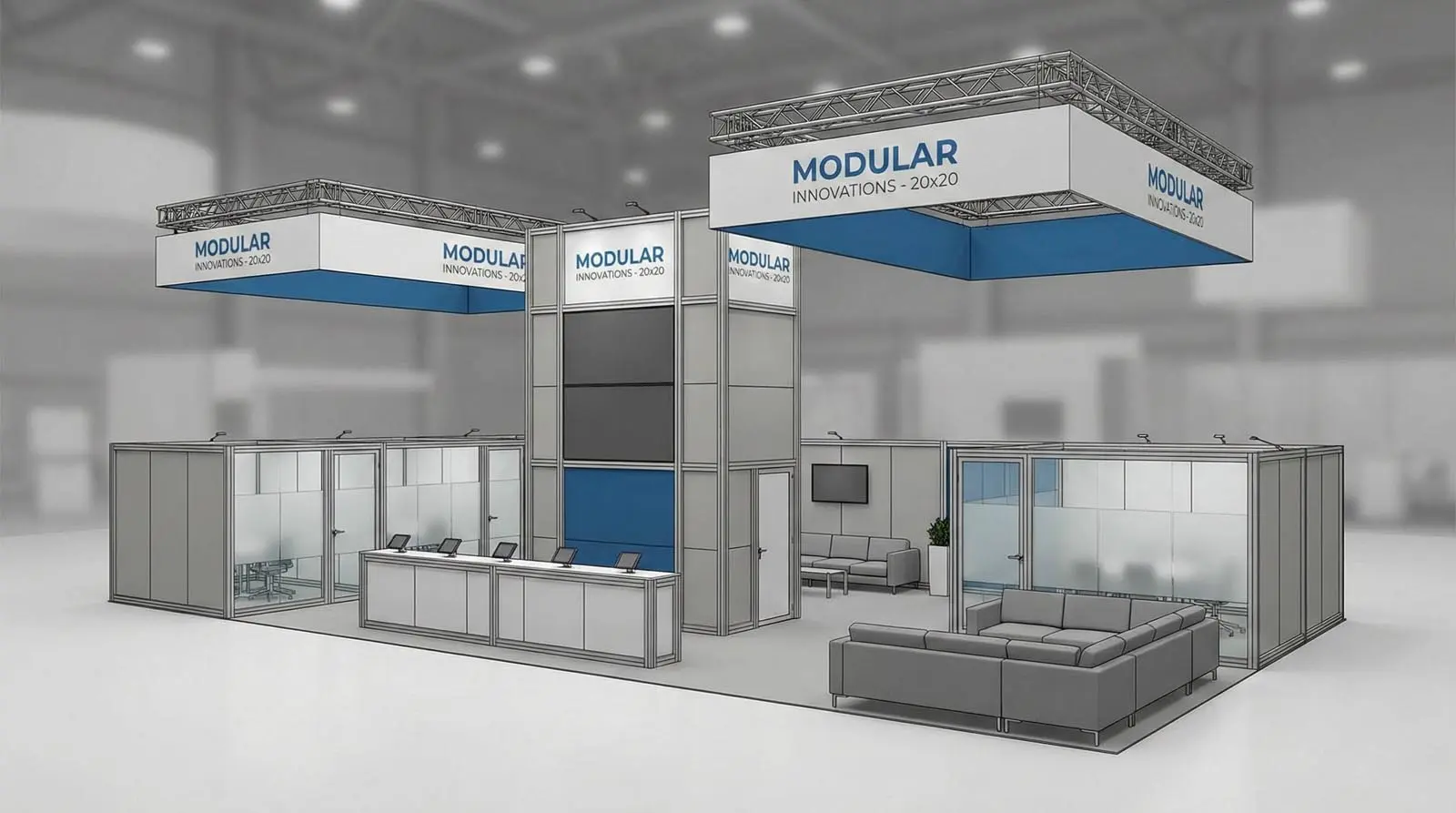
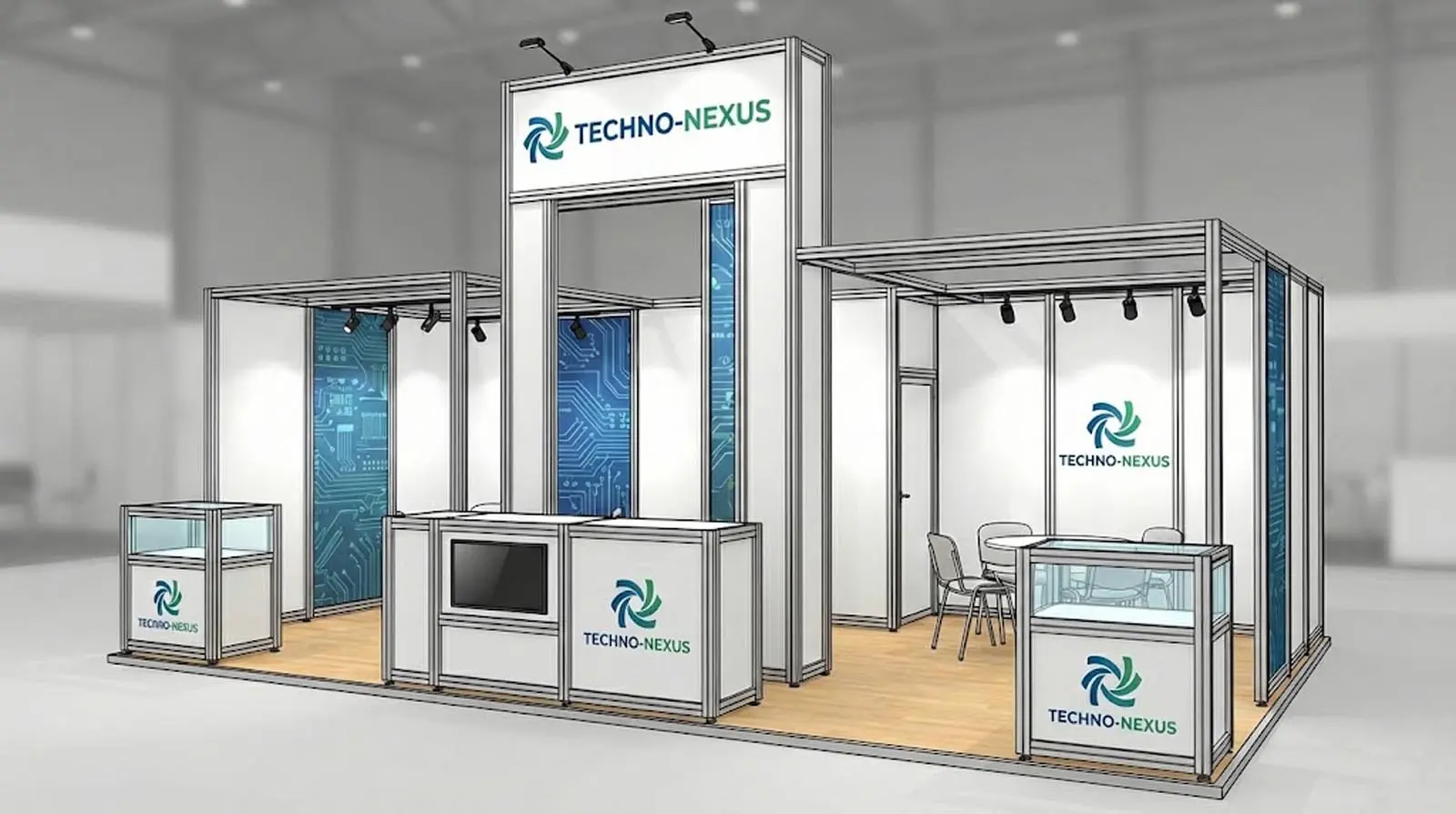
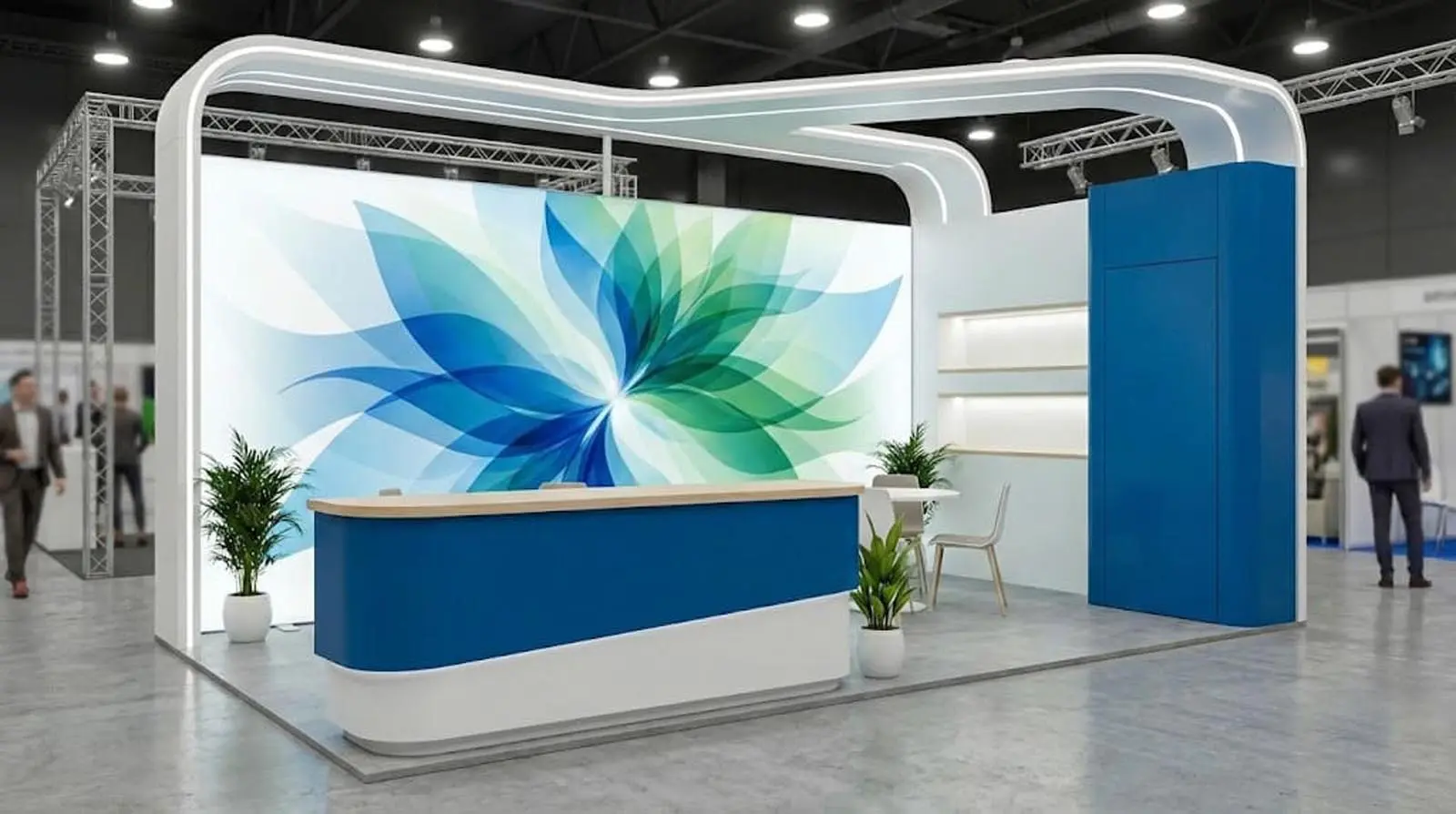
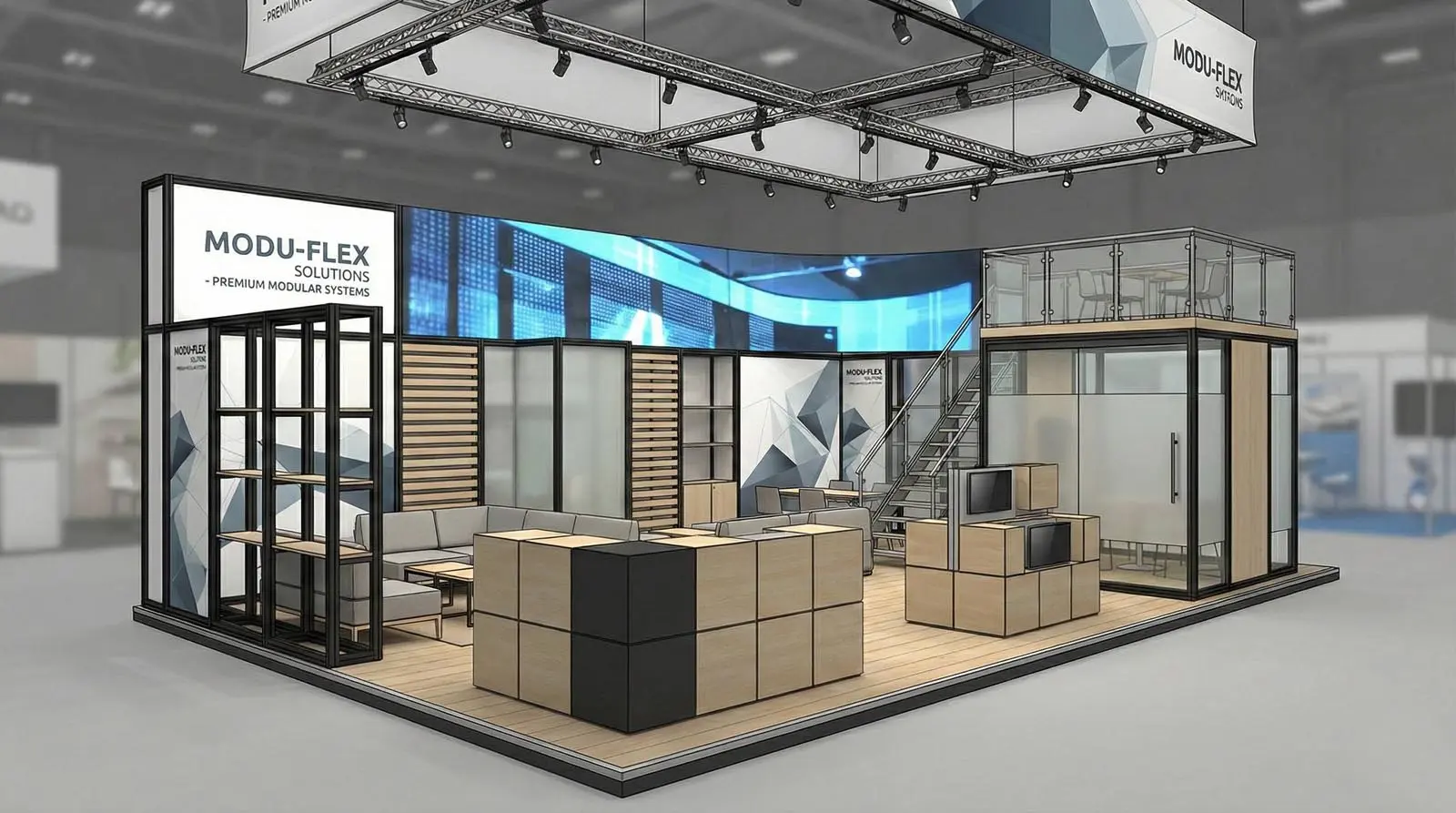
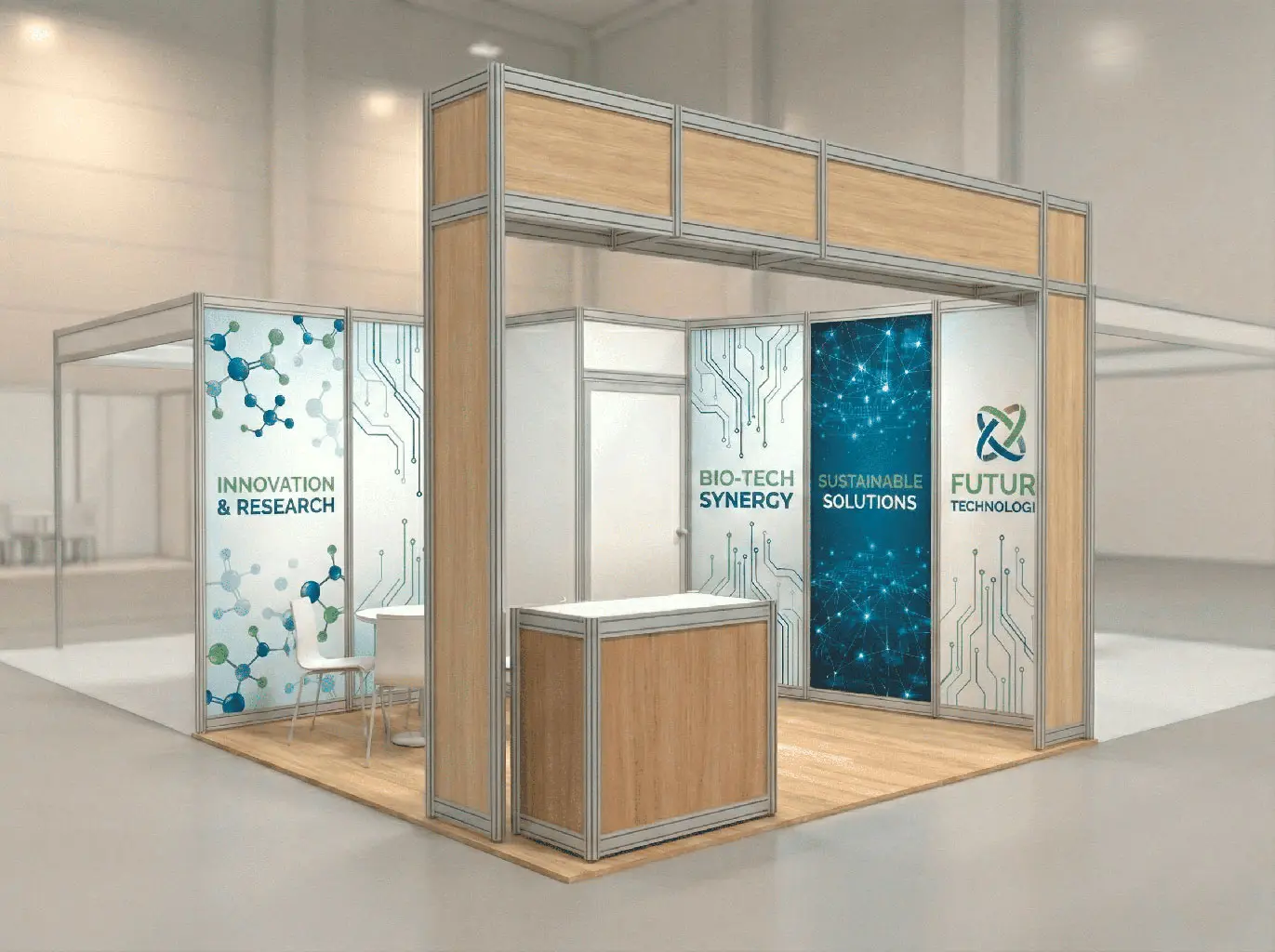
What “modular” should mean
(and why it wins in Barcelona)
Modular is not a style. It is a delivery strategy.
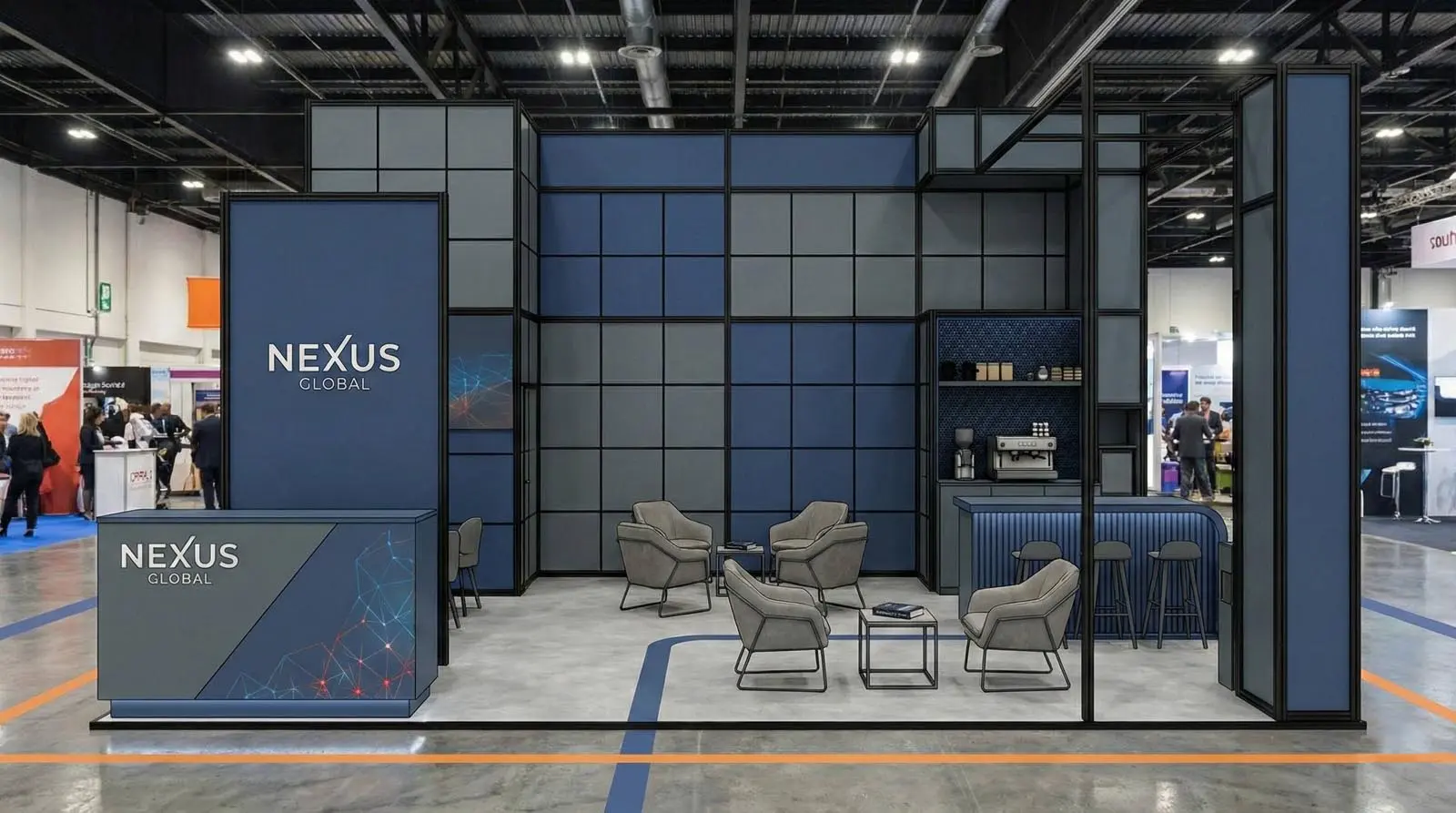
A modular exhibition stand is built from a repeatable system. That repeatability has real advantages in Barcelona:
- Faster approvals because fewer elements are truly “new”
- Fewer production unknowns
- Easier adaptation by footprint and open sides
- More predictable delivery, especially on tight timelines
- A clearer path to reuse across multiple shows
This is why modular performs so well for international exhibitors. Barcelona shows are demanding, schedules are often compressed, and stakeholders want certainty. Modular offers certainty.
But certainty alone does not create leads. The stand still needs to behave like a commercial environment.
The modular mistake:
thinking structure replaces design
The most common modular failure looks like this:
- a standard back wall
- a standard counter
- too much text on graphics
- no clear proof moment
- no obvious visitor journey
- lead capture treated as an afterthought
It’s not that modular can’t do better. It’s that modular needs the same thing every high-performing stand needs: objective-first design.
Visitors do not care if your stand is modular or bespoke. They care if they understand you quickly, believe you, and have an easy next step.
So we build modular stands around a simple conversion sequence:
- stop
- understand
- believe
- take the next step
Everything in the stand supports that sequence. If an element does not support the sequence, it should not exist.
Start with objective:
lead-first, demo-first, meeting-first modular stands
A modular stand can support multiple actions, but it still needs one primary objective so the space doesn’t become confused.
Lead-first modular stands
Lead-first modular stands are built for volume and qualification.
- An open engagement edge that invites conversation
- A clear headline that explains what you do in plain language
- One proof point that reduces skepticism quickly
- A capture moment that feels like a natural continuation of the conversation
- Storage planning so the stand stays clean under traffic
Lead-first modular does not mean low-quality. It means repeatable, efficient performance.
Demo-first modular stands
Demo-first modular works when the demo is planned properly.
- demo visibility from the aisle, without blocking entry
- queue and crowd control so the aisle stays clear
- early planning for power and AV so the demo runs reliably
- a capture step that happens at the moment belief appears
Many demo stands fail because the demo is “added” after the layout is decided. In reality, the demo is the layout. If the demo drives behaviour, it must drive the design.
Meeting-first modular stands
Meeting-first modular stands can perform extremely well at the right events.
- calm usable meeting zone (not decorative seating)
- privacy choices that don’t turn the stand into a closed box
- a clear hook outside the meeting area so inbound interest doesn’t die
- staff workflow that protects the meeting schedule
Meeting-first modular is often best when your meeting demand is real and your team has a system to qualify visitors quickly.
Flow and open sides:
the detail that decides whether modular feels premium or messy
Modular stands often look clean in an empty hall. The test is what happens when traffic arrives.
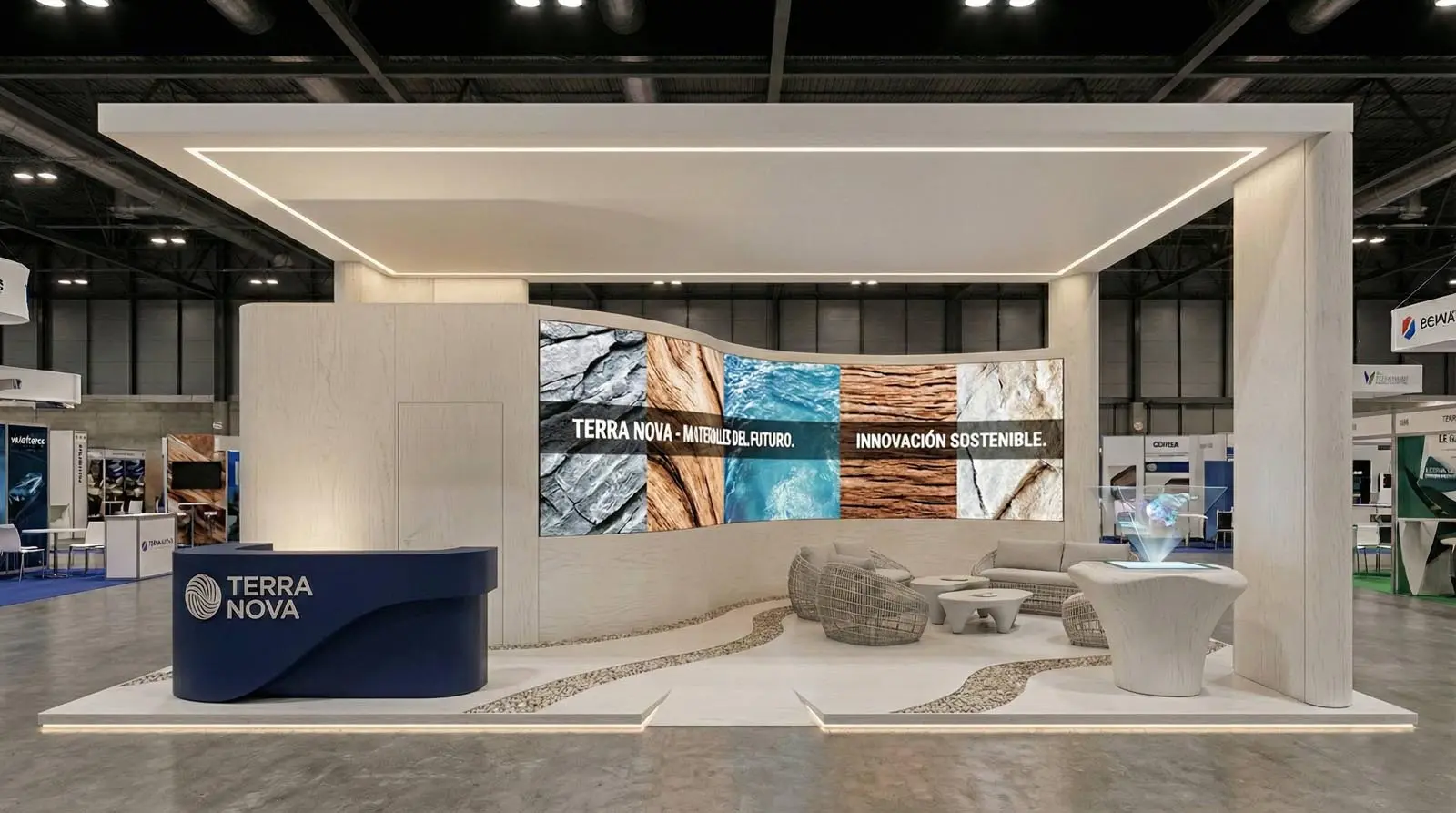
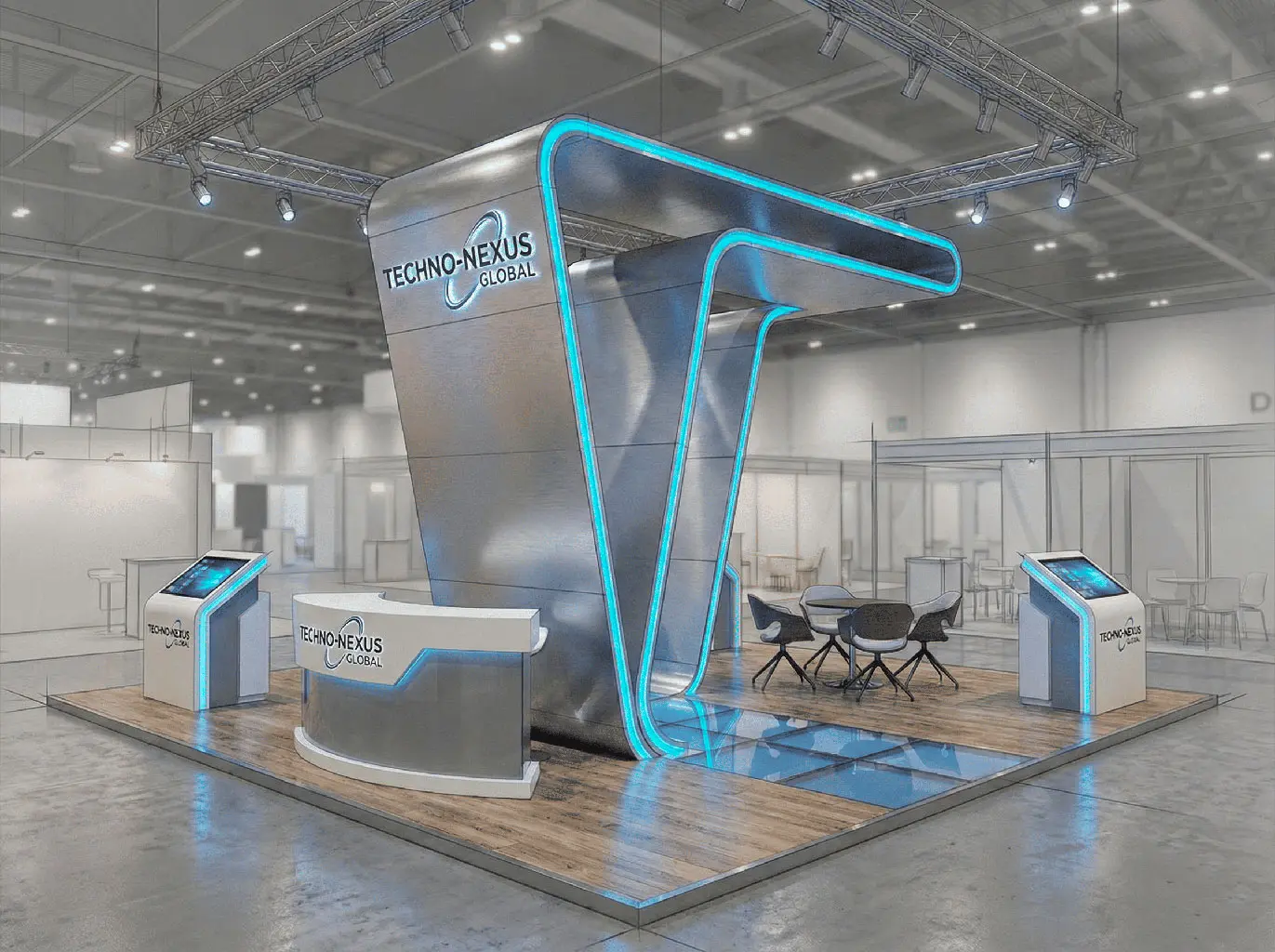
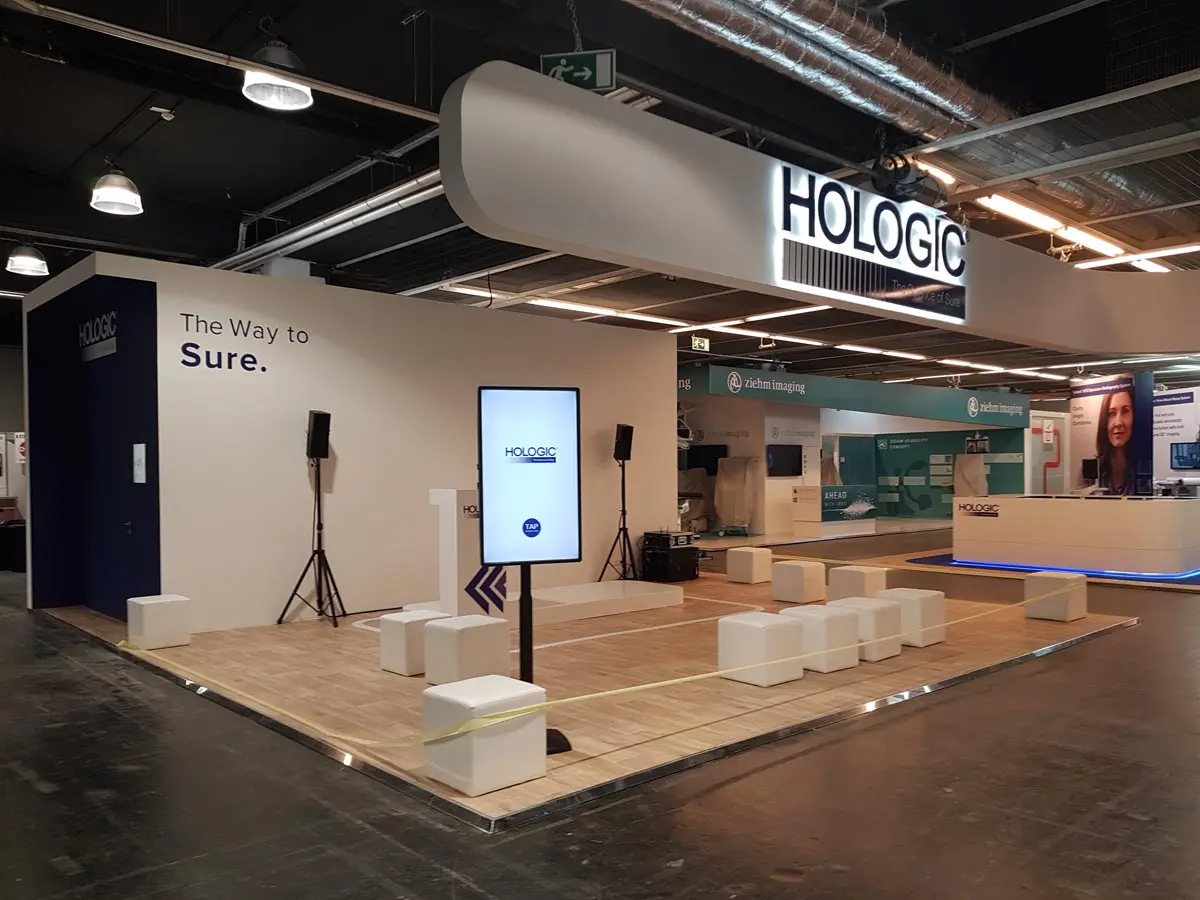
- One open side: you must keep entry open and avoid counter-blocking.
- Corner (two open sides): powerful visibility, but dead corners are common.
- Peninsula (three open sides): great potential, higher chaos risk without lanes.
- Island (four open sides): maximum exposure, requires 360° coherence.
- where the first pause point is
- whether the aisle feels blocked
- where capture happens
- whether staff can move without crossing visitor flow
- whether storage exists so clutter doesn’t appear
Modular vs custom vs hybrid
(how to choose without guessing)
If you’re comparing modular against other stand types, here’s the honest logic.
Modular vs custom
Choose modular when:
- timeline is tight
- you want predictable scope
- you exhibit frequently and want repeatability
- your objective is lead capture, lightweight demo, or structured meetings
Choose custom when:
- differentiation is essential
- you need a very specific environment or architecture
- the stand itself is part of your positioning
Custom page: /custom-exhibition-stands-barcelona/
Modular vs hybrid
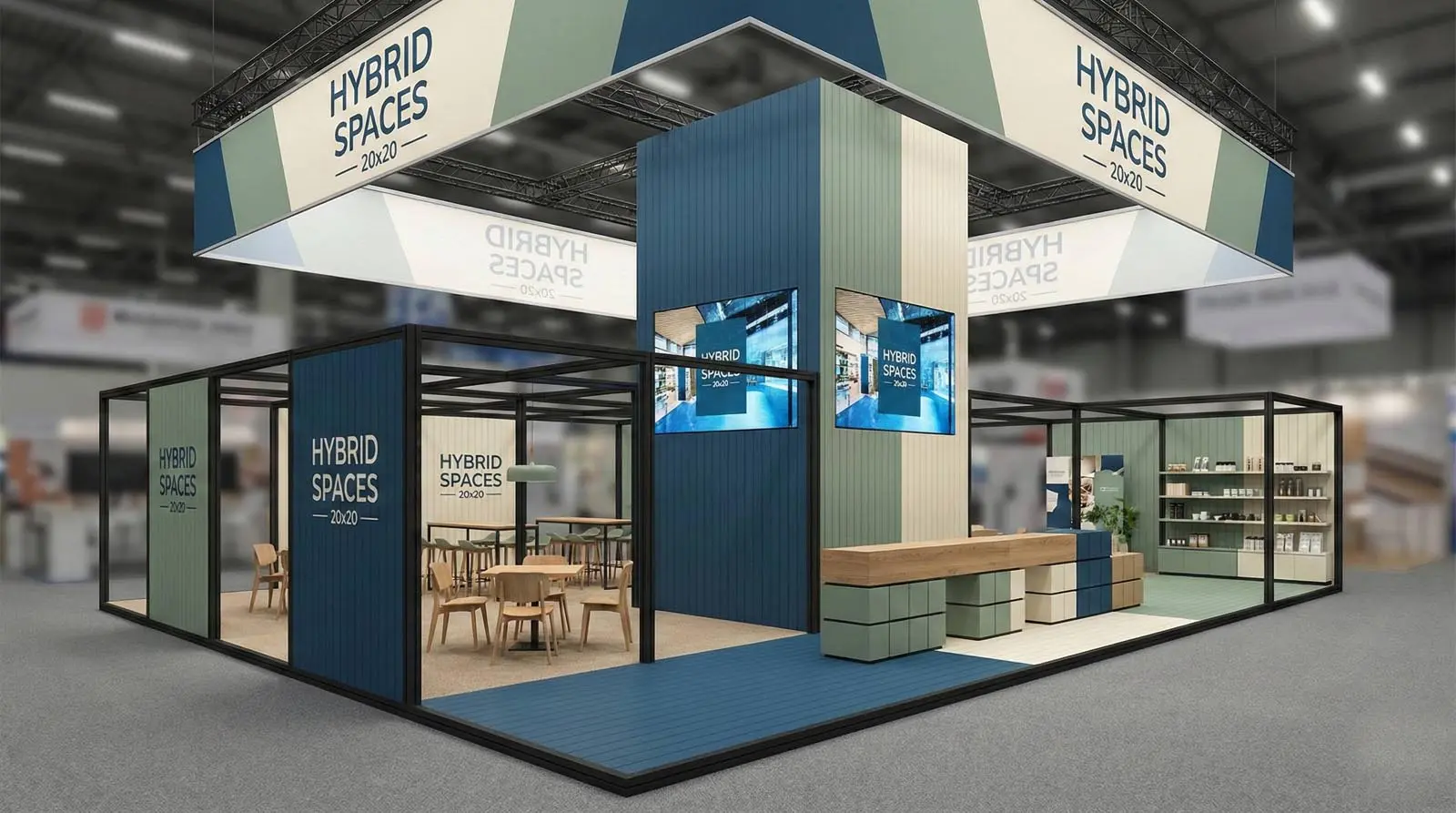
Hybrid is modular plus one custom signature element. It’s often the best middle for Barcelona: stability with impact.
Hybrid page: /hybrid-exhibition-stands-barcelona/
If you’re worried modular will look “generic,” hybrid is frequently the answer. But hybrid must be disciplined: the custom element must create real behavioural advantage, not just decoration.
Modular vs hire/rental
Hire is often best for one-off speed. Modular is best for repeat use.
Hire page: /exhibition-stands-hire-barcelona/
Modular exhibition stands by size:
make the footprint work harder
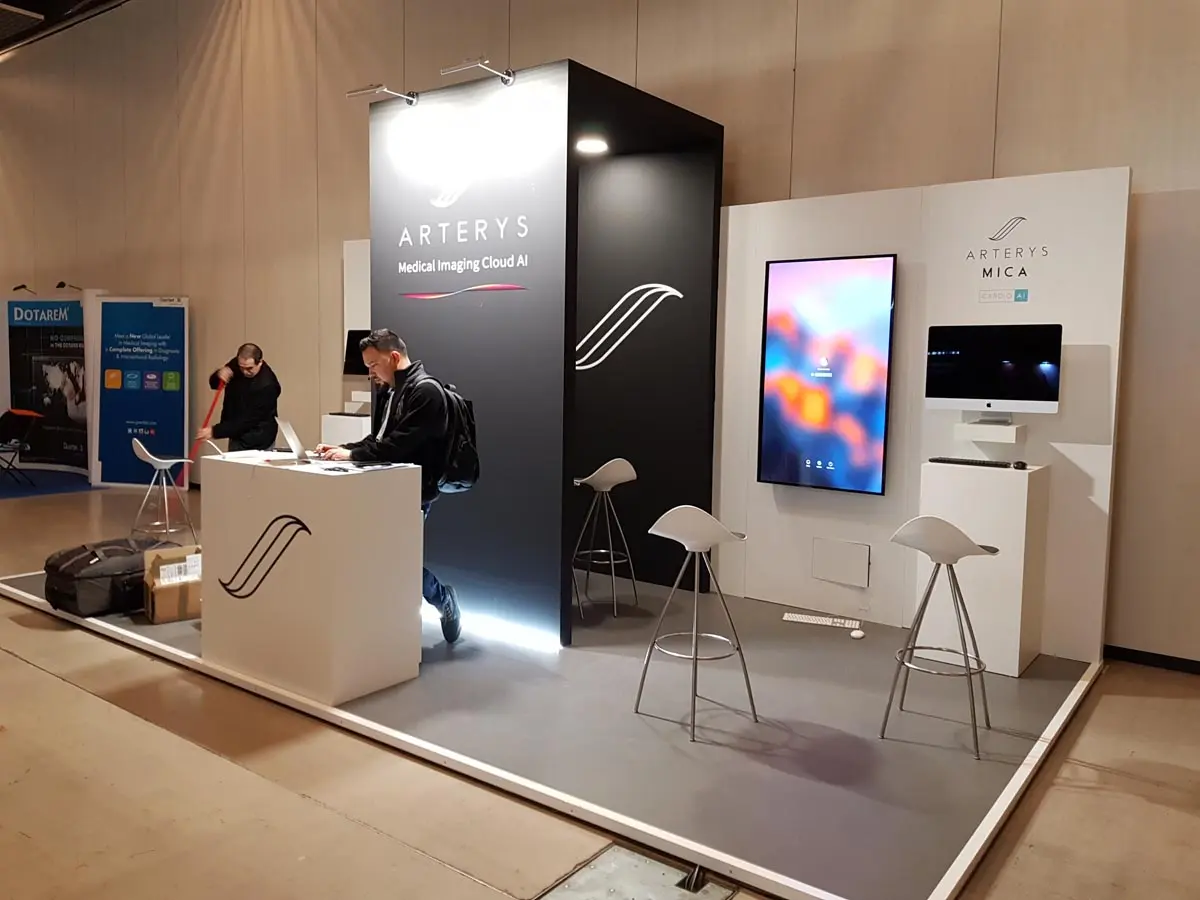
Modular stands perform when the footprint matches your workflow. The same system can feel brilliant in one size and awkward in another if the flow isn’t designed.
Browse sizes and layout logic here:
Included footprints:
3×3, 3×4, 3×5, 3×6, 3×7, 3×8, 3×9, 3×10, 5×5, 8×5, 10×5, 10×10, 15×10, 20×10.
If you’re unsure which footprint is realistic, the most useful input is not “how many square metres can we afford?” It’s:
- how many people will staff the stand at peak times
- whether you will demo or meet
- whether you need storage or a back-of-house reset point
- how you will capture leads
Small modular stands can convert extremely well because they force clarity. Large modular stands can underperform if they are filled with zones that don’t have a role.
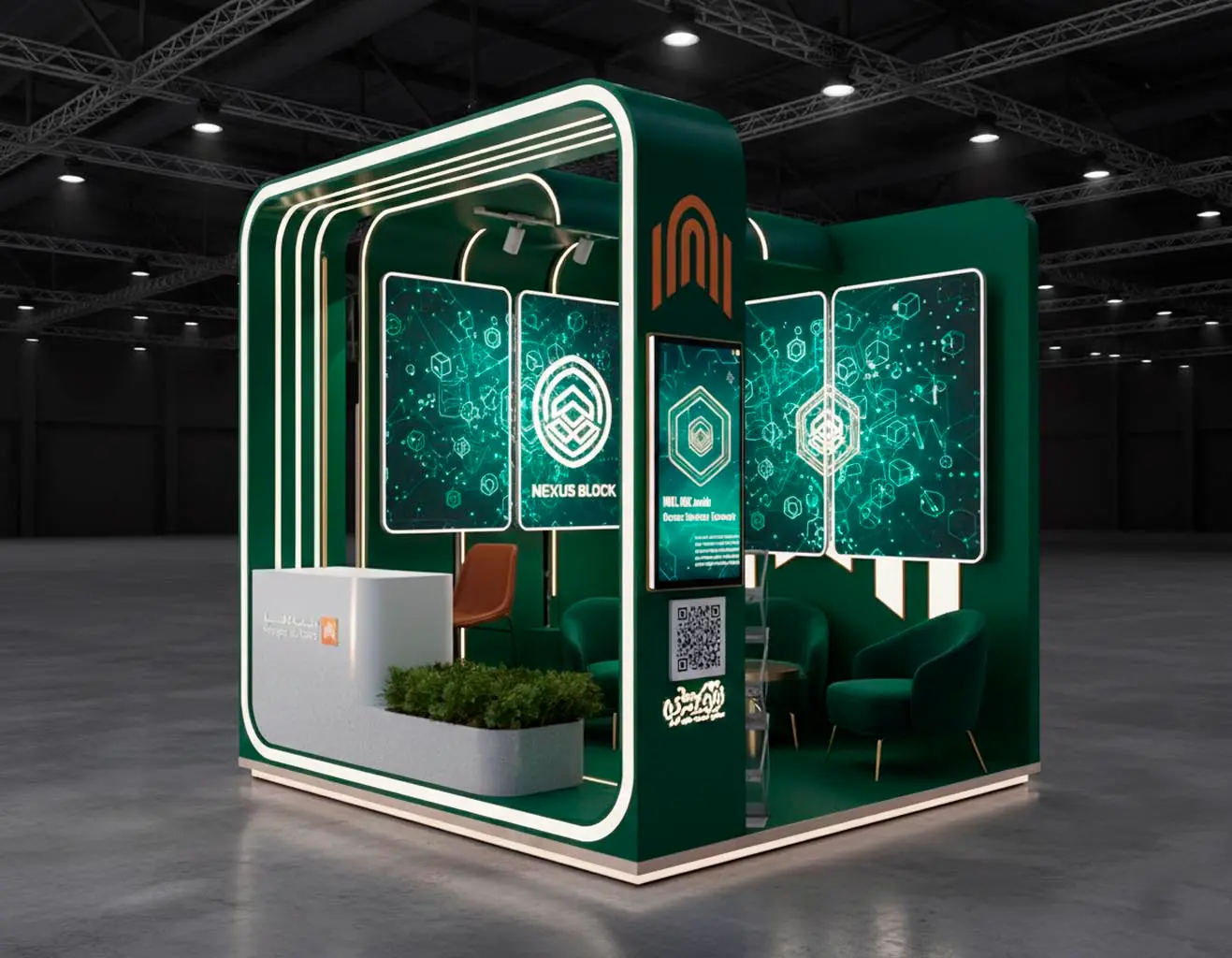
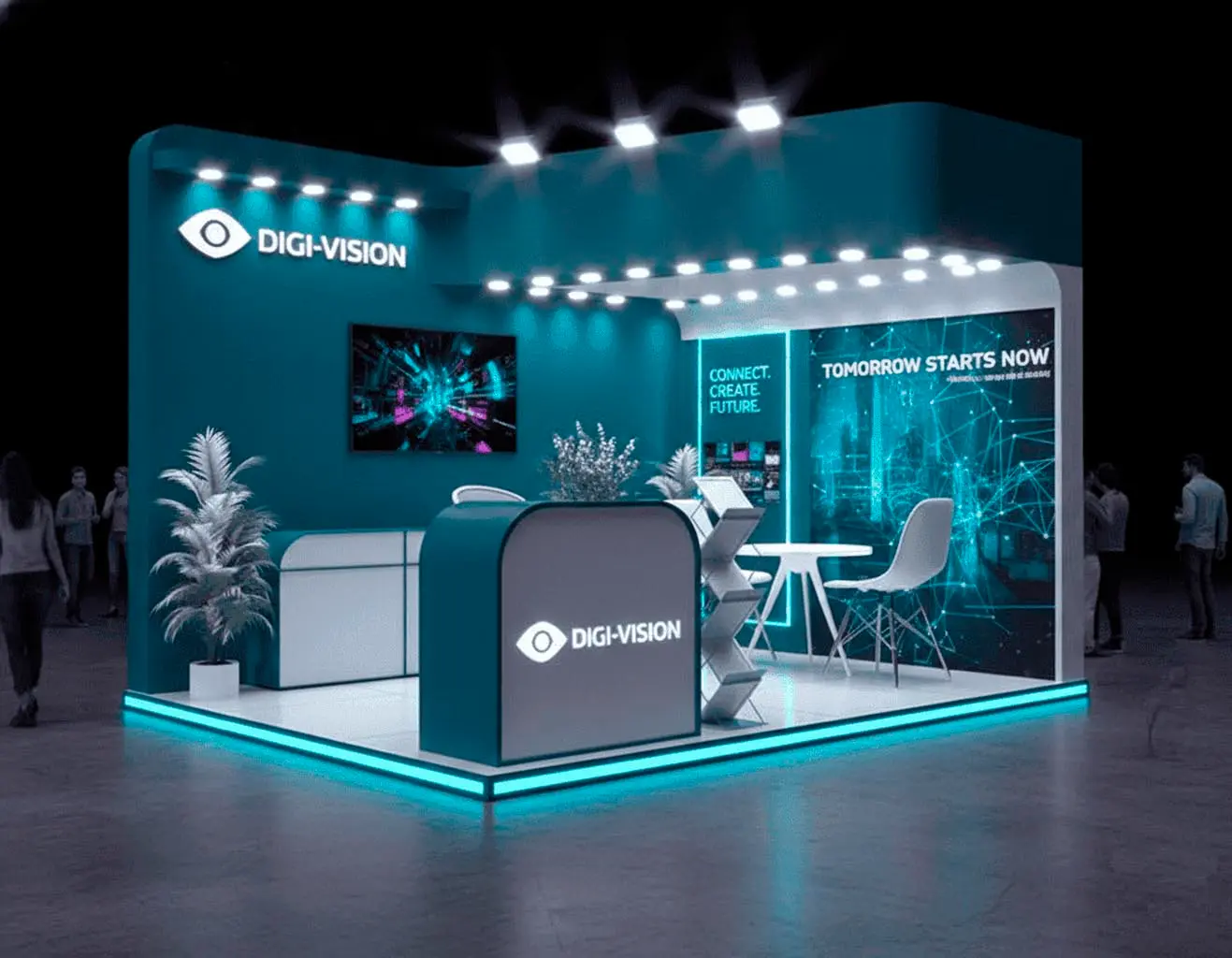
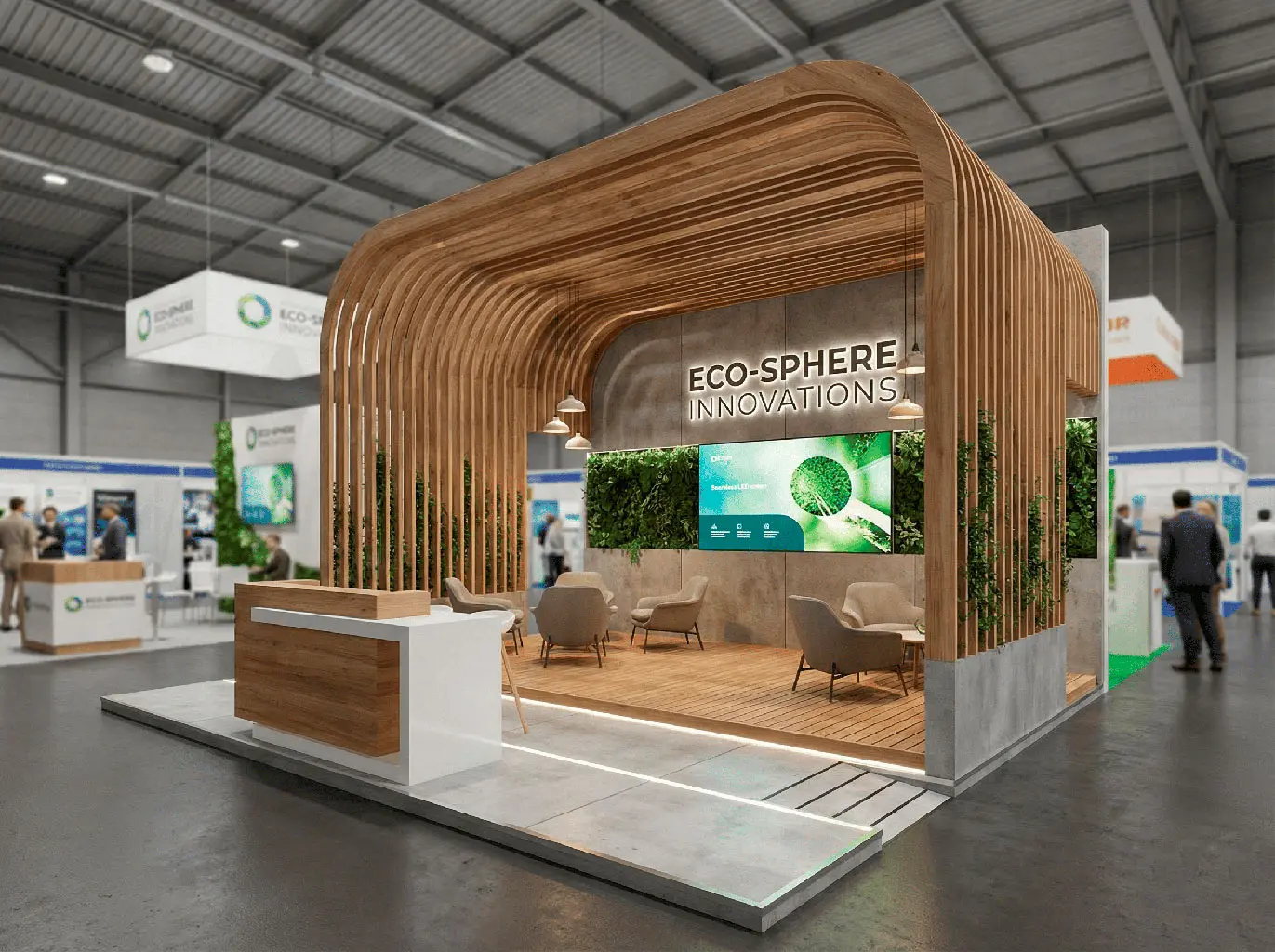
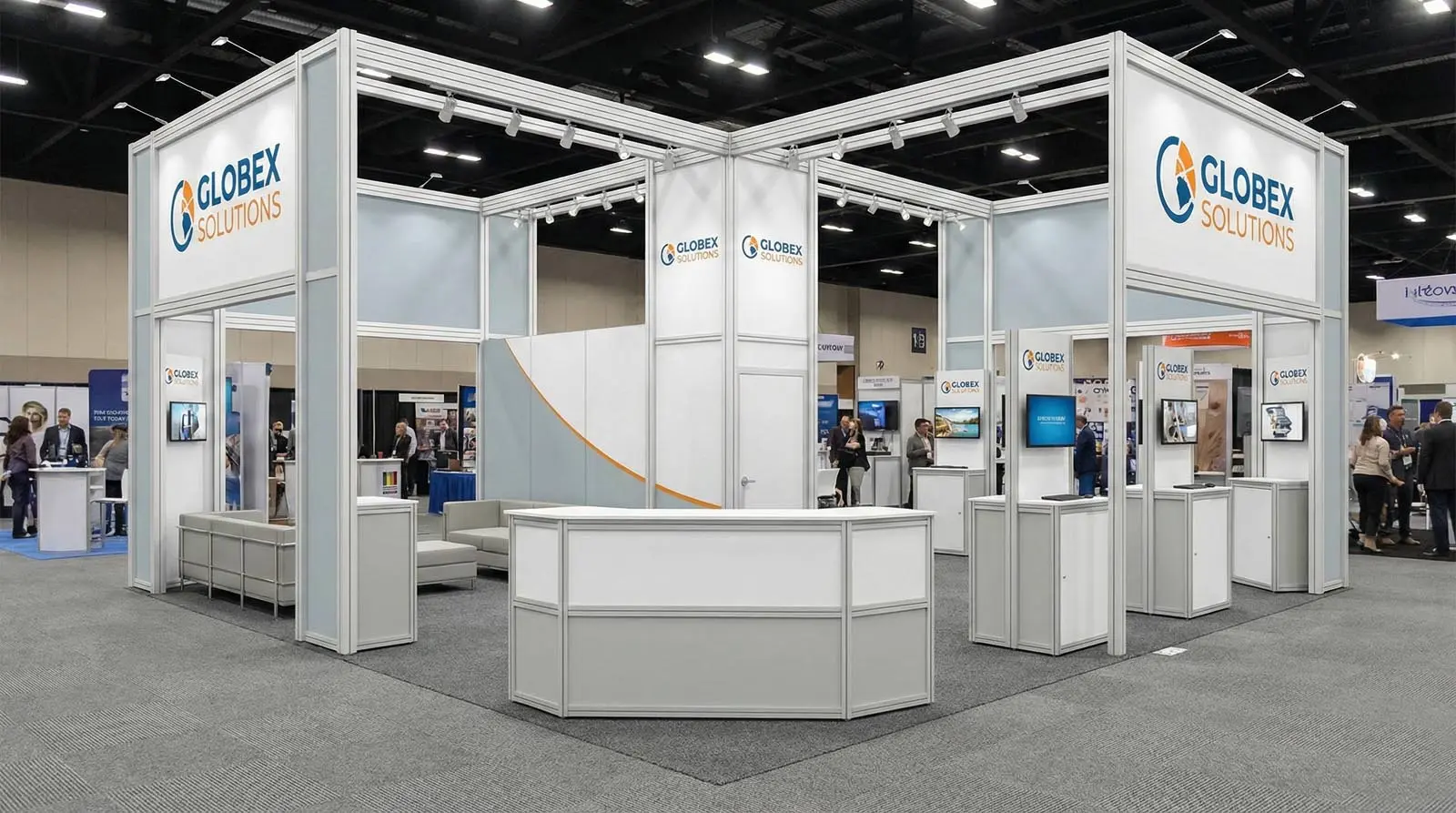
Venue-aware modular design in Barcelona
(Gran Via, Montjuïc, CCIB)
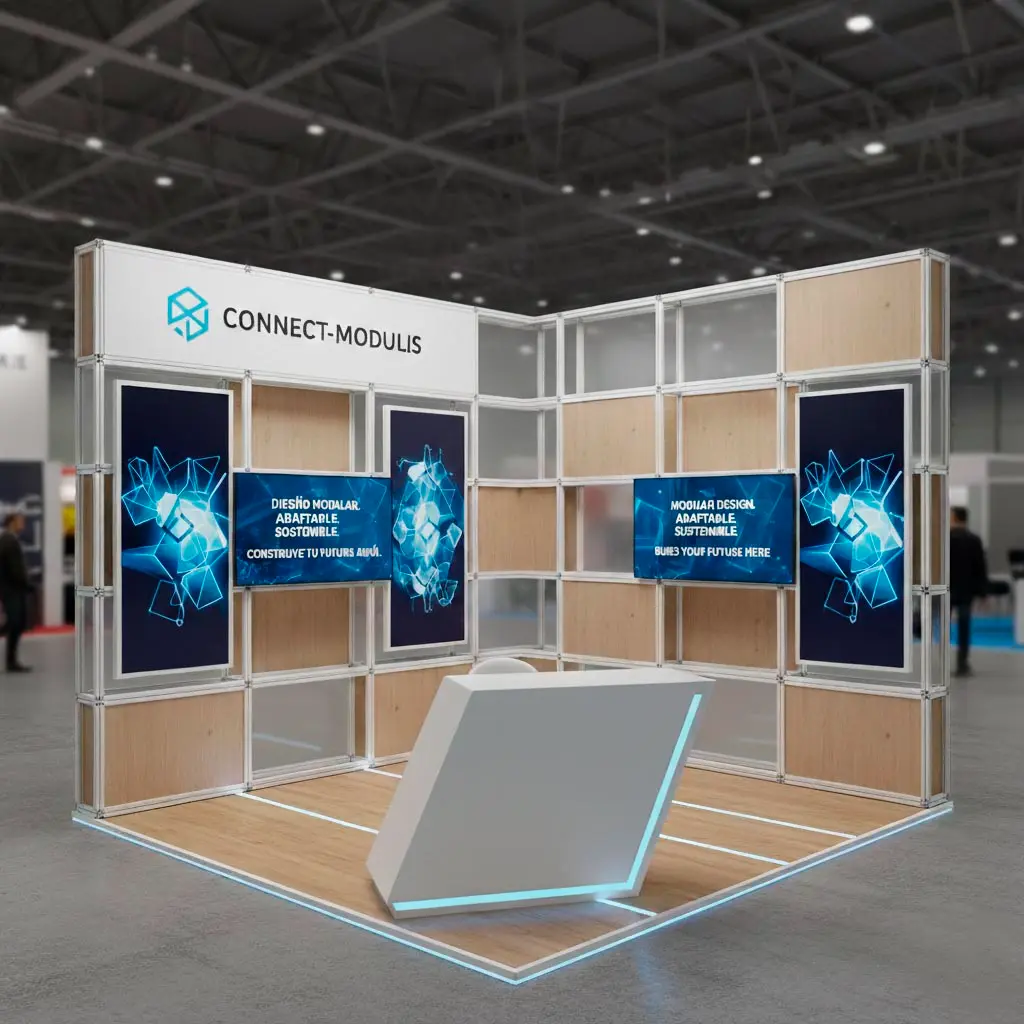
Modular does not mean venue-agnostic.
Barcelona venues change traffic and expectations.
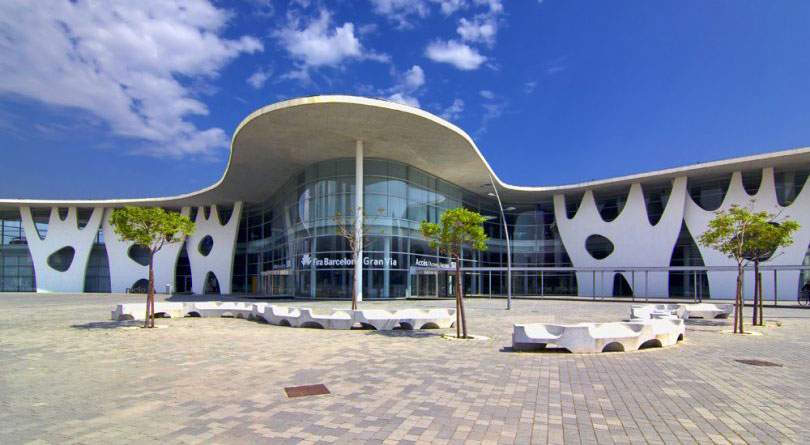
Gran Via modular stands
Gran Via is intense. You need fast clarity and an obvious reason to stop. If you are demo-driven, technical stability matters early. If you are lead-driven, capture must not block the aisle.
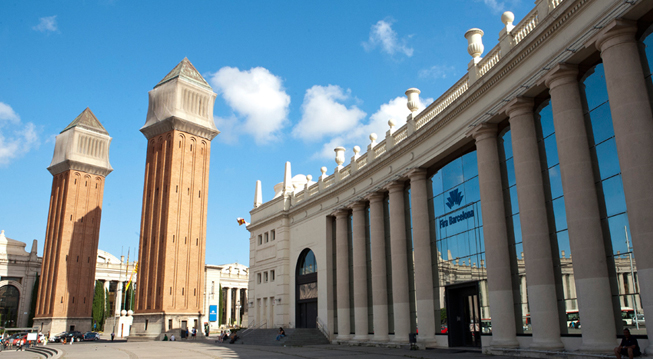
Montjuïc modular stands
Montjuïc often rewards disciplined simplicity. Overbuilding can add risk without adding performance. Modular works well when the message is sharp and the workflow is clear.
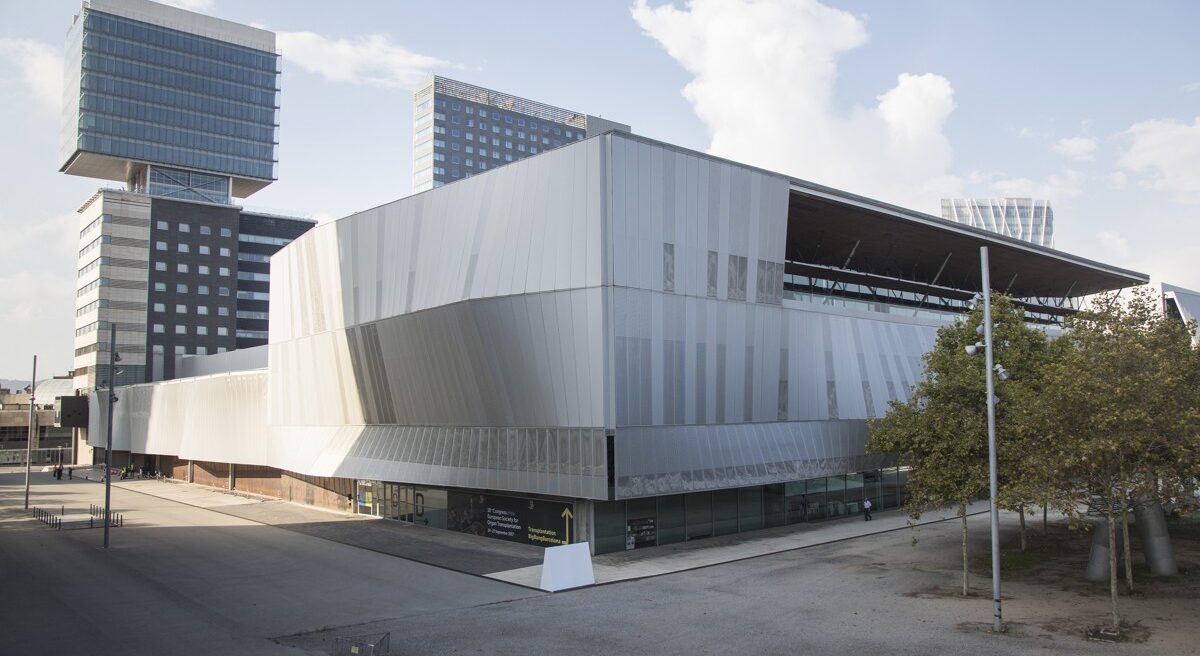
CCIB modular stands
CCIB can be meeting-led depending on the event. Modular works well when meeting zones are usable and the stand still has a hook that invites approach.
How modular stands stay branded
(without turning into a text wall)
Branding is not “more text.” Branding is recognition and confidence.
Modular branding works when:
- the headline is plain and specific
- the proof point is visible (product, case, demo, metric)
- the structure supports a clean composition
- lighting is disciplined (premium comes from lighting more than people expect)
- touchpoints feel intentional (where hands and eyes go)
A modular stand can feel more premium than a bespoke stand if the bespoke stand is cluttered and the modular stand is clear.
Cost control:
why modular is often the calmest budget decision
Modular budgets are easier to stabilise because the system reduces unknowns. But modular can still drift if scope is unclear.
To keep modular cost controlled:
- Lock the primary objective early
- Separate must-haves from optional upgrades
- Plan power/AV early if you demo
- Define inclusions/exclusions in writing
- Avoid last-minute reprints and layout changes
Cost Guide
If you want a cost explanation written plainly
Directional estimate
If you want a fast directional range before requesting quotes
What we need to quote a modular stand accurately
You don't need a long brief. You need the decisions that shape the system.
What we need
- event name + dates
- venue (Gran Via / Montjuïc / CCIB)
- stand size (m²) and footprint if known (e.g., 10×5)
- open sides (1 / 2 / 3 / 4)
- primary objective (leads / demos / meetings)
- must-haves (AV, storage, meeting space, product display)
- deadline for design approval
You can also use the brief template:
Phone: +34 609 70 92 56
FAQs:
Frequently Asked Questions
A stand built from a repeatable system that improves speed, predictability and reusability. The best modular stands are still designed for conversion and flow.
They can if they are treated like furniture. When message hierarchy, proof and flow are designed properly, modular can feel highly branded and premium.
Often more predictable, sometimes lower, but the real advantage is controlled scope and reduced delivery risk.
Yes, especially for lightweight demos. For heavier demo needs, hybrid or custom may be a better fit depending on technical requirements.
Yes, if meeting space is usable and the stand remains inviting. Meeting-first modular can perform very well at the right events.
Choose modular when speed and predictability are primary. Choose hybrid when you want modular stability plus one custom signature element for impact.
Yes. Traffic intensity, sightlines, meeting behaviour and technical planning differ across Gran Via, Montjuïc and CCIB
By designing entry/exit logic by open sides, placing counters strategically, and ensuring demo/capture zones do not block flow.
Event, venue, size/m², open sides, objective, must-haves and approval deadline.
Yes. The system is adaptable, but the layout strategy changes by footprint and open sides.
Clarity, lighting discipline, a visible proof point, and intentional touchpoints where visitors look and interact.
Too much text and no visitor journey. Modular needs a clear sequence: stop, understand, believe, next step.
Yes. Reuse is one of the strongest practical sustainability levers in trade show design.
Use /stand-price-calculator-barcelona/ for a directional range, then request a quote with a consistent brief.
Send your event, venue, size, open sides and objective via /contact/ or call +34 609 70 92 56.