Exhibition stand services in Barcelona
explained like you're buying outcomes,
not " stuff " ...

"Exhibition stand services" is one of those phrases that can hide more than it reveals.
One supplier calls a 3D render a service. Another calls logistics a service. Another includes on-site support but never writes it down. You end up with quotes that look comparable on the surface and become completely different projects the moment the show gets close.
This page exists to make things simple.
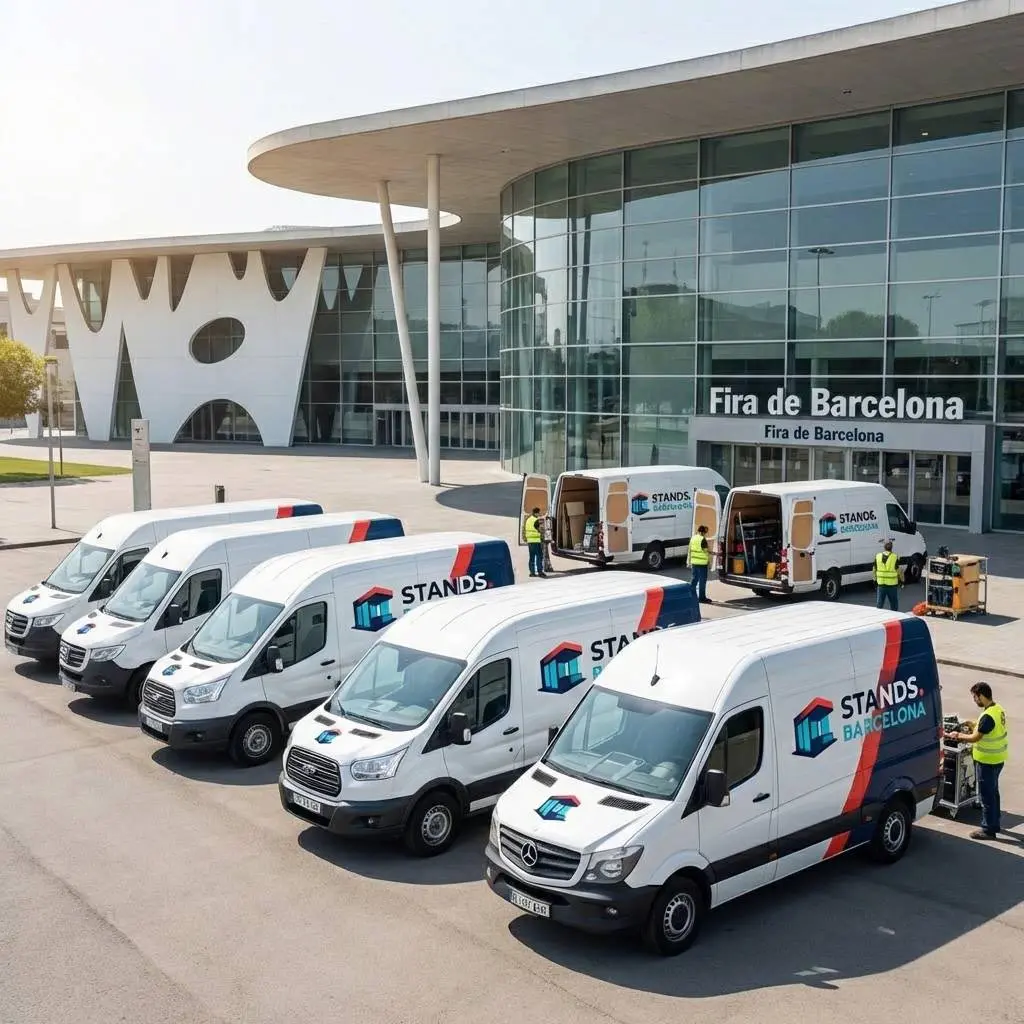
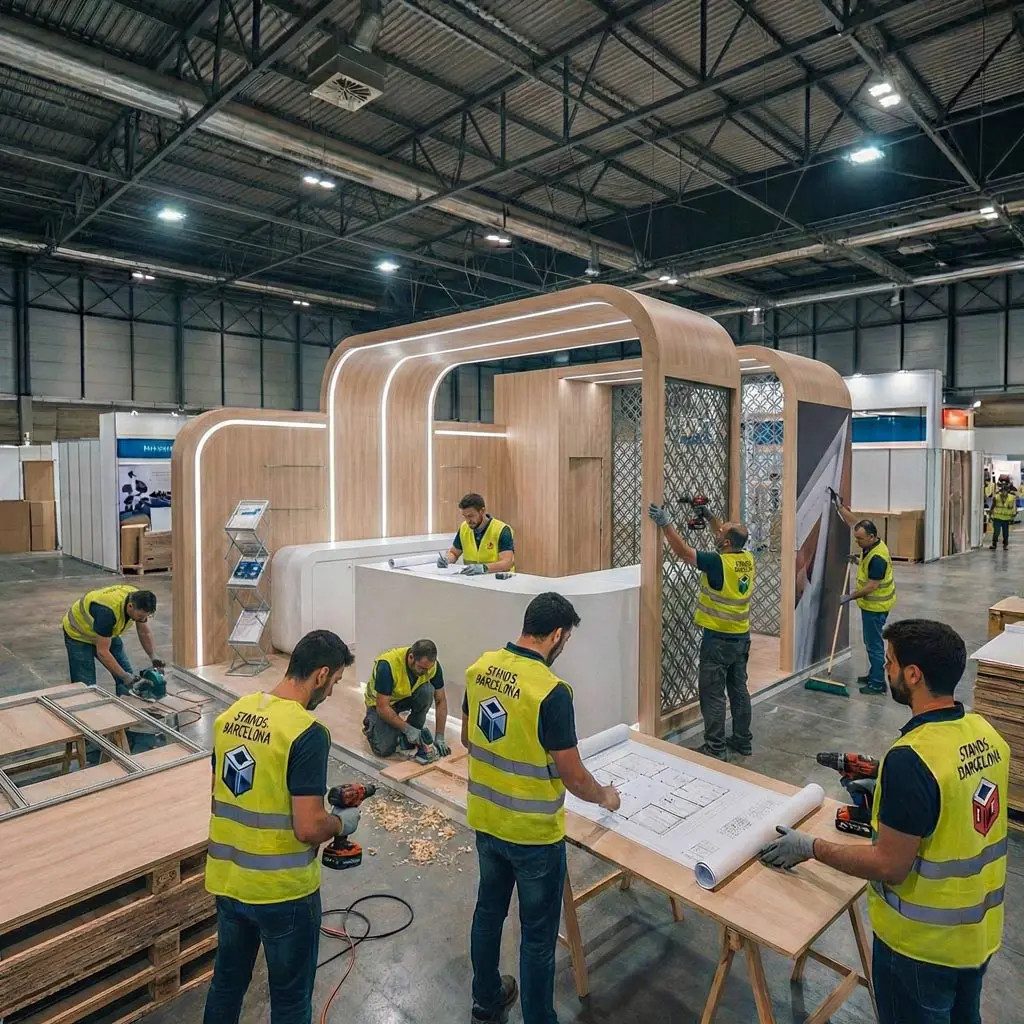
At Stands.Barcelona, our exhibition stand services in Barcelona are built around one goal: a stand that performs on the show floor and stays controllable as a project. That means we focus on clarity, scope discipline, venue-aware planning, and a delivery mindset that prevents last-minute chaos.
If you want a stand that just “looks present,” services can be minimal. If you want a stand that behaves like a commercial system-attract, clarify, prove, convert-then services must be structured around that outcome.
What you are really buying when you buy exhibition stand services
Most exhibitors think they're buying a stand. In reality, you're buying a chain of decisions and execution.
That chain includes:
- what the stand is meant to achieve (leads, demos, meetings)
- how visitors move and behave around it
- what proof you show and how quickly it lands
- how the team operates the space under pressure
- how scope is defined so costs don’t drift
- how venue realities are handled so there are fewer surprises
If that chain is managed well, the project feels calm and the stand converts. If the chain is managed poorly, the stand becomes a set of last-minute fixes.
Our services exist to protect the chain.
SERVICE 1
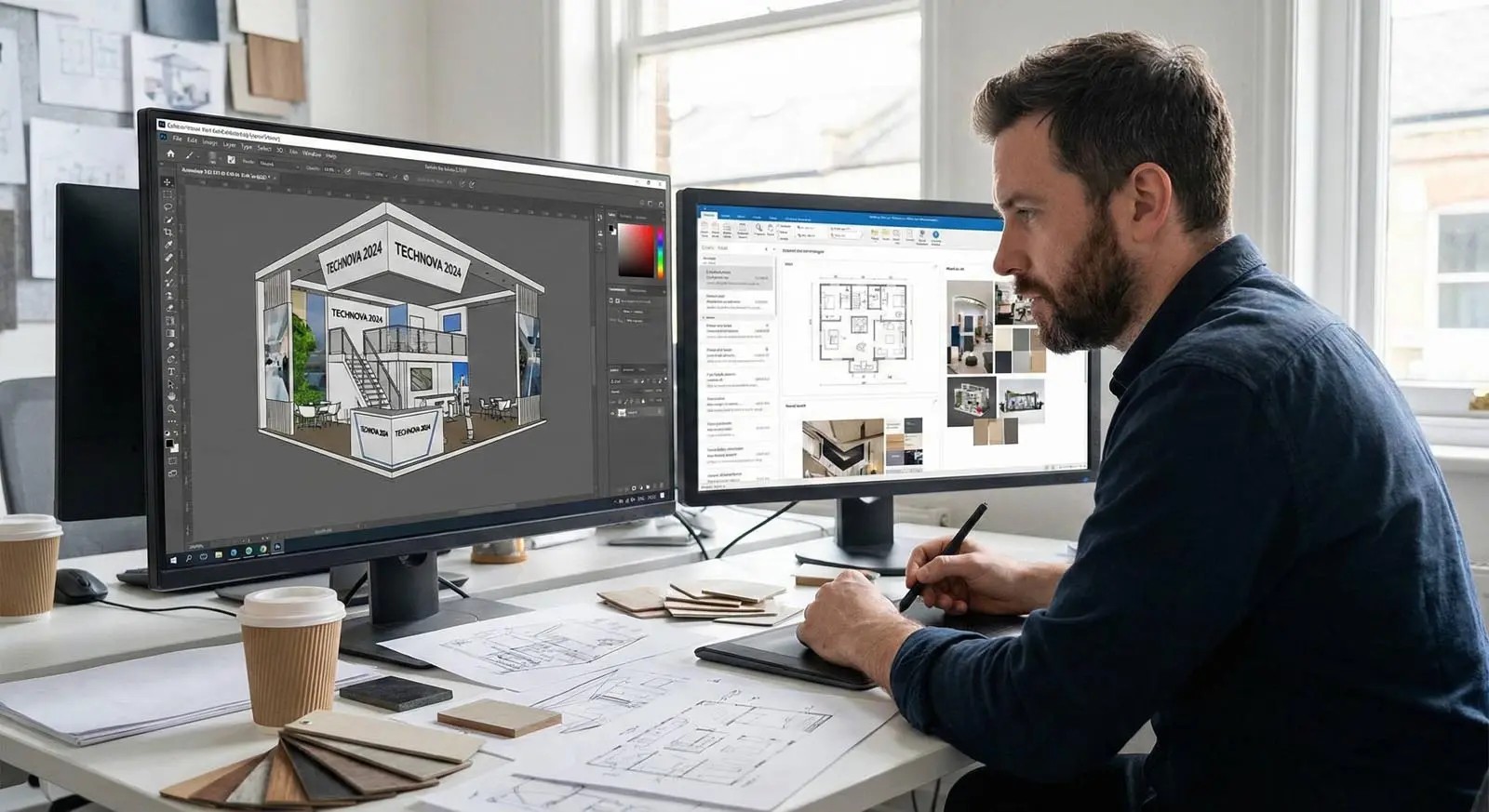
Exhibition stand design
(behaviour-first, Barcelona-aware)
Design is not decoration. It is the operating system of the stand.
Our design work typically focuses on:
- objective-first layout (lead-first, demo-first, meeting-first)
- flow planning based on open sides (one side, corner, peninsula, island)
- message hierarchy at walking speed (what people understand in seconds)
- proof moments that reduce scepticism (demo, product, case, metric, certification)
- practical decisions that keep the stand operable (staff routes, storage, reset points)
Start here if you want the design page:
And stand sizes logic:
SERVICE 2
Stand type strategy
(custom, modular, hybrid, bespoke, hire, double deck)
A lot of budget problems are not “bad pricing.” They’re stand type mismatch.
Choosing the wrong stand type creates hidden costs: longer approvals, more production risk, last-minute upgrades, or a stand that doesn’t fit how you sell. We help you pick the stand type based on objective, timeline, and risk tolerance.
Pages:
- Custom: /custom-exhibition-stands-barcelona/
- Modular: /modular-exhibition-stands-barcelona/
- Hybrid: /hybrid-exhibition-stands-barcelona/
- Bespoke: /bespoke-exhibition-stands-barcelona/
- Hire / Rental: /exhibition-stands-hire-barcelona/
- Double deck: /double-deck-exhibition-stands-barcelona/
- Sustainable: /sustainable-exhibition-stands-barcelona/
If you want impact plus control, hybrid is often the best middle. If you want maximum predictability, modular or hire may be best. If you want flagship perception, bespoke might be the right category. The point is to choose intentionally, not emotionally.
SERVICE 3
Venue-aware planning
(Gran Via, Montjuïc, CCIB)
Barcelona is not “one venue reality.” Venue constraints and visitor behaviour patterns change design and execution decisions.
Our venue-aware planning typically covers:
- traffic expectations and how they affect flow
- practical constraints that influence layout and technical planning
- early identification of what can cause last-minute issues
- aligning the stand plan to the venue’s behavioural realities
Venues:
Venue awareness is not a bonus. It’s how you avoid emergency decisions later.
SERVICE 4
Scope clarity
(the service that saves budgets and prevents surprise costs)
If you want one service that protects everything else, it’s scope clarity.
Scope clarity means defining:
- what is included
- what is optional (priced separately)
- what is assumed (power availability, AV needs, rigging)
- what is excluded (so you are not surprised)
- what finishing level is expected
- what technical requirements exist and when they must be decided
Without scope clarity, quotes are not comparable. With scope clarity, procurement becomes real: you can compare like-for-like and make a decision you can defend internally.
If you want the cost logic explained in plain language:
SERVICE 5
Technical planning
(power, AV, lighting, demo reliability)
Many stand problems are not design problems. They are technical planning problems discovered too late.
If you’re demo-first, or even proof-first with screens and lighting, technical planning should happen early, not as an add-on one week before build-up.
Technical planning includes:
- power distribution and realistic needs for demo equipment
- AV integration that doesn’t create cable chaos
- lighting that supports premium perception and readability
- planning for repeatability (demos that can run all day without staff stress)
The goal is not “more tech.” The goal is reliability and calm.
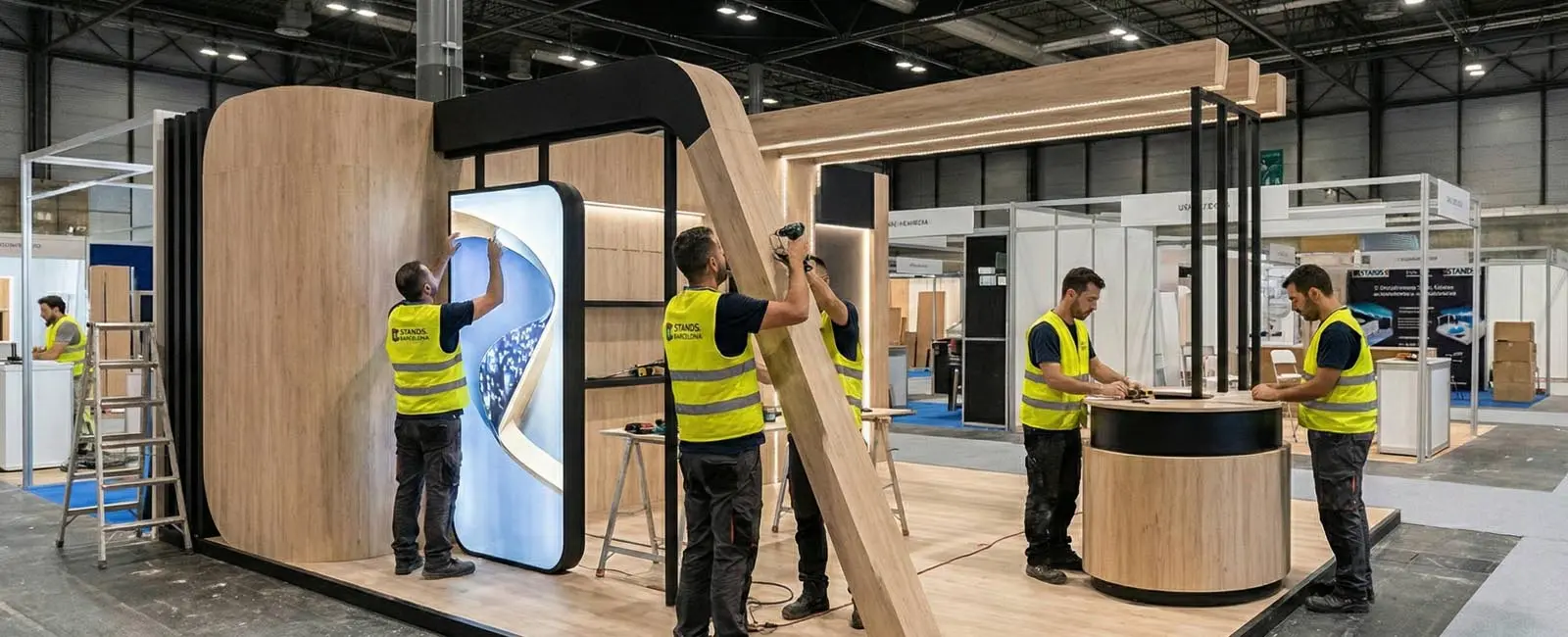
SERVICE 6
Build coordination mindset
(what a good "builder" actually provides)
If you are searching “exhibition stand builders in Barcelona,” you are usually searching for certainty.
A builder who adds real value:
- documents scope clearly
- aligns design with buildability early
- sequences delivery in a way that reduces risk
- prevents the classic last-week chaos (rushed graphics, surprise upgrades, emergency labour)
Builders page:
The more international the team, the more important this becomes. Clear documentation prevents misunderstandings across time zones and stakeholders.
SERVICE 7
Cost direction and decision support
(before you commit)
Most teams don’t need a perfect budget early. They need a realistic range and a plan to stabilise it.
We support that by:
- explaining the cost drivers behind a project
- separating must-haves from optional upgrades
- reducing late-change risk
- providing a path to comparable quotes
Cost guide:
Directional estimate:
If you are not sure where you sit, start with the calculator and then request a managed quote based on your constraints.
SERVICE 8
Trade fair context
(design for the event you're actually attending)
Different trade fairs reward different behaviours.
- demo-driven halls require crowd control and technical stability
- meeting-led events require calm zones and privacy choices
- product-led events require presentation, storage and reset discipline
Trade fairs hub:
This is why “one stand design” doesn’t automatically work everywhere. The event context is part of the service.
How the process works
(so you know what happens next)
Exhibition services often feel vague.
We keep the process simple and structured.
Inputs
Event, venue, size/footprint, open sides, objective, must-haves, deadline
Direction
Layout strategy + stand type recommendation
Scope clarity
Inclusions, options, technical assumptions
Quote path
a quote that you can compare and trust
Delivery mindset
planning that protects build-up and show days
What we need from you (so the quote is meaningful)
This is the basic info:
- event name + dates
- venue (Gran Via / Montjuïc / CCIB)
- stand size (m²) and footprint if known (e.g., 10×5)
- open sides (1 / 2 / 3 / 4)
- primary objective (leads / demos / meetings)
- must-haves (AV, storage, meeting space, product display)
- deadline for design approval
You can also use the brief template:
Phone: +34 609 70 92 56
FAQs:
Frequently Asked Questions
The services that turn a stand into a controlled, performance-focused project: design, planning, scope clarity, venue awareness, technical planning and a reliable quote path.
Depending on the project, yes. Many teams start with design direction and scope clarity before selecting execution.
Scope clarity and objective-first layout direction. They prevent last-minute cost drift and chaotic execution.
Yes. Venue constraints and visitor behaviour are treated as design inputs from the start.
By using a consistent brief and demanding written inclusions/exclusions and optional upgrades so you can compare like-for-like.
Yes. We can stress-test it for flow, buildability, technical needs and scope clarity, and recommend practical adjustments.
It depends on objective and timeline. Hybrid is often the practical middle; modular or hire is strong for predictability; bespoke is for flagship perception with disciplined planning.
Technical planning is critical for demo reliability and premium perception, and should be defined early in scope.
Lock objective and scope early, separate optional upgrades, plan technical needs early, and document inclusions/exclusions clearly.
Event, venue, size/footprint, open sides, objective, must-haves and approval deadline via /contact/ or call +34 609 70 92 56.
Yes. We align terminology so briefs remain clear (stand vs booth) and decisions don’t get lost.
Start with /stand-price-calculator-barcelona/ for a directional range, then use /exhibition-stand-cost-barcelona/ to understand cost drivers.
Yes. Sustainability is supported through reuse-first design, scope discipline, and reducing late-change waste.
Yes. Different events reward different behaviours. We plan the stand around the event context and your objective.
Send your details via /contact/ or call +34 609 70 92 56.